
By Gene Johnson
The Associated Press
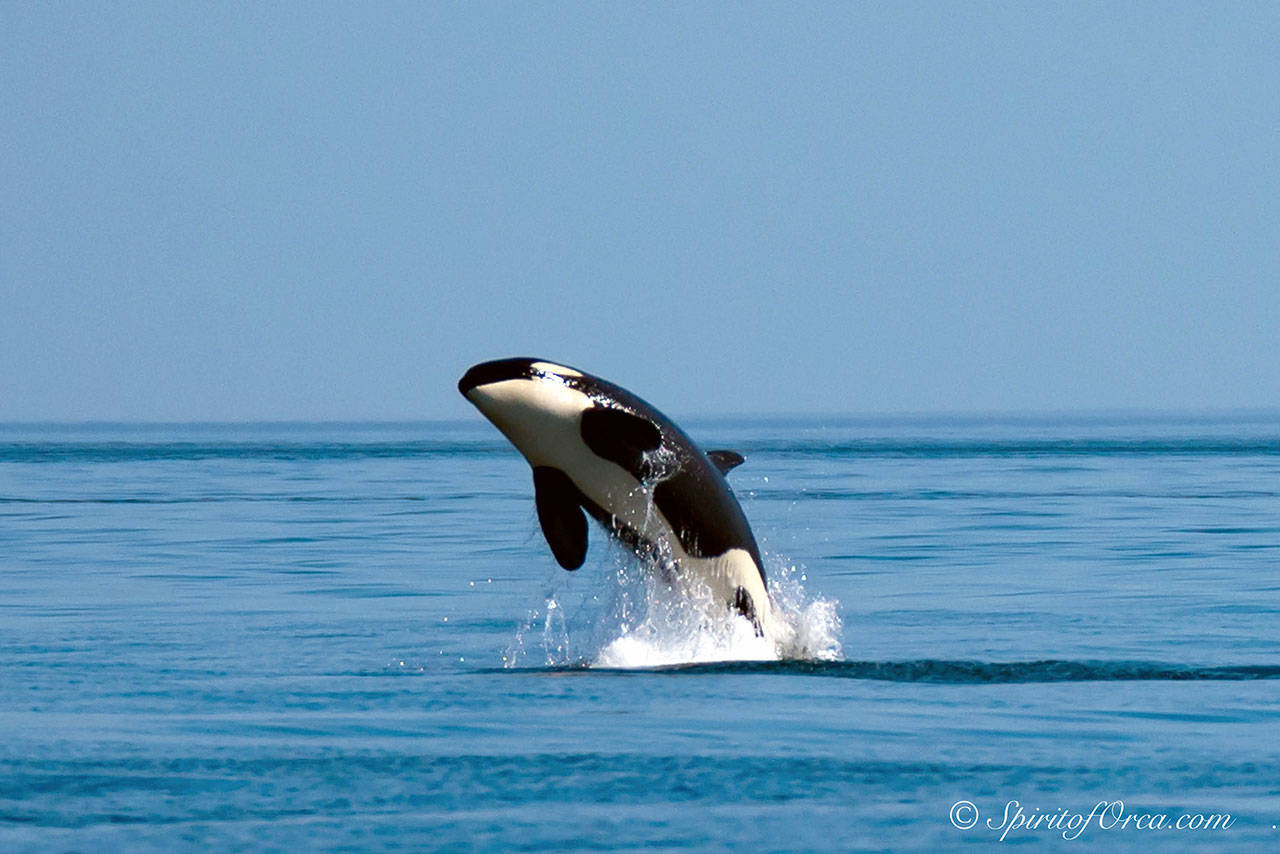
SEATTLE — Over the years, scientists have identified dams, pollution and vessel noise as causes of the troubling decline of the Pacific Northwest’s resident orcas. Now, they may have found a new surprising culprit: pink salmon.
Four salmon researchers were perusing data on the website of the Center for Whale Research, which studies the orcas, several months ago when they noticed a startling trend: that for the past two decades, significantly more of the whales have died in even-numbered years than in odd years.
In a newly published paper, they speculate that the pattern is related to pink salmon, which return to the Salish Sea between Washington state and Canada in enormous numbers every other year — in odd-numbered years — though they’re not sure how.
They suspect that the huge runs of pink salmon, which have boomed under conservation efforts and changes in ocean conditions in the past two decades, might interfere with the whales’ ability to hunt their preferred prey, chinook salmon.
Given the dire plight of the orcas, which officials say are on the brink of extinction, the researchers decided to publicize their discovery without waiting to investigate its causes.

Salmon researcher Greg Ruggerone, one of a group of scientists who noticed a startling trend about the deaths of endangered southern resident orca whales, stands with a chart showing various salmon species his office. (The Associated Press)
“The main point was getting out to the public word about this biennial pattern so people can start thinking about this important, completely unexpected factor in the decline of these whales,” said one of the authors, Greg Ruggerone.
“It’s important to better understand what’s occurring here because that could help facilitate recovery actions.”
Ruggerone, president of Seattle-based Natural Resources Consultants and former chairman of the Columbia River Independent Scientific Advisory Board, and the other authors — Alan Springer of the University of Alaska at Fairbanks, Leon Shaul of the Alaska Department of Fish and Game, and independent researcher Gus van Vliet of Auke Bay, Alaska — have previously studied how pink salmon compete for prey with other species.
As news stories chronicled the struggles of the orcas last year — one whale carried her dead calf on her head for 17 days in an apparent effort to revive it — the four biologists looked at data on the Center for Whale Research’s site. Thanks to their previous research, it took them only a few minutes to recognize a trend that had escaped the attention of other scientists.
“We know that some are good years for the whales and some are bad years, but we hadn’t put it together that it was a biennial trend,” said Ken Balcomb, the center’s founding director, one of the foremost experts on the Southern Resident orcas.
Further analyzing the data, the researchers found that from 1998 to 2017, as the population of whales decreased from 92 to 76, more than 3.5 times as many newborn and older whales died during even years — 61, versus 17 in odd years. During that period, there were 32 successful births during odd years, but only 16 during even years.
That biennial pattern did not exist during a prior 22-year period from 1976 to 1997, when the whale population was recovering from efforts to capture orcas for aquarium display, the researchers said.
But in 1998, salmon harvests were curtailed amid efforts to boost runs decimated by overfishing, pollution and habitat loss. A strong change in ocean conditions occurred around the same time, benefiting pink salmon especially by increasing the abundance of zooplankton, which make up much of the pink salmon’s diet.
The combined effect of the ocean changes and fishing restrictions has greatly benefited the pinks, which are by far most numerous salmon species in the North Pacific.
When they return to the Salish Sea, there are about 50 for each of the bigger, fattier chinook. Nearly all pinks return to their natal streams in odd years, completing their two-year life cycle, unlike other salmon, which stay in the ocean longer.
Meanwhile, chinook populations have continued to struggle — the dearth of chinook is considered the most severe threat to the orcas — and many scientists say they will continue to do so unless four dams on the Lower Snake River are breached.
The researchers speculate that the blossoming numbers of pinks in the Salish Sea during odd-numbered years have interfered with the echolocation the orcas use to hunt increasingly sparse chinook. The orcas almost never eat pink salmon.
Because the orcas are such large mammals, the theory goes, the stress caused by the pinks in odd years would not affect their mortality rates and reproductive rates until the following year — and that’s why more die in even years.
Another possibility is that presence of pinks means less food for the chinook — and thus less food for the orcas, Ruggerone said.
The researchers also put forth a contrary hypothesis: that the presence of pinks somehow enhances the orcas’ hunting, improving their survival in odd-numbered years — though they say they have no reason to believe that’s the case.
