
Peninsula Daily News and The Associated Press
SEATTLE — State agriculture officials will decide soon whether to propose spraying a biological pesticide over 10,500 acres across seven sites in Western Washington to kill leaf-eating gypsy moths.
None of the proposed sites is in Clallam or Jefferson County, although one European gypsy moth was found at Fort Worden last summer.
The proposed sites are Kent, Tacoma, Vancouver, Nisqually, Lacey, Gig Harbor and Seattle’s Capitol Hill neighborhood.
At the same time, Oregon agriculture officials are proposing to spray about 8,000 acres over the Portland area next spring.
If Washington proceeds, it would conduct three aerial sprayings, seven to 10 days apart, in April.
“This isn’t an experiment,” said Clint Burfitt, who manages Oregon Agriculture Department’s pest program.
“We know the results of this project are safe and predictable. We know it’s safe for humans and non-targets.”
In Oregon, state officials propose spraying in mid-April by helicopter over targeted areas of Forest Park, north Portland and Hayden Island with three treatments.
“This is a preliminary proposal,” Burfitt said. “We’re still gathering information on how best and how to respond.”
In October, a panel of experts recommended that Washington and Oregon spray areas where Asian gypsy moths were detected in 2015.
The panel also recommended spraying in Seattle’s Capitol Hill neighborhood, where 22 European gypsy moths were found.
The group included federal and state agricultural officials, as well as experts from Canada, University of Washington and University of California, Riverside.
Last summer, Washington state found 42 gypsy moths in six counties, including 10 of the Asian variety.
In August, Capital Press, an agricultural newspaper based in Salem, Ore., said Asian gypsy moths had been found at the Port of Tacoma, Gig Harbor and near Fife in Pierce County.
In addition to the moths in Seattle, four European moths were trapped on Steamboat Island in Thurston County, one at Fort Worden in Jefferson County and one in Port Orchard in Kitsap County, Capital Press said.
The Oregon Department of Agriculture trapped 14 gypsy moths last summer, including two Asian gypsy moths in the Portland area.
Asian gypsy moths have yet to permanently establish in the U.S., and agriculture officials say they want to prevent the destructive insects from taking hold.
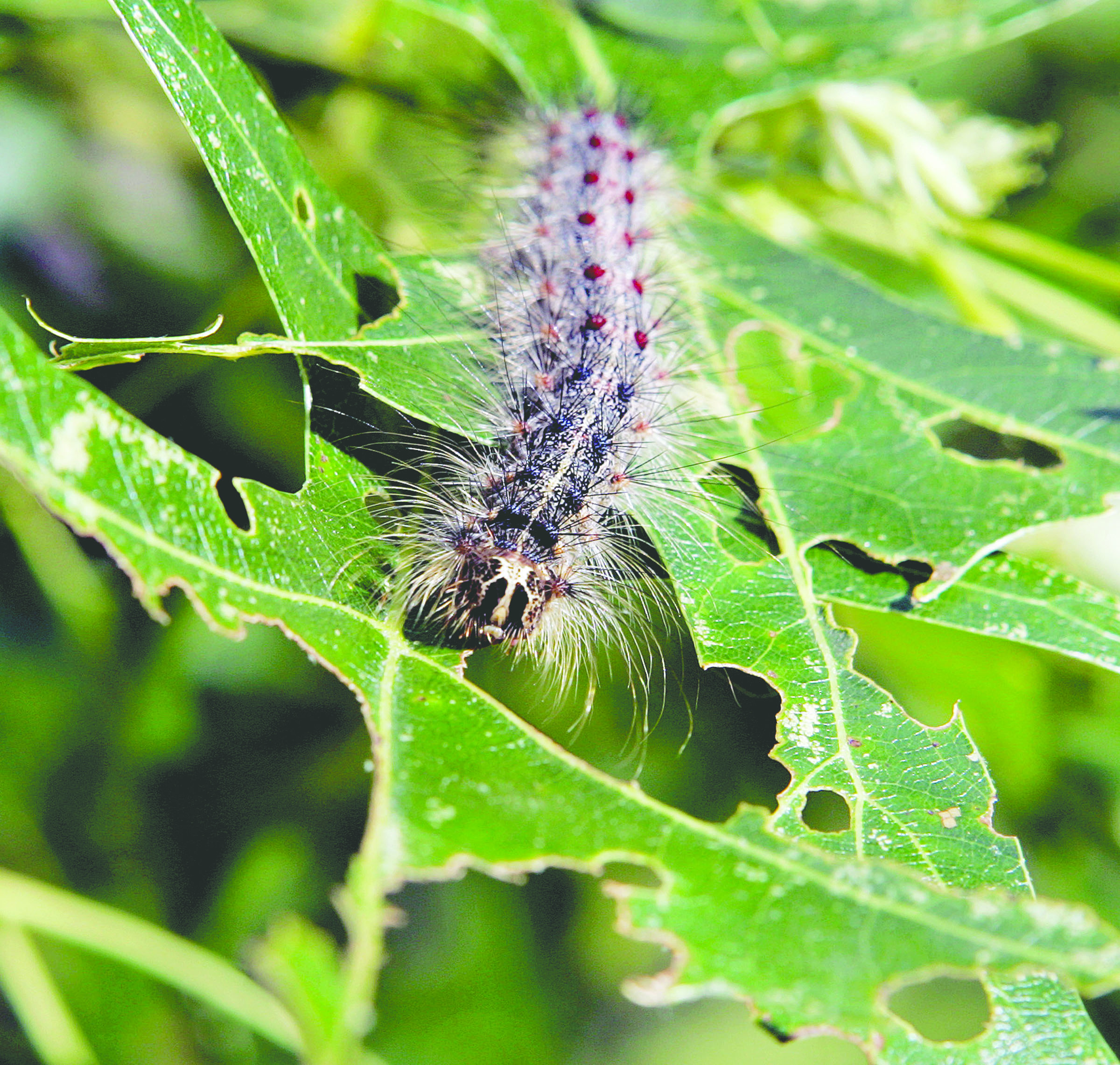
Gypsy moths devour shrubs and trees and can make forests more vulnerable to other problems, leading to possible quarantines on Northwest agricultural products such as Christmas trees and raw timber.
“The gypsy moth is a serious invasive pest that can cause great damage to our state,” Washington’s Agriculture Director Derek Sandison told state senators at a hearing in Olympia in November.
Aerial spraying of a moth-killing insecticide has been controversial in the past.
In 2000, a Washington state plan to spray over two Seattle neighborhoods brought out passionate opposition.
A citizens group unsuccessfully sued in King County Superior Court to stop the aerial insecticide spraying.
Asian gypsy moths have not been found in the state since 1999. Unlike the European variety, they are considered more destructive because they can fly and spread more rapidly.
Officials believe the pests arrived on ships from Asia, particularly from Far East Russia, as thousands of steel plates are imported from areas across the Pacific that are infested with Asian gypsy moth.
Washington and Oregon officials said they would do environmental assessments, reach out to stakeholders and get extensive public comment before finalizing any spraying plans.
The states would use a biological insecticide called bacillus thuringiensis kurstaki, commonly known as Btk, a bacterium found naturally in the soil.
The pesticide is sprayed on foliage and kills the moths that eat the leaves or needles.
State officials say it is widely used, safe and effective and has been approved for use in organic farming.
Jim Marra, Washington’s pest program manager, told state senators in November that the pesticide has an excellent safety record and targets only moths and butterflies with a similar history life.
The Washington State Department of Health says on its website that the pesticide Btk is not toxic to humans and that a vast majority of people living in sprayed areas report no symptoms.
Even so, the state agency recommends that people in the spray area minimize their exposure.