
By Charlie Bermant
Peninsula Daily News and The Associated Press
PORT TOWNSEND — A 10-year study of Southern Resident orcas, which found that the orcas are among the most contaminated marine mammals, used input from the Port Townsend Marine Science Center.
“As the top predators, orcas’ health depends on the entire ecosystem, so they are a reflection of what is happening in the [Puget] Sound,” said Chrissy McLean, the marine program coordinator for the center based at Fort Worden State Park.
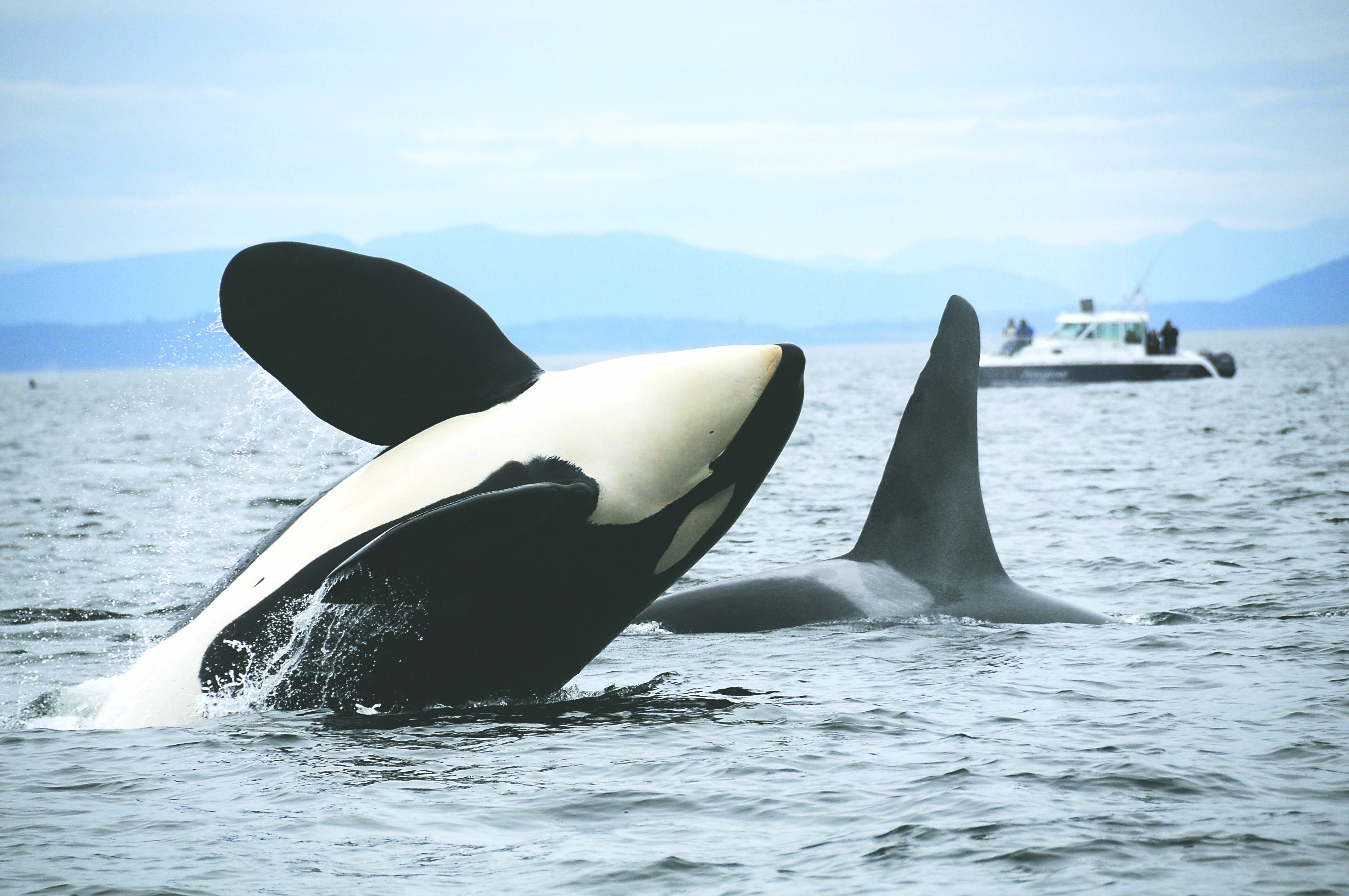
The report by the National Oceanic and Atmospheric Administration summarizes a decade of research findings that reveal aspects of the lives of a small population of endangered orcas — known as the Southern Resident orcas — that frequent the inland waters of Washington state.
The marine science center is a partner in the preparation of the report, and its activities support the public action component suggested by the report’s authors.
“We are hoping that people will become whale-wise,” said NOAA Fisheries Seattle branch chief Lynne Barre during a Wednesday press conference.
“We want to educate people about the effect they have on the environment, which can translate to the effects they have on marine mammals as well.”
The marine science center has two orca-related exhibits: a skeleton display and an interactive component that transmits live whale calls from 12 microphones throughout Puget Sound.
The report released Wednesday said that despite recovery efforts — including new rules that prevent vessels from coming within 200 yards of any orca and designated critical habitat — orcas continue to struggle to recover, and more long-term work needs to be done to ensure survival.
Pollutants were found to be particularly high in young orcas.
Orcas can be found in many oceans, but the distinct Puget Sound population can be found most summer months and fall in Washington state waters.
They primarily eat fish, rather than other marine mammals.
They travel in three families, or the J, K and L pods. Whales from the same pod tend to spend most of their time together.
Until recently, scientists didn’t know exactly where orcas went in the winter months. Using acoustic monitoring and satellite tags, they’ve been able to track the orcas’ movements as they moved up and down the coast.
Scientists have also found that chinook from the Fraser River in British Columbia make up the bulk of the orcas’ summer diet.
Genetic tools have been used to understand what the orcas eat, how they mate and their relationship with each other.
“We are in a much better situation with the information we have now,” Barre said Wednesday.
The report says orcas prefer to eat chinook and consume fish such as halibut; hunt less, travel more and call louder when more vessels are in the area; head to the outer coast during the winter, foraging as far south as Central California and eating salmon from the Columbia and Sacramento rivers; and have high levels of banned pollutants such as PCB.
Mysteries remain, though, including why this population hasn’t grown, as well as why certain whales die and how high contamination levels impact a whale’s health and reproduction.
Orcas were listed as endangered in 2005 after local and regional efforts began in the 2000s to conserve them.
Scientists came up with a recovery plan in 2008 after finding that orcas face three key threats: lack of prey, pollution and disturbance from noise and vessel traffic.
The lack of prey prompted NOAA to examine the supply of chinook, the orcas’ main food source, although any proposed limit on fishing has not been discussed.
“We’re still evaluating the ‘take’ side of things,” Barre said.
“We are working with our partners to create a bridge between orca recovery and salmon recovery to focus to help sustain a prey base in the long term.”
The unique population, known as Southern Resident killer whales, numbered more than 140 animals decades ago but declined to a low of 71 in the 1970s when dozens of the mammals were captured live to be displayed at marine parks and aquariums across the country. In 2013, there were about 82.
As the depleted populations of some marine mammals have replenished themselves, orcas have failed to do so, the report states.