
By Gillian Flaccus
The Associated Press
WARRENTON, Ore. — A rare environmental success story is unfolding in waters off Oregon and California.
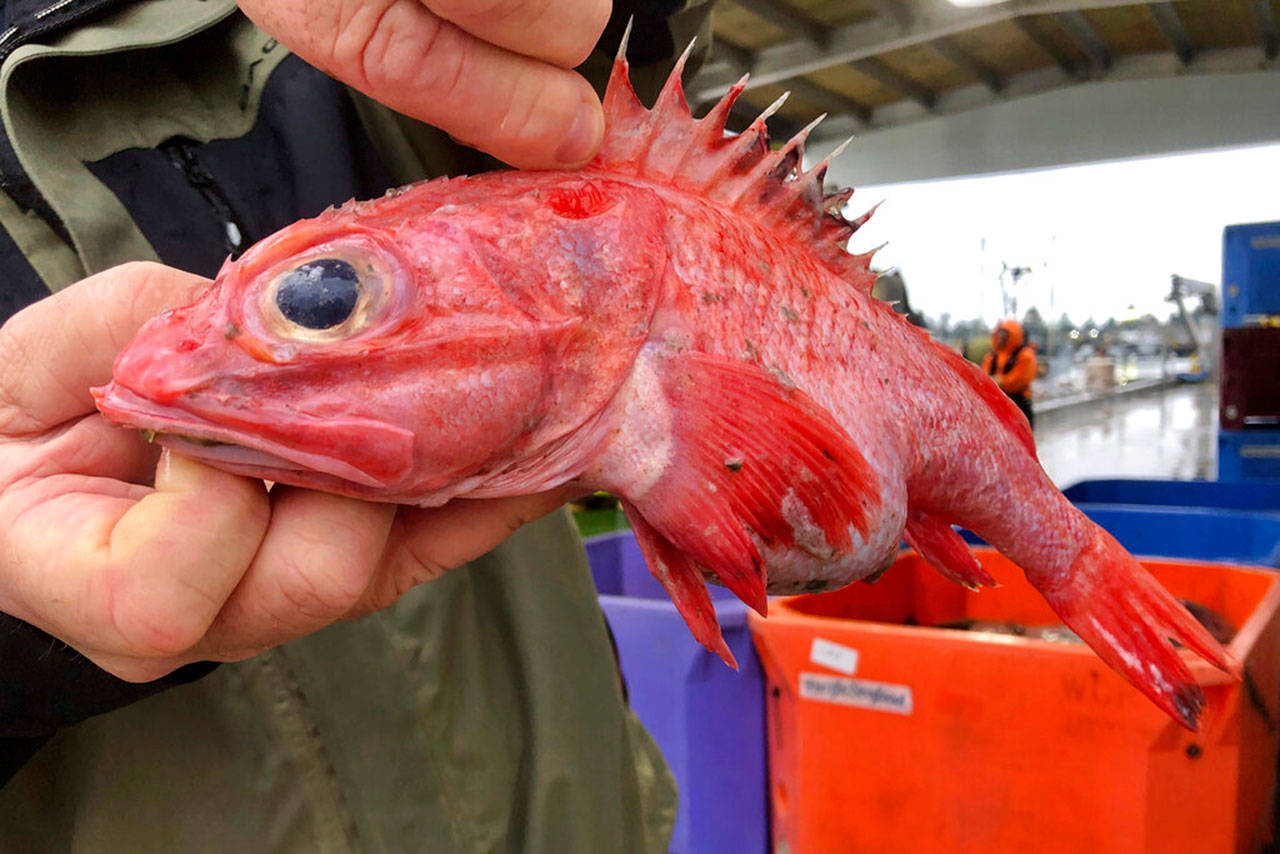
After years of fear and uncertainty, bottom trawler fishermen — those who use nets to scoop up rockfish, bocaccio, sole, Pacific Ocean perch and other deep-dwelling fish — are making a comeback in Oregon and California, reinventing themselves as a sustainable industry less than two decades after authorities closed huge stretches of the Pacific Ocean because of the species’ depletion.
The ban devastated fishermen, but on Jan. 1, regulators will reopen an area roughly three times the size of Rhode Island off Oregon and California to groundfish bottom trawling — all with the approval of environmental groups that were once the industry’s biggest foes.
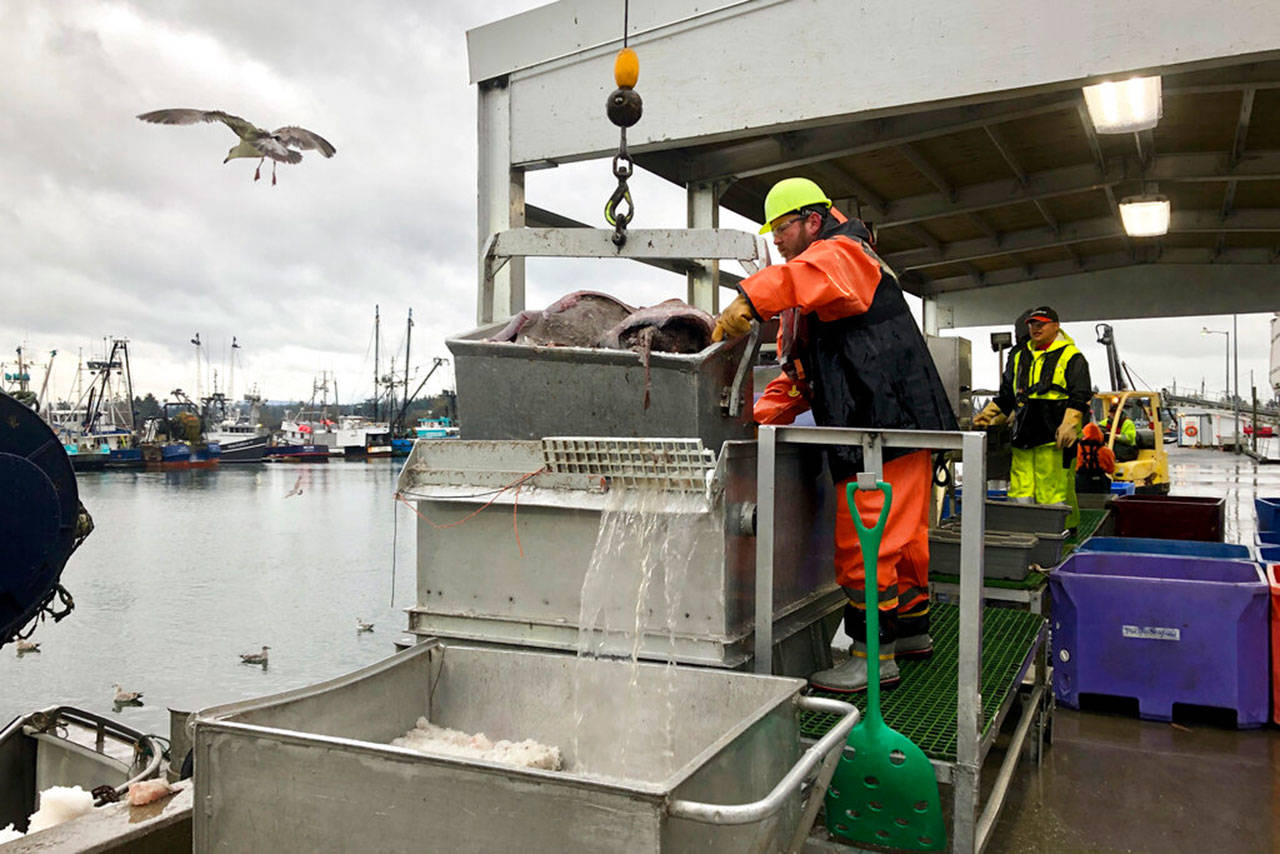
In this Dec. 11, 2019, photo, a worker prepares to dump a bucket of fish onto a conveyor belt for sorting after the fish were unloaded from a bottom trawler containing rockfish and other groundfish species in Warrenton, Ore. (AP Photo/Gillian Flaccus)
The two sides collaborated on a long-term plan that will continue to resuscitate the groundfish industry while permanently protecting thousands of square miles of reefs and coral beds that benefit the overfished species.
In Washington state, recreational and commercial rockfish fishing is still prohibited in Puget Sound and Marine Area 6 (Eastern Strait of Juan de Fuca). There are recreational rockfish fisheries off Sekiu in Marine Area 5 typically held from May 1 to Sept. 30, from the second Saturday in March to the third Saturday in October off Neah Bay, west of the Bonilla-Tatoosh Line and year-round off Neah Bay east of the Bonilla-Tatoosh line.
In recent years, recreational daily limits for rockfish have been trimmed but there have been changes to season schedules to provide more time on the water and more chances to catch more rockfish and other bottomfish species such as lingcod.
There are charter bottomfish trips available out of Seiku and Neah Bay.
Now, fishermen in Oregon and California who see their livelihood returning must solve another piece of the puzzle: drumming up consumer demand for fish that haven’t been in grocery stores or on menus for a generation.
“It’s really a conservation home run,” said Shems Jud, regional director for the Environmental Defence Fund’s ocean program. “The recovery is decades ahead of schedule. It’s the biggest environmental story that no one knows about.”
The process also netted a win for conservationists concerned about the future of extreme deepwater habitats where bottom trawlers currently don’t go.
A tract of ocean the size of New Mexico with waters up to 2.1 miles deep will be off limits to bottom-trawling to protect deep-sea corals and sponges just now being discovered.
“Not all fishermen are rapers of the environment. When you hear the word ‘trawler,’ very often that’s associated with destruction of the sea and pillaging,” said Kevin Dunn, whose trawler Iron Lady was featured in a Whole Foods television commercial about sustainable fishing.
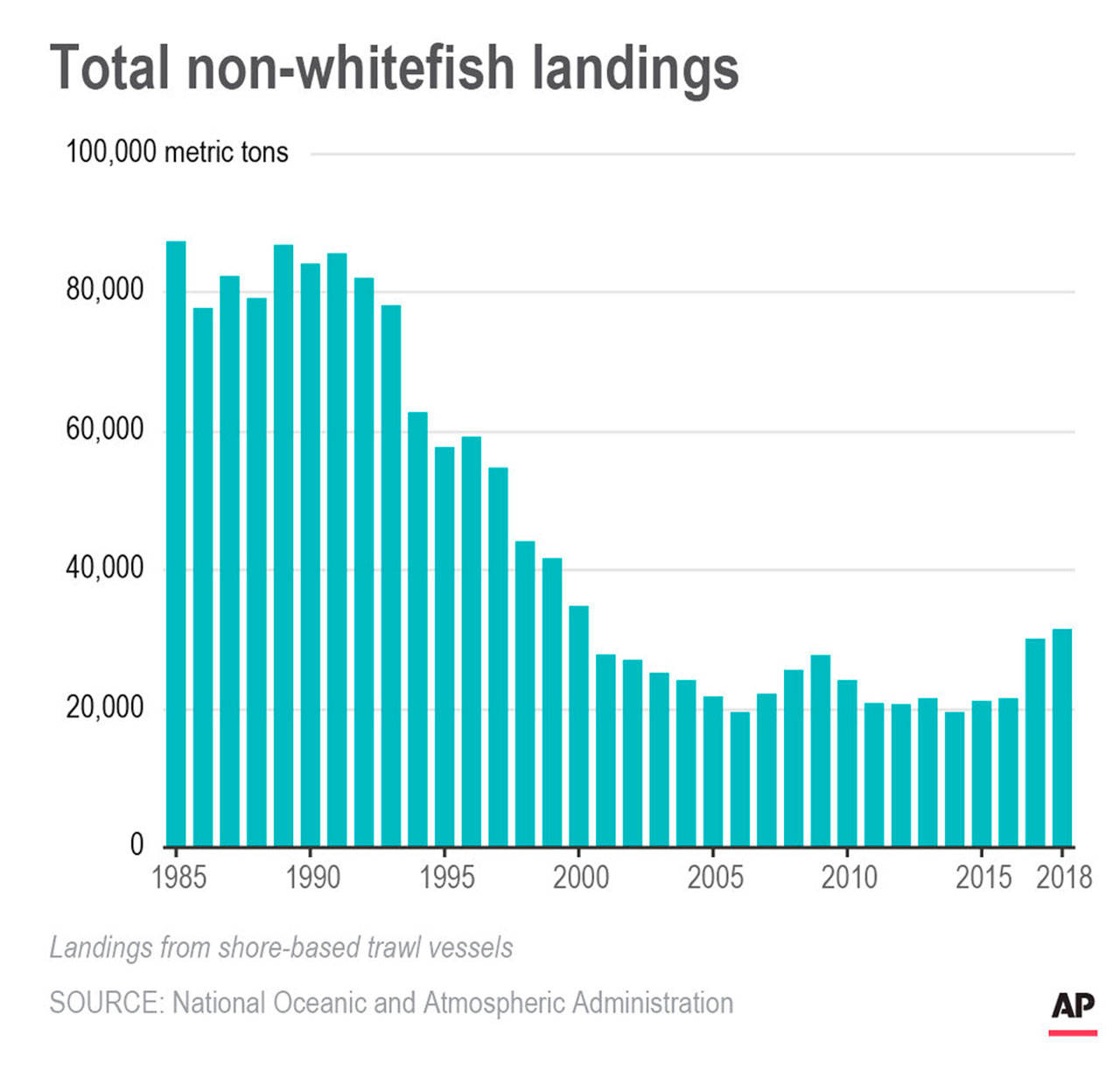
This chart shows total non-whitefish landings from shore-based trawl vessels on the U.S. west coast.
Groundfish is a catch-all term that refers to dozens of species that live on, or near, the bottom of the Pacific off the West Coast.
Trawling vessels drag weighted nets to collect as many fish as possible, but that can damage critical rocky underwater habitat.
The groundfish fishery hasn’t always struggled. Starting in 1976, the federal government subsidized the construction of domestic fishing vessels to lock down U.S. interests in West Coast waters, and by the 1980s, that investment paid off.
Bottom trawling was booming, with 500 vessels in California, Oregon and Washington hauling in 200 million pounds of non-whiting groundfish a year.
Unlike Dungeness crab and salmon, groundfish could be harvested year-round, providing an economic backbone for ports.
But in the late 1990s, scientists began to sound the alarm about dwindling fish stocks.
Just nine of the more than 90 groundfish species were in trouble, but because of the way bottom trawlers fished — indiscriminately hauling up millions of pounds of whatever their nets encountered — regulators focused on all bottom trawling.
Multiple species of rockfish, slow-growing creatures with spiny fins and colorful names like canary, darkblotched and yellow eye, were the hardest hit.
Last year, regulators approved a plan to reopen the 17-year-old Rockfish Conservation Area off Oregon and California, while banning future trawling in extreme-depth waters and making off-limits some habitat dubbed essential to fish reproduction, including a large area off Southern California.
“A fair number of fishermen thought it was a good deal and if it was going to happen, it was better for them to participate than not,” said Tom Libby, a fish processor who was instrumental in crafting the agreement. “It’s right up there with the best and most rewarding things in my career — and I’ve been at it 50 years.”
