
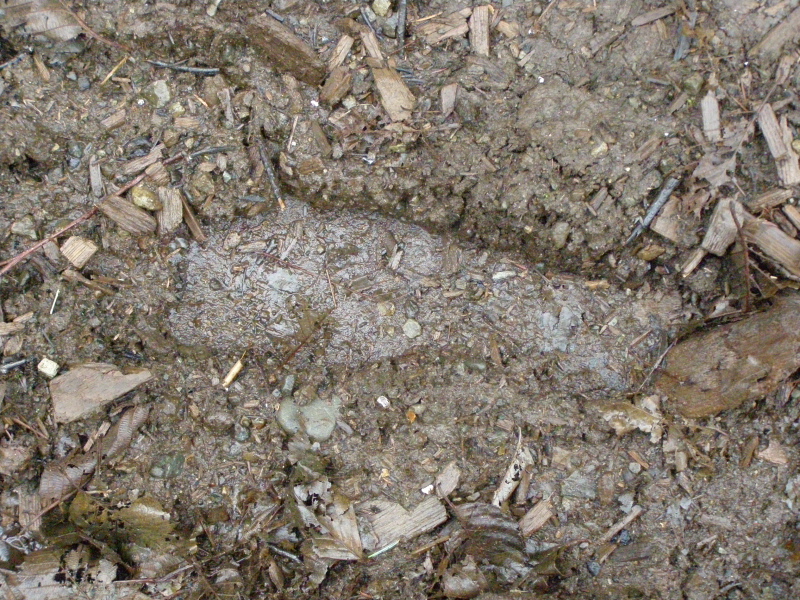
THERE ARE NO widely accepted photographs or videos — or bones or teeth — of Bigfoot.
In findings published last summer, researchers who analyzed more than 30 hair samples reportedly left behind by Bigfoot and similar beasts like the Himalayan Yeti said all of the hairs came from more mundane creatures like bears, wolves, cows and raccoons.
There is no scientific evidence to prove 8-foot-tall ape-like creatures roam the forests of North America.
But that doesn’t dissuade the true believers.
In business since February 2009, the Olympic Project is dedicated to gaining as many facts about local Bigfoot sightings as possible.
(It also monitors sightings in Eastern Washington.)
The Sol Duc Valley is the home of the project’s research base.
It was selected in part, the Olympic Project’s founder says, because there had been three Bigfoot sightings in a year in the area.
“The Olympic Project is an association of dedicated researchers, investigators, biologists and trackers committed to documenting the existence of Sasquatch through science and education,” according to its website.
“Through comprehensive habitat study, DNA analysis and game camera deployment, our goal is to obtain as much information and empirical evidence as we can, with hopes of being as prepared as possible when and if species verification comes to fruition.
“Our studies are conducted in a non-invasive manner with respect and sensitivity to probable habitat we believe this amazing species inhabits.”
Derek Randles, founder of the Olympic Project, is a landscape contractor and licensed guide for Ridge Walkers Unlimited, a group that offers guided wilderness hikes and classes in backpacking.
A Bigfoot researcher for more than 30 years, Randles says his second Sasquatch sighting was up by the Hoko River.
One of Olympic Project’s goals is a “comprehensive camera trap” on the western Olympics.
Randles says in recent years the group has worked with several West End families — and, he adds, there are “core areas” on the Olympic Peninsula which are hot spots for Bigfoot activity.
The decision was made to focus resources and heavily document all encounters and evidence of Bigfoot in those areas, two of which are in the Sol Duc Valley.
“We are sticklers for documentation,” Randles says.
“What we are trying to do is learn everything we can so when/if [scientifically-accepted] species verification happens, we have a large volume of study to hand over.”
For the Olympic Project team, Bigfoot is a somewhat predictable creature.
“The patterns start to paint a picture of what that animal is doing,” Randles says.
For instance, he explains, Bigfoot tracks in the Olympics show that they hang around elk calving areas during the calving season.
Randles says the mystery creatures also study them.
“We are some of Sasquatch’s best entertainment,” he says..
“Some of the best sightings are when we catch them watching us.”
But sometimes, Randles adds, Sasquatches don’t like humans in their space.
“It is very intimidating how much noise they can make without exposing themselves,” he says.
He says they use a variety of vocalizations, pounding sounds and other noises.
Randles has pondered certain questions repeatedly:
■ What would a scientifically recognized sighting of Bigfoot in the Olympics do to the public’s access of local forests?
■ Would species recognition of Bigfoot affect logging?
The Olympic Project offers retreats throughout the summer for members of the public to learn how to become adept at conducting their own Bigfoot research.
There are classes in the basics of track casting, DNA evidence-gathering and audio recording.
The retreats are three to four days and cost from $300 to $400 a person.
Randles describes the retreats as “a chance to rub shoulders with top Bigfoot researchers.”
Go to the Olympic Project website, www.olympicproject.com, for more details.
______
Zorina Barker lives in the Sol Duc Valley with her husband, a logger, and two children she home-schools. She writes the West End Neighbor column for Peninsula Daily News.
Submit items and ideas for the column to her at zorinabarker81@gmail.com or phone her at 360-327-3702. West End Neighbor appears every other Tuesday. Her next column will appear Nov. 4.
