
By Robert Burns
The Associated Press
EDITOR’S NOTE — A version of this story appeared in today’s Peninsula Daily News print edition. To follow this and other national-international news, go to the “Nation/World” button at the top of this page (www.peninsuladailynews.com).
Then go to “AP News” and click. There are also still photos and video at the AP News site.
The Associated Press, a nonprofit cooperative owned by U.S. newspapers, is the largest newsgathering agency in the world.
WASHINGTON — Fearing a Russian invasion and occupation of Alaska, the U.S. government in the early Cold War years recruited and trained fishermen, bush pilots, trappers and other private citizens across Alaska for a covert network to feed wartime intelligence to the military, newly declassified Air Force and FBI documents show.
Invasion of Alaska? Yes. It seemed like a real possibility in 1950.
“The military believes that it would be an airborne invasion involving bombing and the dropping of paratroopers,” one FBI memo said.
The most likely targets were thought to be Nome, Fairbanks, Anchorage and Seward.
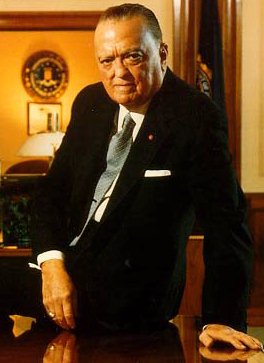
So FBI director J. Edgar Hoover teamed up on a highly classified project, code-named “Washtub,” with the newly created Air Force Office of Special Investigations, headed by Hoover protege and former FBI official Joseph F. Carroll.
The secret plan was to have citizen-agents in key locations in Alaska ready to hide from the invaders of what was then only a U.S. territory.
The citizen-agents would find their way to survival caches of food, cold-weather gear, message-coding material and radios. In hiding they would transmit word of enemy movements.
This was not civil defense of the sort that became common later in the Cold War as Americans built their own bomb shelters. This was an extraordinary enlistment of civilians as intelligence operatives on U.S. soil.
This account of the “Washtub” project is based on hundreds of pages of formerly secret documents.
The heavily censored records were provided to The Associated Press by the Government Attic, a website that publishes government documents it obtained through the Freedom of Information Act.
The Russians never invaded, of course.
So the covert cadre of “stay-behind agents,” as they were known, was never activated to collect and report wartime information from backwoods bunkers.
It was an assignment that federal officials acknowledged (to each other, if not to the new agents) was highly dangerous, given that the Soviet Union’s military doctrine called for the elimination of local resistance in occupied territory.
To compensate for expected casualties, a reserve pool of agents was to be held outside of Alaska and inserted by air later as short-term replacements.
This assignment was seen as an easier sell to potential recruits because “some agents might not be too enthusiastic about being left behind in enemy-occupied areas for an indefinite period of time,” one
planning document noted dryly.
“Washtub” was not, however, a washout.
It operated from 1951-59, according to Deborah Kidwell, official historian of the Air Force Office of Special Investigations, or OSI.
“While war with the Soviet Union did not come to Alaska, OSI trained 89 SBA (stay-behind agents), and the survival caches served peacetime purposes for many years to come,” she wrote in an OSI magazine last year.
With the benefit of hindsight, it would be easy to dismiss “Washtub” as a harebrained scheme born of paranoia.
In fact it reflected genuine worry about Soviet intentions and a sense of U.S. vulnerability in a turbulent post-World War II period.
As the plan was being shaped in 1950, Soviet-backed North Korea invaded South Korea, triggering a war on the peninsula that some in the Pentagon saw as a deliberate move by Moscow to distract Washington before invading Europe.
The previous summer the Soviets stunned the world by exploding their first atomic bomb.
Also in 1949, the U.S. locked arms with Western Europe to form the NATO alliance, and Mao Zedong’s revolutionaries declared victory in China, adding to American fear that communism was on the march.
“Washtub” was known inside the government by several other codenames, including Corpuscle, Stigmatic and Catboat, according to an official Air Force history of the OSI, which called it one of OSI’s “most extensive and long-running Cold War projects.”
The FBI had its own code word for the project: STAGE.
“Washtub” had two phases.
The first and more urgent was the stay-behind agent program.
The second was a parallel effort to create a standby pool of civilian operatives in Alaska trained to clandestinely arrange for the evacuation of downed military air crews in danger of being captured by Soviet forces.
This “evasion and escape” plan was coordinated with the CIA.
Among those listed as a stay-behind agent was Dyton Abb Gilliland of Cooper Landing, a community on the Kenai Peninsula south of Anchorage.
A well-known bush pilot, Gilliland died in a plane crash on Montague Island in Prince William Sound in May 1955 at age 45.
FBI records say he spent 12 days in Washington D.C., in June-July 1951 undergoing a range of specialized training, including in the use of parachutes.
The agents also got extensive training in coding and decoding messages, but this apparently did not always go well.
Learning these techniques was “an almost impossible task for backwoodsmen to master in 15 hours of training,” one document said. Details in the document were blacked out.
Many agent names in the OSI and FBI documents also were removed before being declassified.
None of the indigenous population was included.
The program founders believed that agents from the “Eskimo, Indian and Aleut groups in the Territory should be avoided in view of their propensities to drink to excess and their fundamental indifference to constituted governments and political philosophies. It is pointed out that their prime concern is with survival and their allegiance would easily shift to any power in control.”
Recruiters pitched patriotism and were to offer retainer fees of up to $3,000 a year (nearly $30,000 in 2014 dollars).
That sum was to be doubled “after an invasion has commenced,” according to one planning document.
The records do not say how much was actually paid during the course of the program.
At least some recruits were fingerprinted and all were secretly screened by the FBI for signs of disloyalty.
The FBI linked one candidate, a resident of Stony River, to a list of names in a 1943 bureau file on “Communist Party activities, Alaska” that tracked U.S. subscribers to a magazine called “Soviet Russia Today.”
Another candidate was flagged — falsely, it turned out — as a likely communist sympathizer based on an FBI informant’s tip about membership in the “Tom Paine Club, Communist Party, Spokane, Washington.”
One was described in a May 1952 OSI memo to the FBI office in Anchorage as the postmaster in Kiana, Alaska; another was manager of a hotel in Valdez. One agent candidate worked for a tin-mining company at Lost River on the Seward Peninsula, one of the higher-priority areas for placing “Washtub” stay-behind agents.
The peninsula is named after Secretary of State William H. Seward, the primary negotiator in the 1867 purchase of the Alaska territory for $7.2 million from czarist Russia.
The FBI tapped its local contacts, including federal judges, the head of the U.S. Fish and Wildlife Service in Anchorage, an Anchorage physician and others for names of reliable Alaskans to be approached.
“Washtub’ was crafted in painstaking detail. But just as the first trained agents were to be put in place in September 1951, Hoover pulled out, leaving it in OSI’s hands, even though one month earlier his top lieutenants had advised him the FBI was “in these programs neck deep,” with an “obvious and inescapable” duty to proceed.
Hoover worried that when the shooting in Alaska started the FBI would be “left holding the bag.”
“If a crisis arose we would be in the midst of another ‘Pearl Harbor’ and get part of the blame,” Hoover wrote in the margin of a Sept. 6, 1951, memo from an aide, to whom Hoover added one final order: “Get out at once.”
Three years later, Hoover was pulled back in, briefly.
In October 1954, an envelope and a typewritten letter containing a coded message were turned over to the FBI by a woman in Anchorage. It had been misaddressed by the anonymous sender in Fairbanks.
Espionage was suspected, triggering flurries of FBI internal memos. Hoover was informed that bureau code breakers were urgently trying to decipher the message.
They never broke the code but eventually declared the crisis over. The mystery message, they determined, was not from an enemy spy.
It was a “practice message” sent errantly by one of the “Washtub” agents.
