
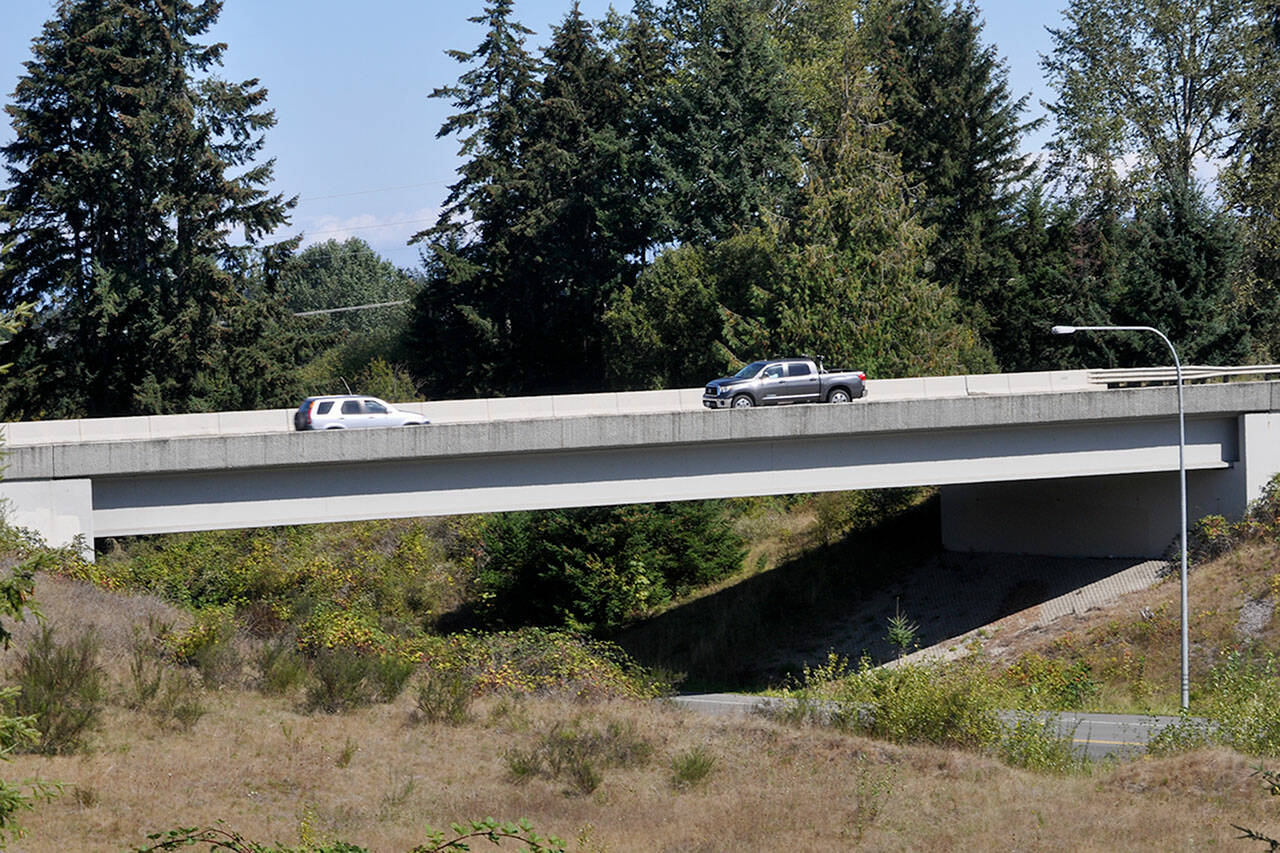
SEQUIM — Funding for a $30.5 million Sequim safety corridor project could hang in the balance of a general election initiative vote.
Funds for the U.S. Highway 101 East Sequim Road Project are housed in the state’s Move Ahead Washington grant program and funded by the Climate Commitment Act (CCA), which would be repealed if Initiative 2117 is passed Nov. 5, Sequim lobbyist Davor Gjurasic told Sequim City Council members during a Sept. 9 work session.
“If that passes, there will be legislators and (state Department of Transportation staff) that try to rearrange the project lists (saying), ‘Hey we just started digging out here, there’s a hole in the street (and) Simdars hasn’t even broken ground yet. We have to prioritize this versus that,’” Gjurasic said.
Gjurasic said they’d have to “put pressure on (legislators)” to keep the Sequim project going forward.
“I’ve learned especially with transportation projects, if they haven’t broken ground, the money’s up for grabs,” he said.
Full funding for the project moved up on the Move Ahead project list last year from the 2031-33 biennium to the 2025-27 biennium after lobbying efforts from Sequim, Clallam County and Jamestown S’Klallam Tribe officials.
The project would finish the incomplete Simdars Road interchange and create frontage roads from Palo Alto Road and Happy Valley Roads off U.S. Highway 101.
The Simdars Interchange was slated to be completed in August 1999 with the opening of the 4.6-mile U.S. Highway 101 bypass through Sequim, but a lack of state funds left the project incomplete.
Advocates over the decades said that completing the bypass would help economic development in Sequim’s east side and increase safety for Palo Alto and Happy Valley roads.
Design elements are still under consideration.
At the work session, Sequim city manager Matt Huish said the Sequim project is on a list of 30 others across Washington, and municipalities are vying to get on the top of the list because, if I-2117 passes, “You’re going to probably be rearranged and never see that funding coming through.”
Gjurasic said there are “mega projects” along the Interstate 5 corridor using a large sum of the funds, and it will be important to connect with legislators about the project’s importance.
State Rep. Steve Tharinger, D-Port Townsend, said there is a possibility the Simdars project could be shelved if I-2117 passes. He said the influx of funds from the CCA ($1.8 billion in 2023) freed up other transportation funds for projects like Simdars as it “lessens competition.”
Tharinger clarified that CCA funds don’t go to Simdars but to other projects, such as installing charging stations, providing rebates for people who buy electric vehicles and free bus passes.
“Exclusive of the money that funds the budgets, we need to address climate change, and this is a mechanism to do that,” he said.
Tharinger said if I-2117 passes, it could impact the state’s transportation budget in general and that some large projects on I-5 that are over budget, underfunded and ongoing could absorb millions of more dollars and jeopardize projects like Simdars.
Hallie Balch, director of communications for Let’s Go Washington, a pro-Initiative 2117 political action committee, said in an email that “legislators combined the Move Ahead Washington budget with the CCA budget so that they could claim that transportation projects would be affected by the repeal of the CCA.”
She said “CCA dollars cannot be used for road and bridge maintenance, therefore, (the Sequim) project should not be affected by the repeal of the CCA since all the existing monies will still remain in the Move Ahead Washington transportation budget.”
She said in the CCA’s expenditure report, no money is allocated to roads and bridges.
I-2117
According to a legislative summary of the initiative, the measure would repeal the Climate Commitment Act and the creation and modification of a “cap-and-invest” program to reduce greenhouse gas emissions by specific entities.
The CCA was enacted in 2021 to reduce statewide greenhouse gas emissions by setting an emissions limit, or cap, and then lowering the cap over time to help meet greenhouse gas reduction commitments previously set in state law.
Under the act, large greenhouse gas pollution emitters must either reduce their carbon emissions or pay for “allowances” to cover their emissions through through auctions administered by the state Department of Ecology.
There are exceptions for entities under 25,000 metric tons of carbon dioxide equivalent each year, and certain business types such as those for agriculture or the transportation of agricultural products who are not required to obtain allowances.
Under the act, 35 percent of funds must go to projects with a direct benefit for people in communities disproportionately impacted by environmental harms, and 10 percent for projects with tribal support.
The Office of Financial Management reported I-2117 would “reduce state revenue from carbon allowance auctions by $3.8 billion and reduce state expenditures by $1.7 billion between the effective date of the initiative (Dec. 5, 2024) and June 30, 2029.”
Proponents of I-2117 say the CCA won’t decrease carbon outputs and has increased the cost of energy, utilities, groceries and gas. Proponents for maintaining the CCA and voting against I-2117 say it would cripple the state’s transportation system and not allow for necessary infrastructure funding for new ferries, fish passages and more.
Tharinger said I-2117 doesn’t guarantee gasoline prices will go down as there are many factors that go into it.
For information from “Yes on I-2117” proponents, visit letsgowashington.com. For more from those opposed, visit No2117.com.
________
Matthew Nash is a reporter with the Olympic Peninsula News Group, which is composed of Sound Publishing newspapers Peninsula Daily News, Sequim Gazette and Forks Forum. Reach him at matthew.nash@sequimgazette.com.
