
By Nicholas K. Geranios
The Associated Press
SPOKANE — Talks are scheduled to begin this week in Washington, D.C., to modernize the document that coordinates flood control and hydropower generation in the United States and Canada along the 1,200-mile Columbia River.
Northwest politicians have been pushing for years to renegotiate the Columbia River Treaty between the two countries. The lawmakers are particularly keen to eliminate a so-called “Canadian Entitlement” they contend is too favorable to Canada.
The State Department announced last week that talks to revise the 1964 treaty would be held today and Wednesday.
“The Columbia River Treaty is integral to so much of the Pacific Northwest way of life — from our economy, to our environment, to our culture and heritage — so it’s hard to overstate the importance of updating this treaty to meet modern-day issues,” Democratic Sen. Patty Murray of Washington said last week.
In addition to hydropower and flood control, the existing treaty provides benefits such as irrigation, municipal and industrial water, navigation and recreation.
But environmental groups and Native American tribes contend it doesn’t do enough to help endangered salmon runs.
Washington state’s congressional delegation in 2014 began urging the federal government to renegotiate the treaty, which expires in 2024.
“These vital negotiations have been long overdue,” said Republican U.S. Rep. Dan Newhouse, who represents central Washington.
The Columbia River begins in Canada but flows mostly in the United States. It forms much of the border between Washington and Oregon before it plunges into the Pacific Ocean.
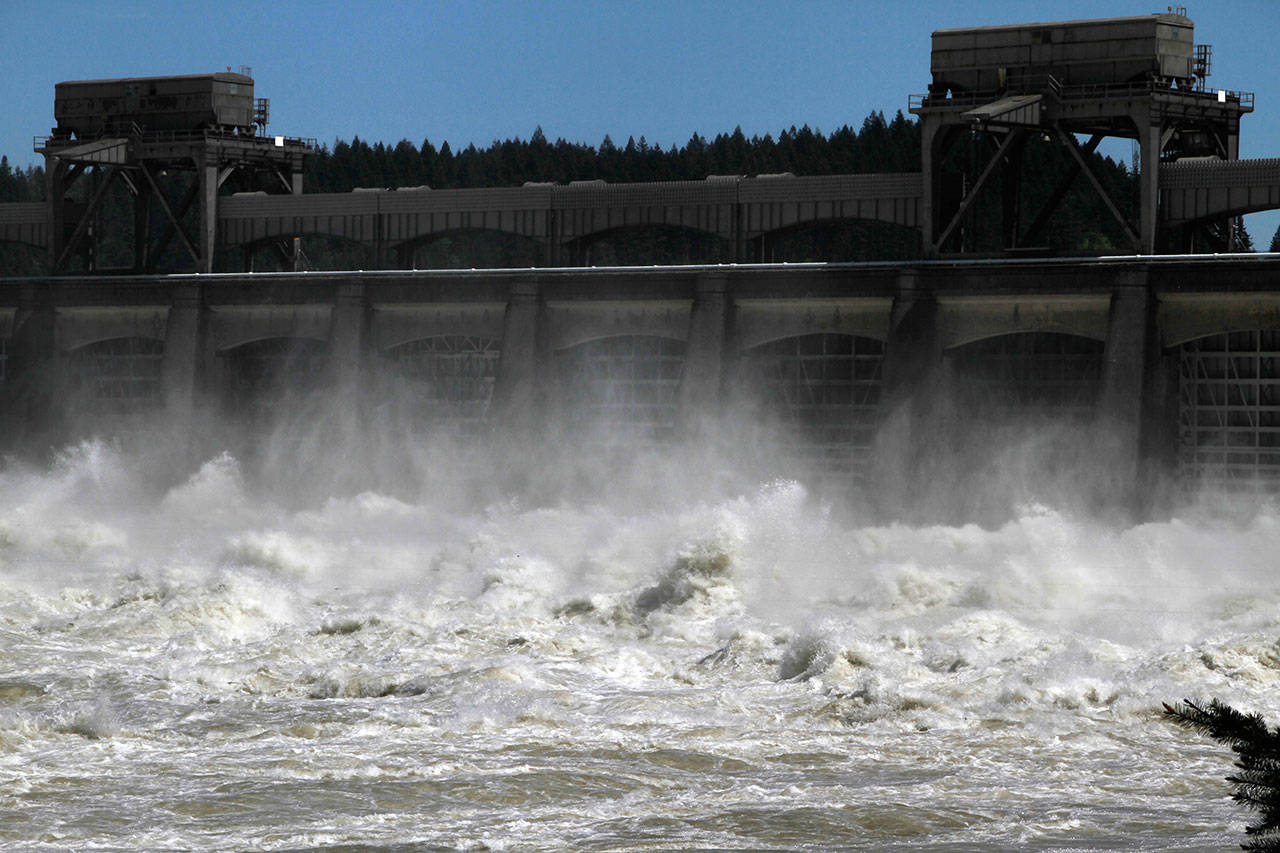
There are some 150 hydroelectric projects on the Columbia and its tributaries. That includes 18 so-called main stem dams on the Columbia and its main tributary, the Snake River, according to the Army Corps of Engineers.
Those dams are blamed for decimating what were once some of the world’s greatest salmon runs.
The U.S. government has said the new talks should include environmental goals, such as increasing stream flows to benefit salmon.
The U.S. also wants reconsideration of the “Canadian Entitlement,” which provides Canada with $250 million to $350 million a year worth of electrical power in exchange for storing water in huge reservoirs that can be released to boost U.S. hydropower generation.
The cost is higher than anticipated by the United States when the treaty was signed.
“It is estimated that our constituents overpay this entitlement by 10 times the reciprocal benefit,” Republican Rep. Cathy McMorris Rodgers of Washington has said.
Those payments affect the monthly bills of 6.4 million U.S. electric customers from 80 utilities in the Pacific Northwest.
British Columbia officials have said they need a better accounting of the benefits Americans get from the vast amounts of water stored north of the border.
“It is imperative that we ensure that any updated treaty is beneficial for both the United States and Canada,” said Democratic Rep. Peter DeFazio of Oregon. “I’m hopeful the negotiations are completed quickly.”
Environmental groups want to ensure conservation measures are given greater weight in these talks.
John Osborn, a Spokane physician who is a member of the Columbia River Roundtable group, pointed out that Memorial Day marked the Vanport flood’s 70th anniversary.
The flood wiped out the city of Vanport, just outside Portland, Ore., killing 15 people and leaving 18,000 homeless. It occurred when a combination of heavy winter snow, warm temperatures and spring rainfall sent torrents down the river, breaking through a railroad embankment serving as a levee.
Osborn said preventing tragedies like the Vanport flood was a major impetus for the original Columbia River Treaty.
The governments of the United States and Canada used the flood to authorize construction of three large storage reservoirs in British Columbia: Duncan, Mica and Keenleyside. The treaty also spurred the construction of Montana’s Libby Dam. The new dams forced thousands of residents from their homes, and permanently flooded valleys.
All told, these new dams doubled the storage capacity of the river basin — and dramatically reduced the river’s natural spring flows.
Meanwhile, Native American tribes in both countries would like the heavily-dammed Columbia to flow more like a natural river, with additional water releases in dry years to aid struggling salmon and steelhead runs. Tribes have also said new negotiations might produce agreement on reintroducing extinct salmon runs above Grand Coulee Dam in Washington state.
“The U.S. government has routinely adopted policies and made decisions which were destructive to the health of the Columbia,” said Michael Marchand, chairman of the Confederated Tribes of the Colville Reservation. He expressed disappointment that Native American tribes are excluded from the actual negotiations.
In British Columbia, residents living along the river likely will seek more stability in reservoir levels.
“We need to rethink dam management to improve river health and restore salmon runs while protecting communities,” Osborn said.
