
Trash pushed over the bluff: Port Angeles regional dump abuse goes back decades
Published 12:01 am Sunday, April 20, 2014
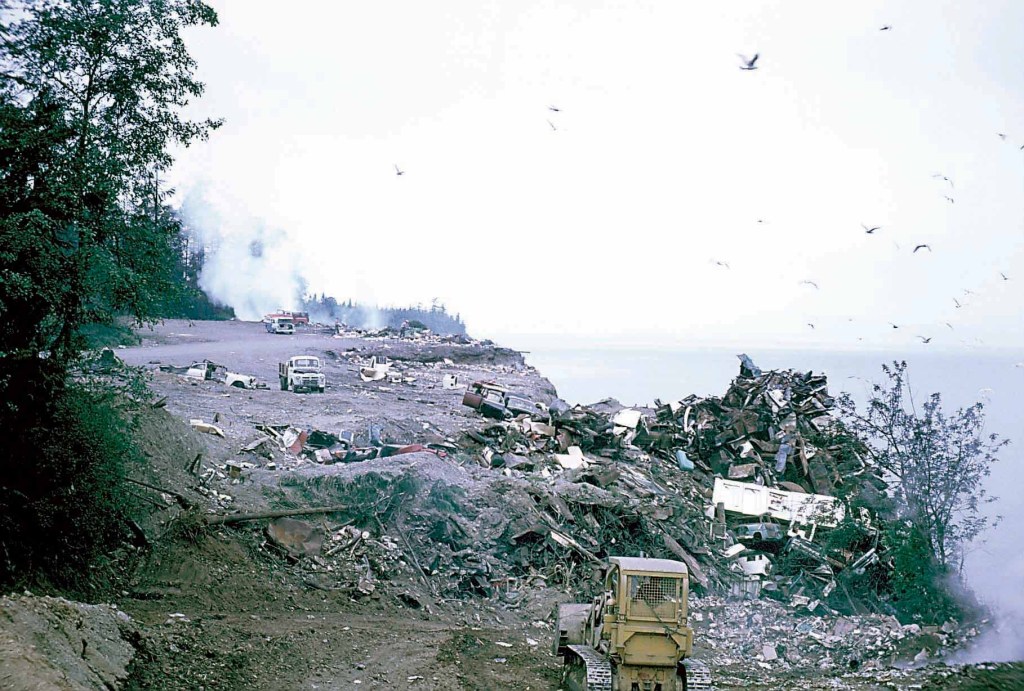
PORT ANGELES — The fragile landfill expected to cost taxpayers $19.6 million to fix sits on an eroding bluff where city and other Clallam County residents freely dumped garbage, cars and other trash from at least 1947 until 1971.
Early disposal methods included pushing cars and other garbage over the bluff to the Strait of Juan de Fuca beach below.
The city, which purchased the site in 1947 from J.R. McDonald and Minnie R. McDonald and closed the regional landfill in 2007, is spending money to shore up a failing bluff that threatens to allow garbage to spill into the Strait.
Last week, City Councilman Brad Collins said the county should have responsibility for a regional landfill.
Bob Martin, public works administrator for Clallam County, said he didn’t “think it’s very realistic” that county commissioners would approve taking the transfer station and defunct landfill off the city’s hands.
On Friday, county and city officials said they are looking toward a solution that may relieve the city of sole responsibility for the facility.
Clallam County board Chairman Mike Chapman said a solution to operating the landfill may involve a regional approach much like that which governs Clallam Transit.
“The governance of the landfill is very much in question,” he said.
City Manager Dan McKeen saw benefits to the suggestion, saying the county and the cities of Port Angeles and Sequim could be involved.
“There would be value because then all three jurisdictions would have a true stake in the outcome of all decisions, too, rather than a single agency, such as the city of Port Angeles,” he said.
City Engineer Mike Puntenney said last week he did not know whether garbage was on the property before the city purchased the land in 1947.
What’s clear is that after the purchase, people dumped, burned and pushed garbage — including cars — over the lip of the bluff and onto the Strait of Juan de Fuca beach below after garbage accumulated.
“Whether it was private citizens or city government or the county, I don’t know,” he said.
The record of landfill operations “is very sketchy,” Puntenney added.
There were two other nearby dump sites on the east side of McDonald Street and on 10th Street where garbage also was routinely dumped and pushed over the bluff, Puntenney said.
According to city records, ownership of the McDonald Street property was unclear.
“Prior to July 1944, all refuse was collected by a private agency or individually hauled and dumped at the northerly end of McDonald Street,” according to the 1970 city report, “Recommended Improvements Solid Waste Disposal City of Port Angeles.”
“In July 1944, the city assumed responsibility for collection and disposal,” the report stated.
“They immediately began dumping at the westerly end of 10th Street and continued this operation until late 1947.
“At this time, the property at the westerly end of 18th Street [the current landfill site] was acquired.
Changes at the facility escalated in the late 1960s and early ’70s, Puntenney said.
■ 1967: The city purchased a D977 Caterpillar bulldozer and began landfill operations at the 18th Street site, compacting and covering the garbage with dirt rather than allowing it to be burned and pushed over the side.
It’s unclear when private individuals were stopped from dumping at the 18th Street site, Puntenney said.
■ 1970: Car bodies were not allowed to be landfilled or dumped, and the city removed the auto hulks that were on the beach.
■ 1971: City and county residents could no longer dump their garbage for free.
In 1972, there were 12 legal private, public and tribal disposal sites in Clallam County, according to the 1972 “Comprehensive Plan for Solid Waste Management, Clallam County.”
The county never owned or ran the city-owned site.
The county consolidated or eliminated dumping operations until the 18th Street landfill, the county-owned Blue Mountain Transfer station and the city-owned Port Angeles Regional Transfer Station on 18th Street were the only refuse-collection sites left.
The City Council approved a $1.4 million contract last week with Seattle-based Anchor QEA to oversee construction of the effort to move 265,000 cubic yards of garbage back from the 18th Street bluff, which sits 11 feet away from the edge, to another part of the landfill.
City officials plan to issue municipal waste bonds to fund the stabilization effort and had pressed the county to approve an ordinance that would require non-recyclable solid waste from the county’s unincorporated areas east of Lake Crescent to be taken to the city’s Regional Transfer Station.
City staff said a countywide flow control ordinance would have reassured bondholders that the transfer station would have a steady stream of revenue, and that would have lowered the interest rate.
County commissioners did not vote on the proposed “flow-control” law, and Chapman said Wednesday that a majority of the commissioners considered the issue dead.
As of now, the city will receive $3.9 million in financial assistance from the state Department of Ecology to fund landfill improvements.
Increased tipping fees also will help pay for the bonds the city plans to sell to finance the project.
A 1972 state Attorney General’s Office opinion appears to lay responsibility for garbage disposal sites squarely at the commissioners’ feet.
In 1970, based on state statute, “the Office of the Attorney General interpreted that it is the duty of the board of county commissioners to provide garbage disposal sites to protect the public health,” according to the 1972 solid waste management report.
The amount the city of Port Angeles paid for the site in 1947 may never be known.
The Feb. 13, 1947, warranty deed from the McDonalds to the city states the couple “for and in consideration of Ten Dollars and other good and valuable considerations ($10) dollars in hand paid, convey and warrant to the city” the property.
Despite the word “convey,” that doesn’t mean the land was purchased for $10.
It was a standard practice to put $10 on the warranty deed whether that was the purchase price or not, county Treasurer Selinda Barkhuis said Friday.
Modern-day warranty deeds now have the purchase price stamped on them.
________
Senior Staff Writer Paul Gottlieb can be reached at 360-452-2345, ext. 5060, or at pgottlieb@peninsuladailynews.com.