
SEQUIM — Sequim researchers are investigating ways to help birds, bats and wind turbines co-exist better in skies over oceans.
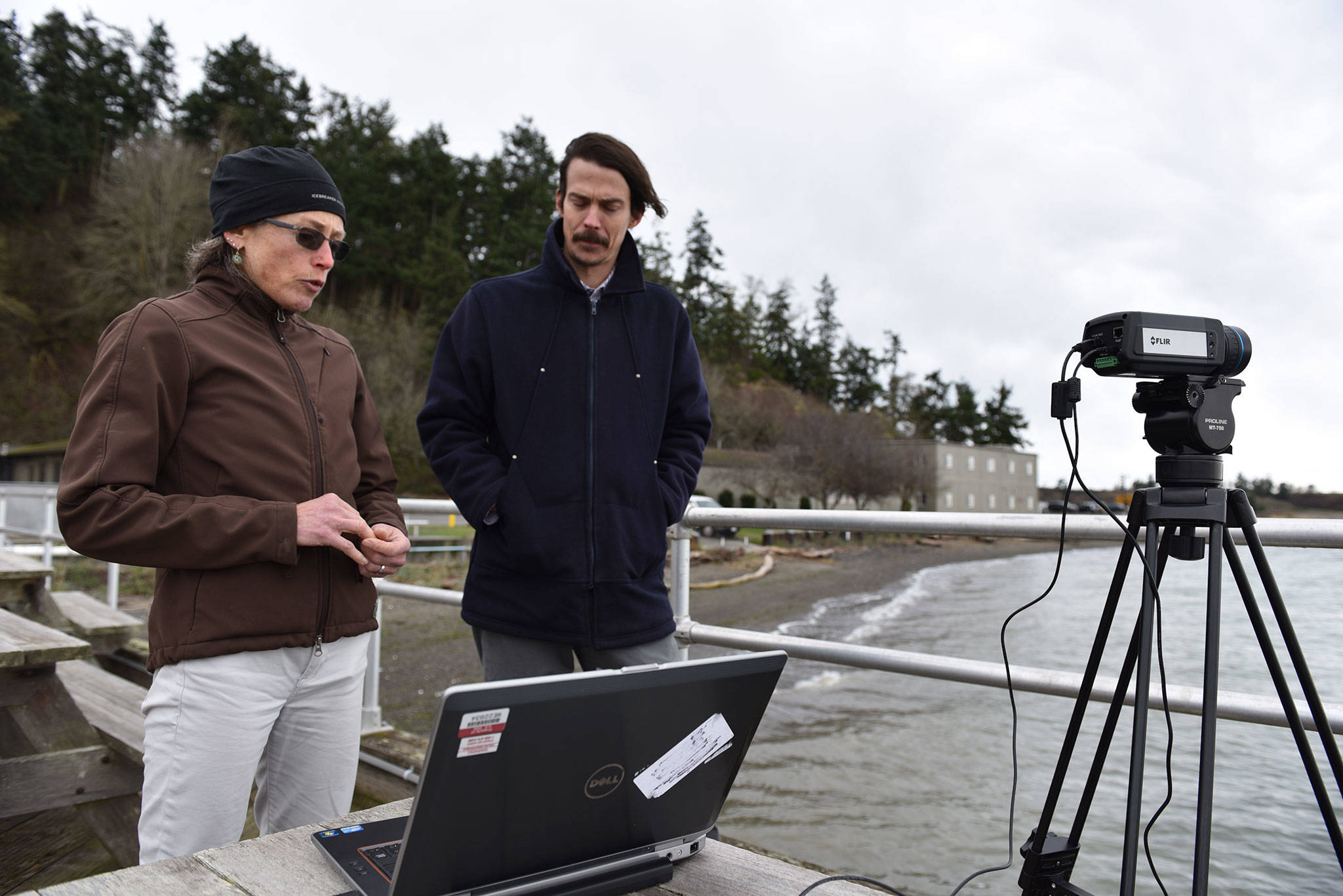
Engineers at the Pacific Northwest National Laboratory’s Marine Sciences Laboratory in Sequim are working with open-source software ThermalTracker to find the best method for capturing flight patterns of winged creatures to help developers locate optimal sites for offshore wind projects.
Shari Matzner, senior research engineer in Sequim, said the software helps identify where birds and bats are flying and if wind projects could be a barrier to flights or are already barriers at existing wind farms.
She said aside from collisions, turbines could affect animals’ expended energy.
“All wild animals have a tight energy budget, and if they have to go out of their way, it could affect their ability to survive,” Matzner said.
Ideally, engineers’ efforts are to help developers identify possible issues impacting birds and bats so that current/future wind farm operations can be adjusted accordingly, she said.
Department of Energy staff are using the software on offshore wind power. They estimate the U.S. could generate at least twice the electricity it currently uses because winds are stronger on the ocean rather than land.
ThermalTracker uses thermal imaging, similarly to night vision goggles, to track bird and bat paths and the frequency of their wing beats over a period of time. The software’s algorithms can translate video and compress 10-second clips into single images to get an animal’s entire path.
Matzner said engineers completed the first version of the software last year. The camera will work in daylight or at night and biologists can look at a spreadsheet of all the tracks.
In turn, they can make assumptions about where birds and bats are traveling and make recommendations to wind-farm developers where to put their farms, Matzner said.
“That’s exactly why this automated processing is important, because to really understand the pattern, you need to make continuous observations, ideally, over several months,” Matzner said.
She said today most field research is based on what biologists see, which can make nighttime observations difficult, particularly for possible offshore wind power sites.
Department of Energy staff said the new technology could allow long-term monitoring, which could mean less labor costs, too.
The Sequim team continues to work on expanding ThermalTracker to have “stereo vision,” or 3-D video, using two thermal cameras to provide depth perception.
Matzner said this could help biologists better identify birds and bats based on their size and what their more specific flight paths may be and if it that conflicts with current and/or future turbines.
Engineers also are working on allowing the program to work in real time and record only when a bird or bat or object flies across screen, saving hard drive space.
Implementation
Biologists at Biodiversity Research Institute in Portland, Maine, have been testing ThermalTracker this summer to compare the software’s results with field observations, which Matzner and fellow staffers are using to refine the algorithms.
Wing Goodale, deputy director of Biodiversity Research Institute, said developing the technology will promote a better understanding of the nature of wildlife risks, or lack thereof, and reduce uncertainty about the potential for unintended impacts during operation.
“These cameras could provide a reliable method of detecting bird and bat response to offshore wind projects where it is not possible to conduct traditional wildlife monitoring,” Goodale said.
Matzner said using wind power is promising and that she and other researchers want to “go forward in a responsible manner.”
She said the push for software like ThermalTracker in the U.S. is because the country is behind other nations in Europe in offshore wind energy innovation.
WindEurope, formerly the European Wind Energy Association, reported in “European offshore wind industry key trends and statistics 2016” that wind power grew by about 48 percent from 2015-16 in Europe. About 12,631 megawatts are created from 3,589 grid-connected wind turbines in 10 countries.
Rhode Island’s Block Island Wind Farm is the U.S.’s first commercial wind farm. Earlier this year, approval was granted in New York for South Fork Wind Farm, a 90-megawatt development 30 miles southeast of Montauk.
Matzner said the Department of Energy’s goal is to find a commercial company to license the laboratory’s first version of ThermalTracker and bring it to market in 2018 and that it’s likely they’ll continue working on the software for at least a year or two in Sequim.
Matzner and her team have worked on the project in some form since 2012. Current funding comes from the Department of Energy’s Office of Energy Efficiency and Renewable Energy.
For more information about the Department of Energy, visit https://science.energy.gov/.
For more on Battelle, which operates the Sequim Marine Science Laboratory, visit https://www.battelle.org/.
For more information on the Biodiversity Research Institute, visit www.briloon.org/.
ThermalTracker’s original source code can be downloaded for free at github.com/pnnl/ThermalTracker.
________
Matthew Nash is a reporter with the Olympic Peninsula News Group, which is composed of Sound Publishing newspapers Peninsula Daily News, Sequim Gazette and Forks Forum. Reach him at mnash@sequimgazette.com.
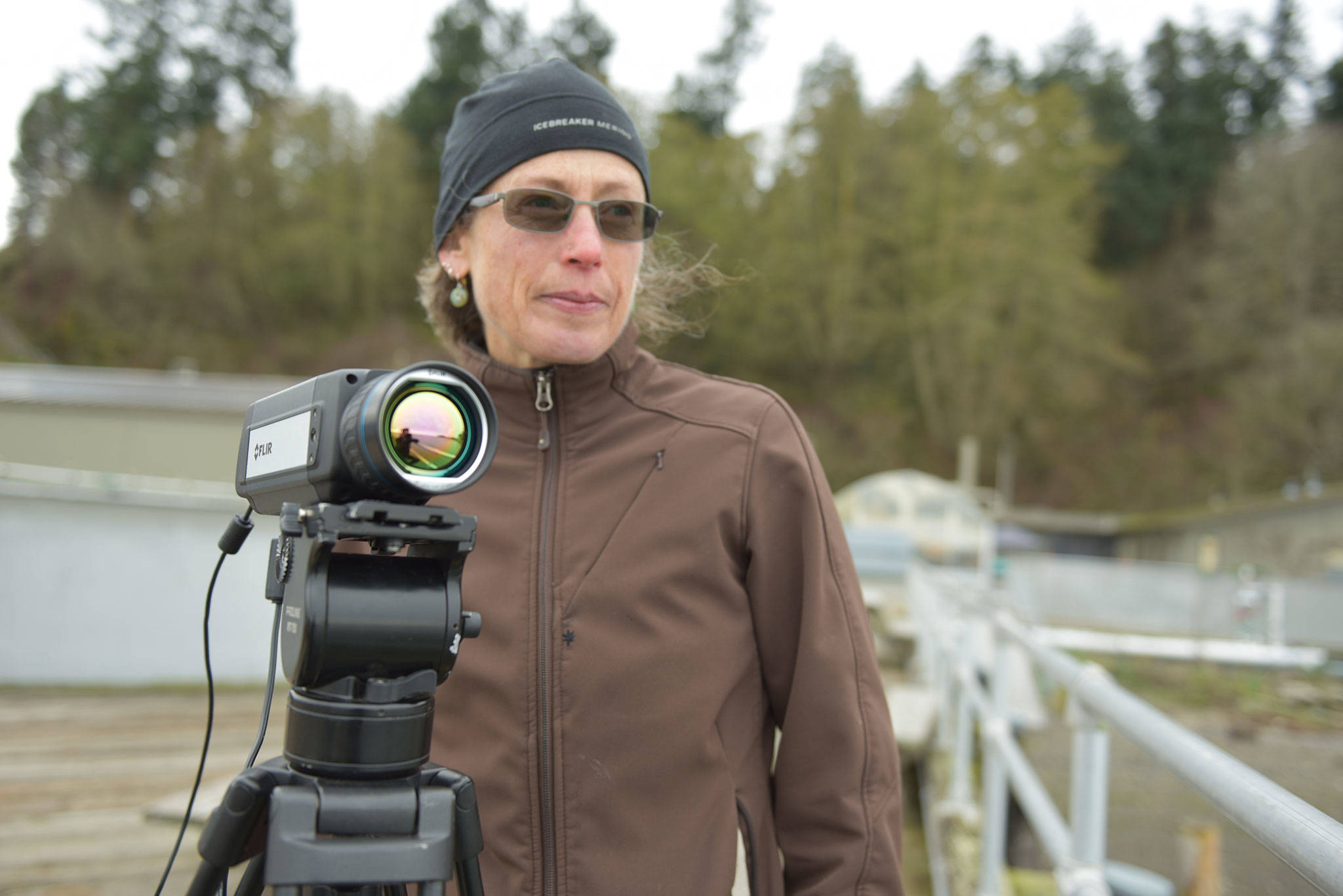
Pacific Northwest National Laboratory’s ThermalTracker software analyzes thermal video to help birds and bats near offshore wind farms. Pacific Northwest National Laboratory engineer Shari Matzner has been working on the project for a few years in Sequim. (Eric Francavilla/Pacific Northwest National Laboratory)
