
By Keith Ridler
The Associated Press
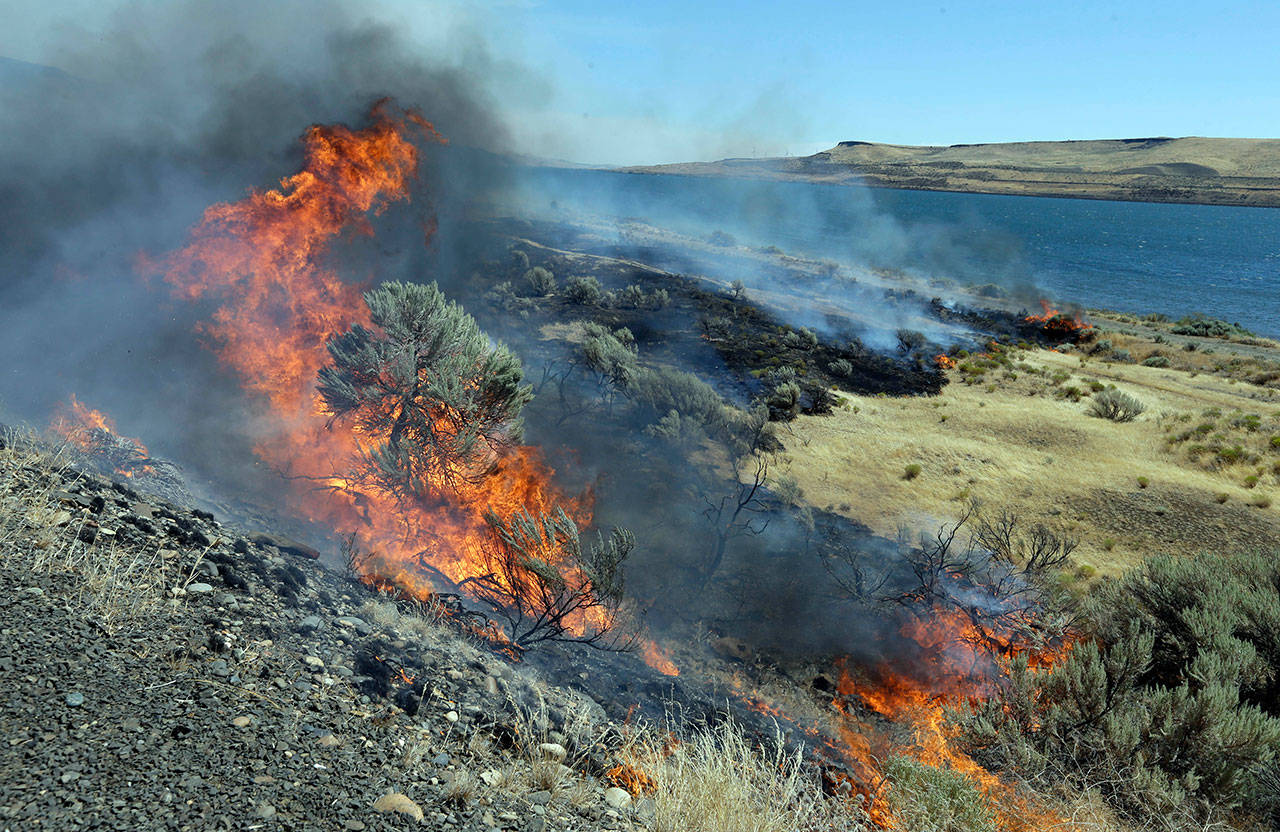
BOISE, Idaho — Public lands managers are losing a battle against a devastating combination of invasive plant species and wildfires in the vast sagebrush habitats in the U.S. West that support cattle ranching and recreation and are home to an imperiled bird, officials said.
The Western Association of Fish & Wildlife Agencies in a 58-page report released this month says invasive plants on nearly 160,000 square miles of public and private lands have reached enormous levels and are spreading.
That could mean more giant rangeland wildfires that in recent decades destroyed vast areas of sagebrush country that support some 350 species of wildlife, including imperiled sage grouse.
The top problem identified in the report is the limited ability at all levels of government to prevent invasive plants such as fire-prone cheatgrass from spreading and displacing native plants.
“There is widespread recognition that invasive annual grasses and wildland fire are the most crucial threats to the sagebrush ecosystem, yet invasive annual grass management is not funded at a level to be effective in breaking the invasive annual grass/fire cycle,” the report said.
Most invasive weed management programs tackle less than 10 percent of the infested areas while the annual rate at which the invasive plants spread is 15 to 35 percent, the report noted. Another invasive is medusahead, a winter annual grass that crowds out native species and forage for livestock.
The report, “Wildfire and Invasive Plant Species in the Sagebrush Biome,” is an update to the 2013 “Gap Analysis Report” produced by the Western Association of Fish & Wildlife Agencies’ multi-agency Wildfire and Invasive Species Working Group.
Both reports were requested by the U.S. Fish and Wildlife Service and U.S. Bureau of Land Management. The 2013 report came out at a time when federal agencies were trying to identify gaps in a strategy to avoid listing greater sage grouse as a protected species under the Endangered Species Act.
In 2015, the federal government declined to list sage grouse but imposed land-use restrictions, leading to multiple lawsuits. Federal officials are scheduled to review that decision in 2020, a main factor in why officials decided to update the 2013 report.
The ground-dwelling, chicken-sized sage grouse are found in 11 Western states. Between 200,000 and 500,000 sage grouse remain, down from a peak population of about 16 million.
The vast areas of sagebrush inhabited by the bird stretch through open country, leading some to refer to it as the sagebrush sea.
The landscape is “iconic to a lot of people,” said John Freemuth, a Boise State University professor and public lands expert. But “in terms of rangeland health and sustainable ranching, we’re just getting that up to speed.”
The most recent report examines efforts over the last several years to close the gaps identified in 2013 and adds several new ones. One of those is the new No. 1 priority of identifying limitations at preventing invasive plants from spreading.
Cheatgrass spreads by growing earlier than native plants each spring, using up moisture in the soil and producing seeds. Then in the summer, the annual cheatgrass dries out, catching fire and destroying native perennial plants.
The second priority involves restoring sagebrush ecosystems following a wildfire. Experts said restoration efforts are key because cheatgrass uses fire to kill the competition, then take over.
“We’re getting close to wildfire season on the rangelands already,” Freemuth said.
“If we can’t get ahead of it, it will just be covered with cheatgrass.”
The third priority is having native plant seeds available to restore burned areas. In 2013, no such program existed. But federal agencies in 2015 established the National Seed Strategy for Rehabilitation and Restoration with the goal of having a warehouse system with native plant seeds.
Officials also want a better understanding of how livestock grazing affects the landscape. The Bureau of Land Management has formed a “Targeted Grazing Team” to develop guidelines for using cattle to reduce wildfire threats in some instances.
“It will certainly take a broad-based coalition of agencies, and public and private groups working together to ensure a healthy Sagebrush biome [habitat] is available for generations to come,” Virgil Moore, director of the Idaho Department of Fish and Game, said in the report.
