

SOMETIMES WE FORGET just how much things change. Our surroundings are always changing. Our lives are changing. Our cars are changing.
Changes in cars seems to reflect changes in technology and culture. “It ain’t what it used to be!”
On July 20, 1925, the Mount Vernon Daily Herald published a section devoted entirely to the automobile. They boldly declared, “The Automobile — Greatest Modern Convenience.” It can still be considered one of the greatest conveniences ever invented. Of course, some will consider it the greatest bane to our world.
In the early 20th century, automobile dealers seemed to congregate in certain areas of a town. These would be referred to as “Gasoline Alley” districts. Much of Port Angeles’ gasoline alley was on Lincoln Street between Front Street and Second Street. Today, “Gasoline Alley” refers to the garage area of the Indianapolis Motor Speedway.
In the early 20th century, there were many automobile manufacturers vying for the market. There were Nash, Willys-Knight, Overland, Ajax, Durant, Packard, Hudson, Essex, Dodge, Studebaker, Chevrolet, Maxwell, Ford, Buick and Oldsmobile.
I owned a 1917 automobile for a while. The seats were an upholstered bench, the dash had an amp meter, the water temperature was monitored on the radiator cap, and the gas gauge was on the gas tank itself, which was mounted on the outside of the car.
Oh, by the way, the top was fabric, and there were no sides to protect you from the weather. Cold? Put on more clothes. Wet? Put on rain gear. Complain? Never! If you cannot tolerate the discomfort, then do it later. Or, you could walk or ride a horse.
It reminds me of the beginning of the personal computer age we live in. At the beginning, there were numerous brands to choose from. Of course, every brand advertises their cars as the best, most comfortable, dependable and affordable. That is about all we see even in today’s advertising. It seems that only the packaging is different. Like automobile manufacturers, many started but few stayed.
Costs always change. In 1933, a pickup might cost $360. Cars prices ranged from $300 to $700. Gas was $0.18 per gallon.
In 1933, a private car cost $3 to license. Today it is $30, which doubles when you add in filing fees and service fees. In 1933, it cost $1 to transfer title, $0.50 for a Certificate of Title, and $1 for a driver’s license. It would cost you $0.50 to get a special serial number assigned to your car.
In 1936, it cost $1 to take the Seattle-to-Bremerton ferry.
The number of cars also has risen significantly. In 1918, there were about six cars for every 100 people. By 1928, that number rose to 20 cars for every 100 people. By 1938, that number rose to 22 cars for every 100 people. Today, there are approximately 91 cars for every 100 people.
By 1954, the average new car might cost $1,950. Gas was 22 cents per gallon and the average new home was $17,500. In 1954, the price of a new car was about 10 percent of what a new home cost. Nothing much has changed in 70 years. The price of a new car is still about 10 percent of a new home.
I have a 1954 proposed purchase agreement for an Oldsmobile Super 88, which was given to my uncle by Ruddell Oldsmobile Cadilac Inc. The base price was $3,012.71, which was on the high side of cars’ prices.
The proposal included a list of accessories he might want. Hydramatic (automatic transmission): $178.35. Heater & defroster: $79.58. Oil filter: $10.27. Heavy duty air cleaner: $6.53. Radio (AM): $100.82. Even then the sound system was one of the most expensive accessories available. Today, everything on this list is considered standard equipment.
So, too, safety features have improved. There was a time when we worried whether there would be a tree across the road. Or we might hit a cow. My first car did not have seat belts. Seat belts were not required until years later. Later we found out lap belts alone could injure and maim people during a collision. Today we have shoulder belts.
Today, cars going 60 mph collide head-on. Cars catapult into the air and hit houses. The 1940 State of Washington Drivers Manual told us “In 30 years the number of automobile deaths in the state has increased from less than 25 to more than 500 a year.” In 2023, Washington state experienced 810 traffic deaths. Even the best of safety devices is not enough, at times.
In the early 20th century, cars were a privilege. Today, cars are taken for granted. People appreciated being able to drive a car somewhere. Traveling along the road at 20 mph was a treat compared to hitching up the horses and pulling a wagon into town. Today, we are in too much of a hurry. Relax! Leave early. Get there safely.
We have to admit that accessories and comfort features sure have improved. We can wonder how we ever survived without automatic headlights, cruise control, heated seats, seat adjustments, satellite radio and a plethora of electronic gizmos.
In fact, we find it hard to function without all those features. Plus, they are so complicated you need a degree in computer science to repair a car.
It is good for us to remember that it is easy to think earlier times were simply primitive and difficult. It may seem to have been primitive, but it was the technology of the day, and people still lived well and enjoyed life.
Cars today have an enormous number of features. We are so accustomed to them that we feel entitled to them. We take them for granted. In fact, we have become dependent upon them. After all, how can we survive without heated seats and surround sound?
Who needs automated lane departure warning? My wife always reminds me to stay in my lane. That is enough.
One simple observation speaks clearly about all these changes. Today, the best anti-theft device out there is a manual transmission.
________
John McNutt is a descendant of Clallam County pioneers and treasurer of the North Olympic History Center Board of Directors. He can be reached at woodrowsilly@gmail.com.
McNutt’s Clallam history column appears the first Saturday of every month.
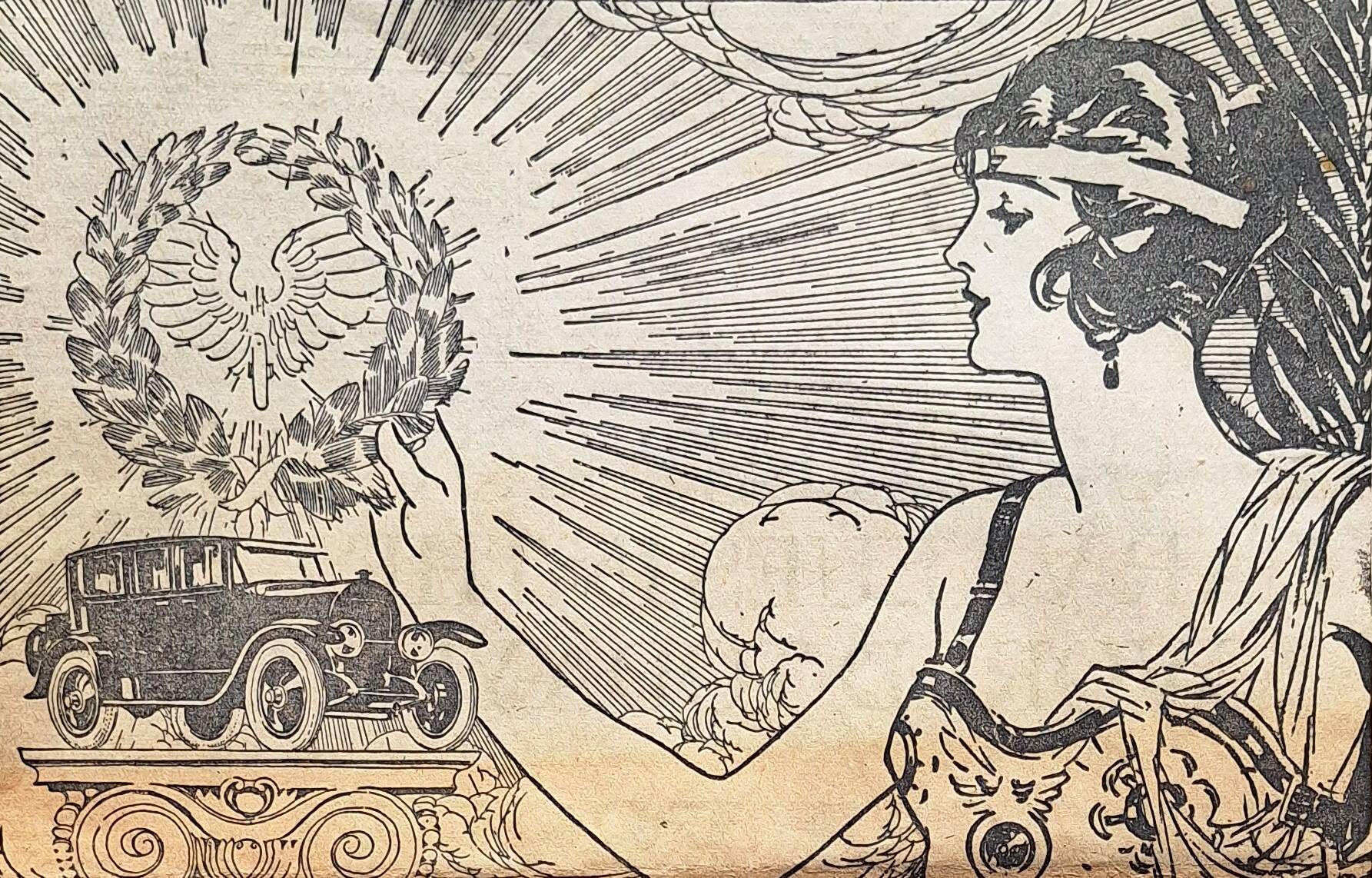
An image from the Mount Vernon Daily Herald, July 20, 1925.
