
By Seth Borenstein
The Associated Press
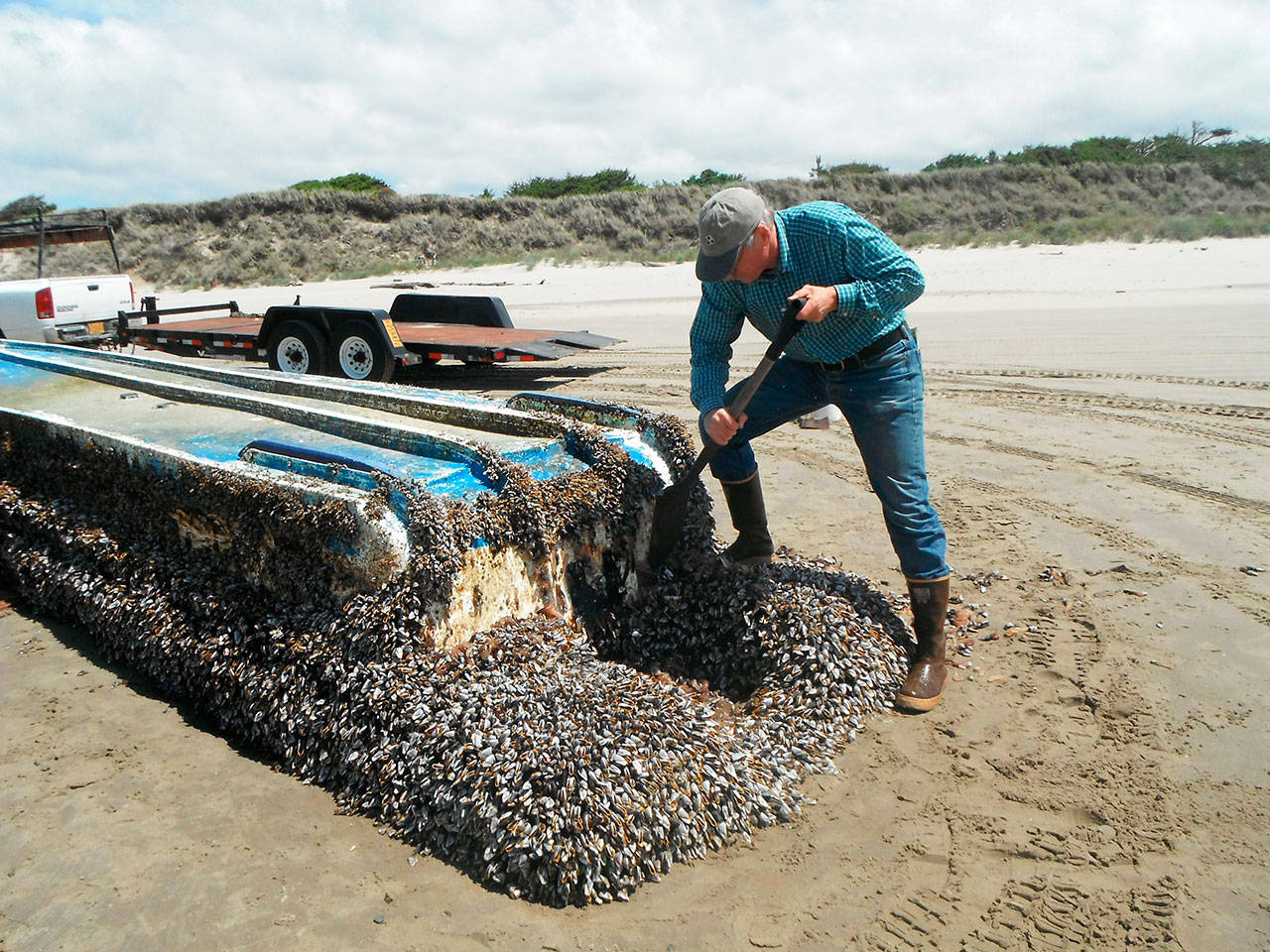
WASHINGTON, D.C. — Nearly 300 species of fish, mussels and other sea critters hitchhiked across the Pacific Ocean on debris from the 2011 Japanese tsunami, washing ashore alive in the United States, researchers reported.
It is the largest and longest marine migration ever documented, said the researchers and outside experts.
The scientists and colleagues combed the beaches of Washington, Oregon, California, British Columbia, Alaska and Hawaii and tracked the species to their Japanese origins.
Their arrival could be a problem if the critters take root, pushing out native species, the study authors said in Thursday’s journal Science.
“It’s a bit of what we call ecological roulette,” said lead author James Carlton, a marine sciences professor at Williams College, in Williamstown, Mass.
It will be years before scientists know if the 289 Japanese species thrive in their new home and crowd out natives.
The researchers roughly estimated that a million creatures travelled 4,800 miles across the Pacific Ocean to reach the West Coast, including hundreds of thousands of mussels.
Invasive species is a major problem worldwide with plants and animals thriving in areas where they don’t naturally live.
Marine invasions in the past have hurt native farmed shellfish, eroded the local ecosystem, caused economic losses and spread disease-carrying species, said Bella Galil, a marine biologist with the Steinhardt Museum of Natural History in Tel Aviv, Israel, who wasn’t part of the study.
A magnitude 9 earthquake off the coast of Japan triggered a tsunami March 11, 2011, that swept boats, docks, buoys and other man-made materials into the Pacific.
The debris drifted east with an armada of living creatures, some that gave birth to new generations while at sea.
“The diversity was somewhat jaw-dropping,” Carlton said. “Mollusks, sea anemones, corals, crabs, just a wide variety of species, really a cross-section of Japanese fauna.”
The researchers collected and analyzed the debris that reached the West Coast and Hawaii throughout the past five years, with new pieces arriving Wednesday in Washington.
The debris flowed across the North Pacific current, as other objects do from time to time, before it moved north with the Alaska current or south with the California current. Most hit Oregon and Washington.
A 20-foot-wide, 7½-foot-tall dock landed on a beach within Olympic National Park and the Olympic Coast National Marine Sanctuary in December 2012.
The Japanese government confirmed that the dock was a remnant of the estimated 5 million tons of debris swept into the ocean by the tsunami. It identified the dock, which was made of plastic foam encased in concrete, through a serial number as coming from Misawa, a city of about 40,000 on the northern tip of the island.
Japan paid most of the $628,000 removal cost, providing $478,000. NOAA’s Office of National Marine Sanctuaries and the National Park Service each paid $75,000.
In early January 2013, staff members from state and federal agencies hiked in and removed more than 400 pounds of non-native plant and animal life found clinging to the dock and then used a diluted bleach solution to wash the structure to prevent spread of the invasive species.
The state Department of Ecology said that between 30 and 50 species of marine plants and animals not found in the United States but native to Japan had attached themselves to it.
Last year, a small boat from Japan reached Oregon with 20 good-sized fish inside, a kind of yellowtail jack native to the western Pacific, Carlton said.
Some of the fish are still alive in an Oregon aquarium. Earlier, an entire fishing ship — the Sai sho-Maru — arrived intact with five of the same 6-inch fish swimming around inside.
Co-author Gregory Ruiz, a Smithsonian marine ecologist, is especially interested in a Japanese parasite in the gills of mussels. Elsewhere in the world, these parasites have taken root and hurt oyster and mussel harvests and they hadn’t been seen before on the West Coast.
The researchers note another huge factor in this flotilla: plastics.
Decades ago, most of the debris would have been wood and that would have degraded throughout the long ocean trip, but now most of the debris — buoys, boats, crates and pallets — are made of plastic and that survives, Carlton said. And so the hitchhikers survive, too.
“It was the plastic debris that allowed new species to survive far longer than we ever thought they would,” Carlton said.
James Byers, a marine ecologist at the University of Georgia in Athens, who wasn’t part of the study, praised the authors for their detective work. He said in an email that the migration was an odd mix of a natural trigger and human aspects because of the plastics.
“The fact that communities of organisms survived out in the open ocean for long time periods (years in some cases) is amazing,” he wrote.
________
The Peninsula Daily News contributed to this story.
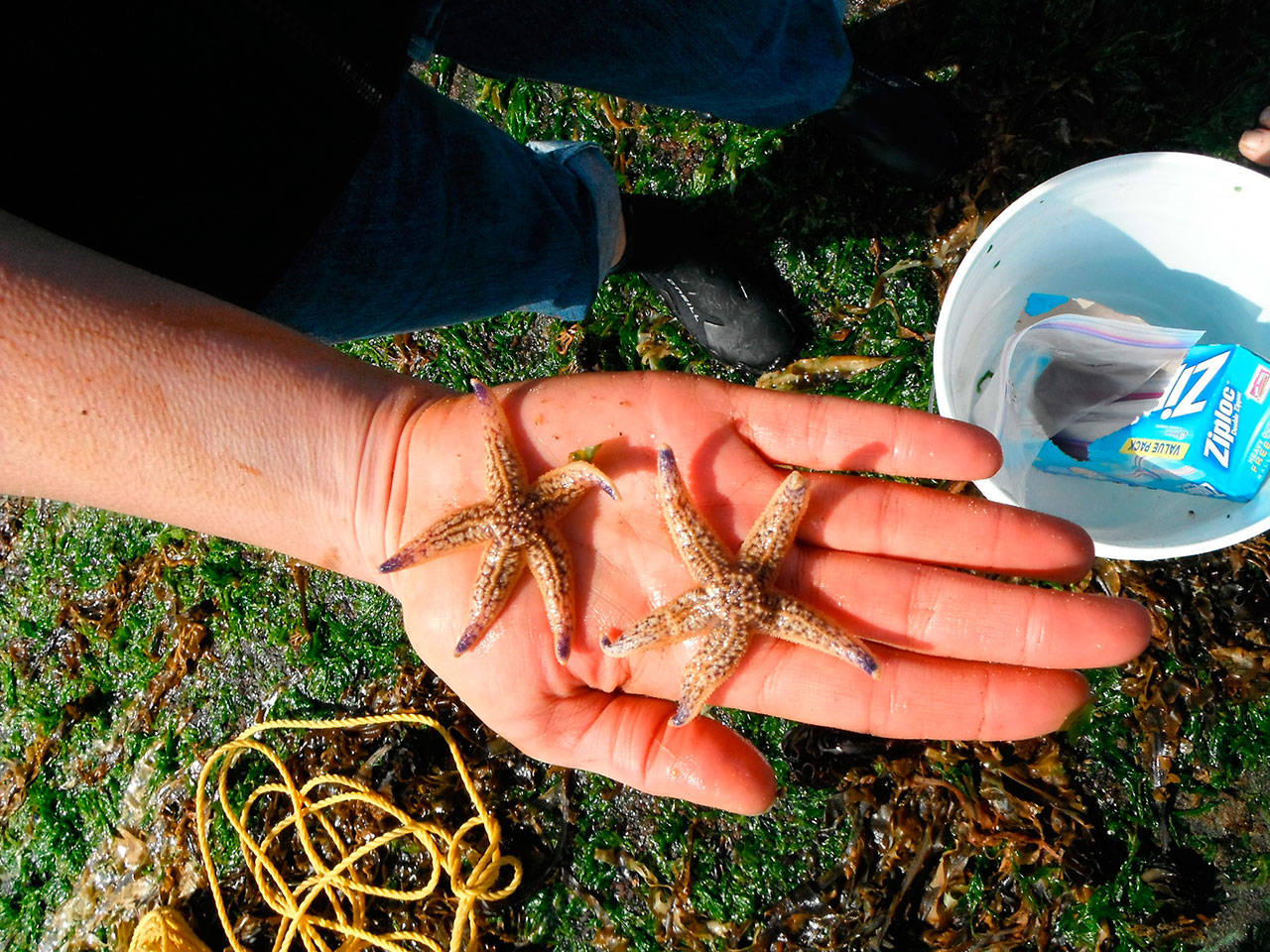
This June 2012 photo shows Japanese sea stars (Asterias amurensis) on a Misawa, Japan, fisheries dock that washed ashore near Newport, Ore. (John W. Chapman via AP)
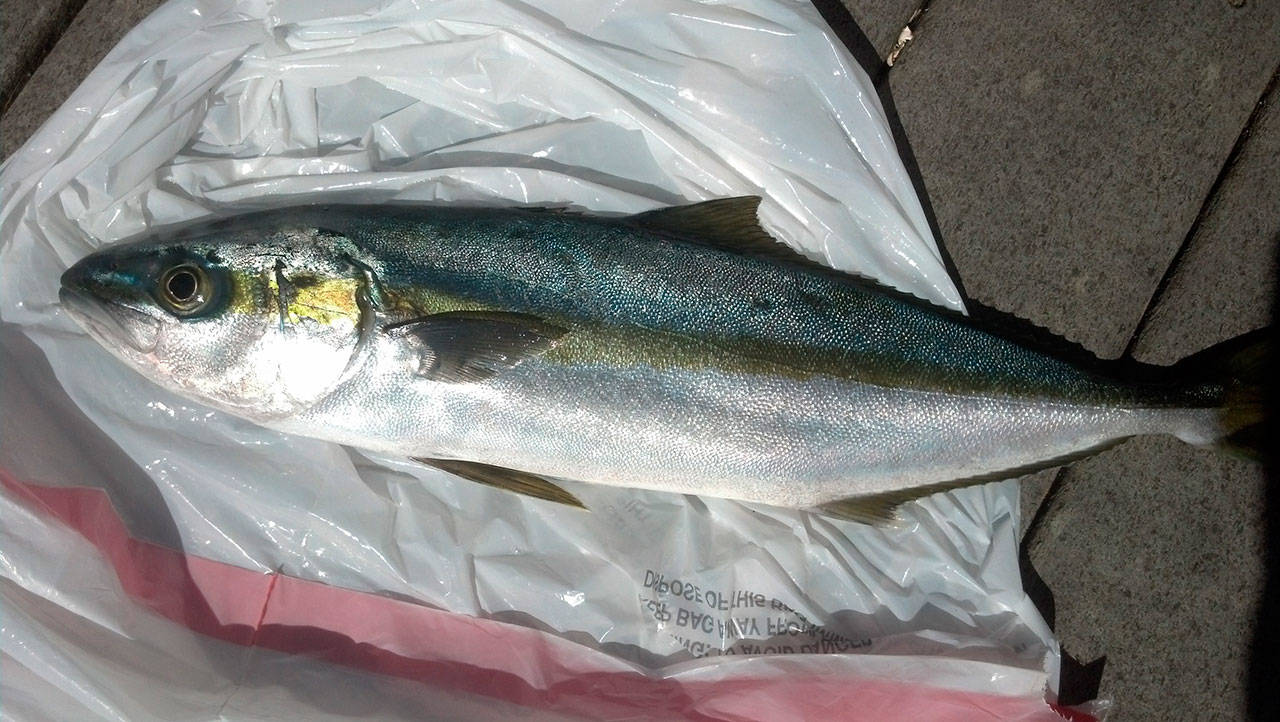
This April 9, 2015, photo shows a yellowtail jack fish that was captured from Japanese tsunami wreckage in Oregon. (Caren Braby/Oregon Department of Fish and Wildlife via AP)

This February 2017 photo shows Japanese mussels (Mytilus galloprovincialis), barnacles (Megabalanus rosa), and sea anemones on a tsunami buoy that washed ashore on Long Beach. (Nancy Treneman via AP)
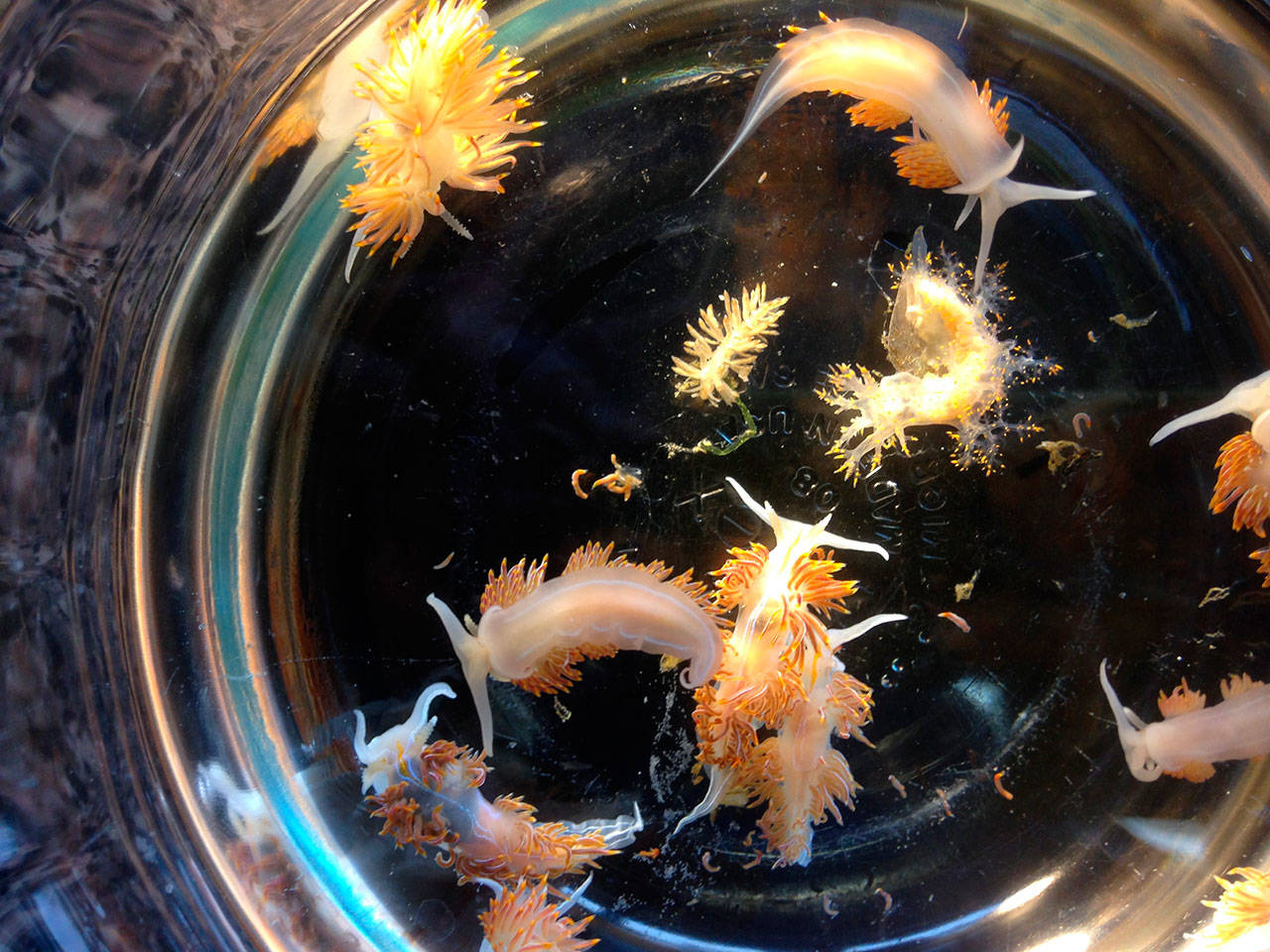
This April 2015 photo shows marine sea slugs from a derelict vessel from Iwate Prefecture, Japan, that washed ashore in Oregon. (John W. Chapman via AP)
