
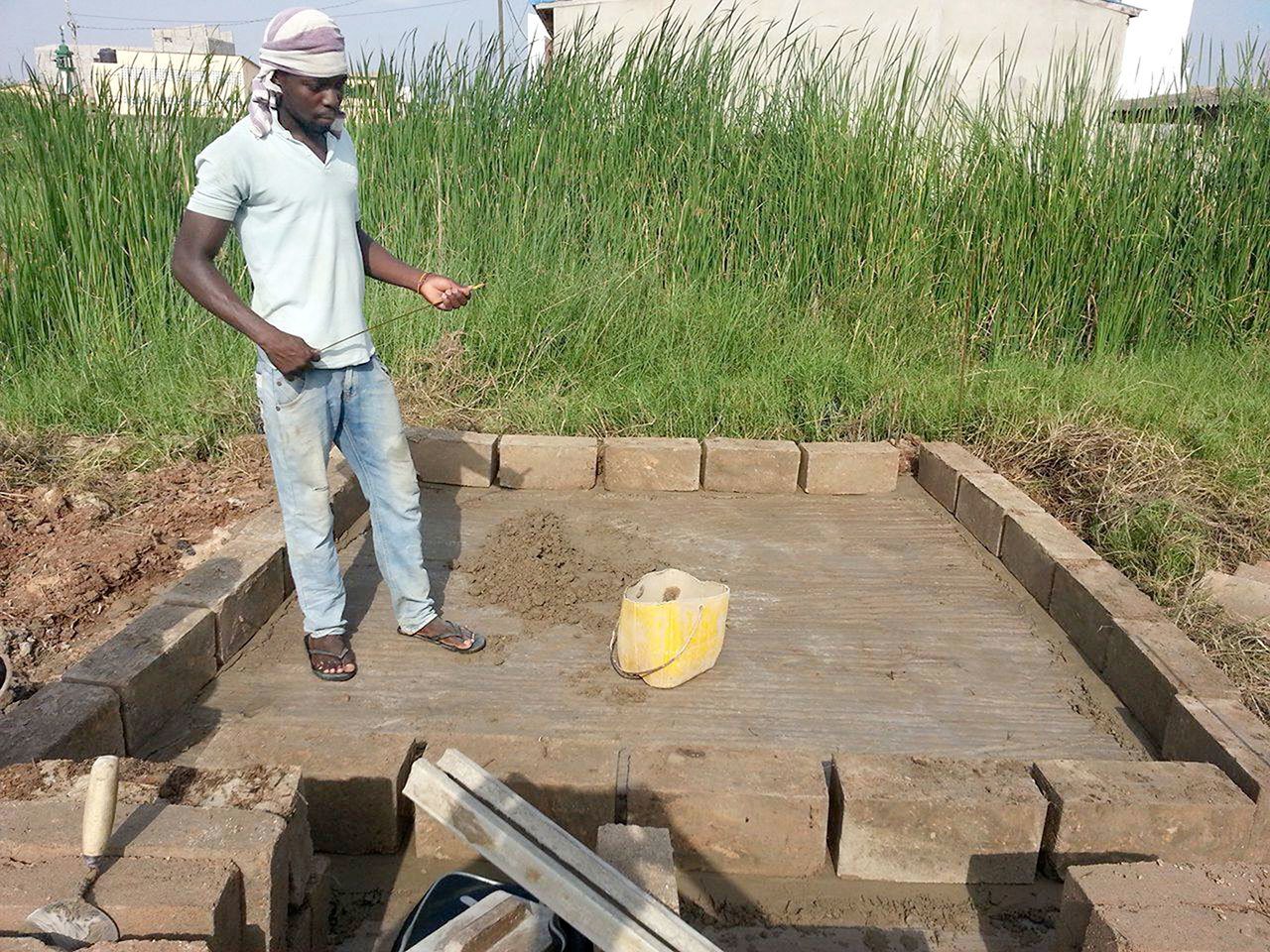
PORT ANGELES — After learning his pen pal in Africa did not have access to a working toilet, Doc Reiss of Port Angeles wanted to help in any way he could.
Now, two years on, Reiss has helped coordinate efforts to provide eight compost toilets for families living in the village of Zogbedgi, Togo, as part of the Dignity Toilets for Togo program.
The Port Angeles managing broker has paid for the toilets himself, so far, having funded eight of the compost toilets with about $2,000 of his own money.
Now he hopes to get others involved and eventually create enough for all 1,200 people in the low-lying village of Zogbedgi in Togo, a small sub-Saharan country on the West African Coast.
“That is long term, big picture,” he said, adding there are “already some other villages” expressing interest.
Each toilet serves about seven people, according to Reiss, who said that much of the village is too low for outhouses because the area floods during the rainy season.
Each compost toilet structure costs about $350 with another $50 for labor. In contrast, such toilets cost about $1,000 in the United States, Reiss said.
Work is done in a few weeks by a crew under the supervision of Bedi Taouvik Boukari, who Reiss met online at InterPals, a free site, in 2012.
The compost toilets are built according to plans provided by the Togo government and modified a bit by Boukari, who is paid $100 a month by Reiss.
Boukari “is an extremely optimistic guy,” Reiss said. “He’s a Rotarian in spirit. I asked him what else he was involved in and he said he works with the poor.”
Donations will be funneled through Nor’Wester Rotary, of which Reiss is a member and past president.
Each structure is constructed of concrete, rebar and bricks and incorporates two squat toilets.
“If you have ever been skiing or in Europe you are familiar with what those are,” Reiss said.
Each squat toilet feeds into a separate sealable chamber, he said.
“There are two side-by-side compartments,” Reiss said.
“One is capped off and you use the other. After six months, they put some enzyme in it, throw the cap over to the side that has been used and use the side that is empty. When they get ready to switch back, they chip off a small layer of cement that is on the door, remove the metal door” and use it as fertilizer or have it removed to a landfill.
“Our point of doing this is to keep” fecal waste “out of the groundwater and away from the flies and the insects” to prevent the spread of communicable disease, Reiss said.
“And, the neat thing is that each one of these is going to last for generations. That is the beauty of concrete.”
Installing the toilets “saves us against sickness and other problems,” said Bourkari via email.
In addition to providing sanitation, constructing a permanent compost toilet “is a way of giving the families some dignity,” Reiss said.
“This is all [constructed] by hand which is what makes it really impressive to me.”
Before the installation of the compost toilets, people were forced to walk out into surrounding bushes to relieve themselves, Reiss said.
He said he learned of this predicament through Boukari.
“One day he made this comment about being tired of going out to the bushes,” Reiss said, adding that it was only after nearly two years of correspondence that Boukari brought it up.
“He was just finally tired of it, and that is when I learned this village has been doing it for generations.”
Villagers seeking seclusion must wander further and further away from the town center to find privacy, Reiss said, adding that some women have being raped in the bushes.
Wanting to make a difference, Reiss coordinated with Boukari — who helped discovered the government designs for the compost toilet structure — to build the facility on Boukari’s family property.
That first toilet was completed about two years ago for about $450, Reiss said.
“Really, it means a lot,” Bourkari said.
“When someone comes to our house and sees our toilet they are happy and thank my daddy for doing it. He always replies to thank me for all this … and I always thank my friend Doc Reiss for his contributions. It was a shame to have guests or visitors and tell him or her to go to [the] bushes.”
Since that first toilet was installed, other villages submitted requests for the toilets, and eight have been complete — the most recent in November.
“Many people pass near my house and come ask me how much it cost and where I found this system and how it works,” Bourkari said. “Many families want to have [one] too.”
To be eligible, families who receive a toilet must “contribute something” toward its construction, Reiss said. “We want some kind of ownership to it.”
However, “this last family was so poor that they couldn’t afford a sack of cement,” Reiss continued.
Instead, the family patriarch “went out with a bucket and got buckets of sand and brought it back until there was a pile big enough for” the construction crew to make concrete, Reiss said.
“Then, while [the crew] made the concrete, because there is no running water, [the patriarch] went out and got buckets of water and brought it in for the concrete mixing.”
Additionally, the man’s wife “made rice for the workers for lunch,” Reiss said.
Currently there are 10 compost toilet structures on request from locals, Reiss said.
Reiss has not yet visited Togo, but is able to help funnel donated money for the project.
Reiss said he hopes to travel to Togo sometime in 2017 to help the cause.
“I haven’t had the chance, but that is one of the things I want to try to do this [coming] year,” he said.
“There are some conditions down there that are pretty nasty. Taouvik, since I have known him, has [caught] malaria twice.”
In the meantime, Reiss said he is working to secure the funding necessary to pay for their construction.
Donations for Dignity Toilets for Togo are currently being accepted through Nor’Wester Rotary, Reiss said.
Donations can be mailed to Nor’Wester Rotary at P.O. Box 176, Port Angeles, 98362.
For more information, call Rotary President Andy Callis at 360-452-2314.
For more on the club, visit www.rotarynorwester.org.
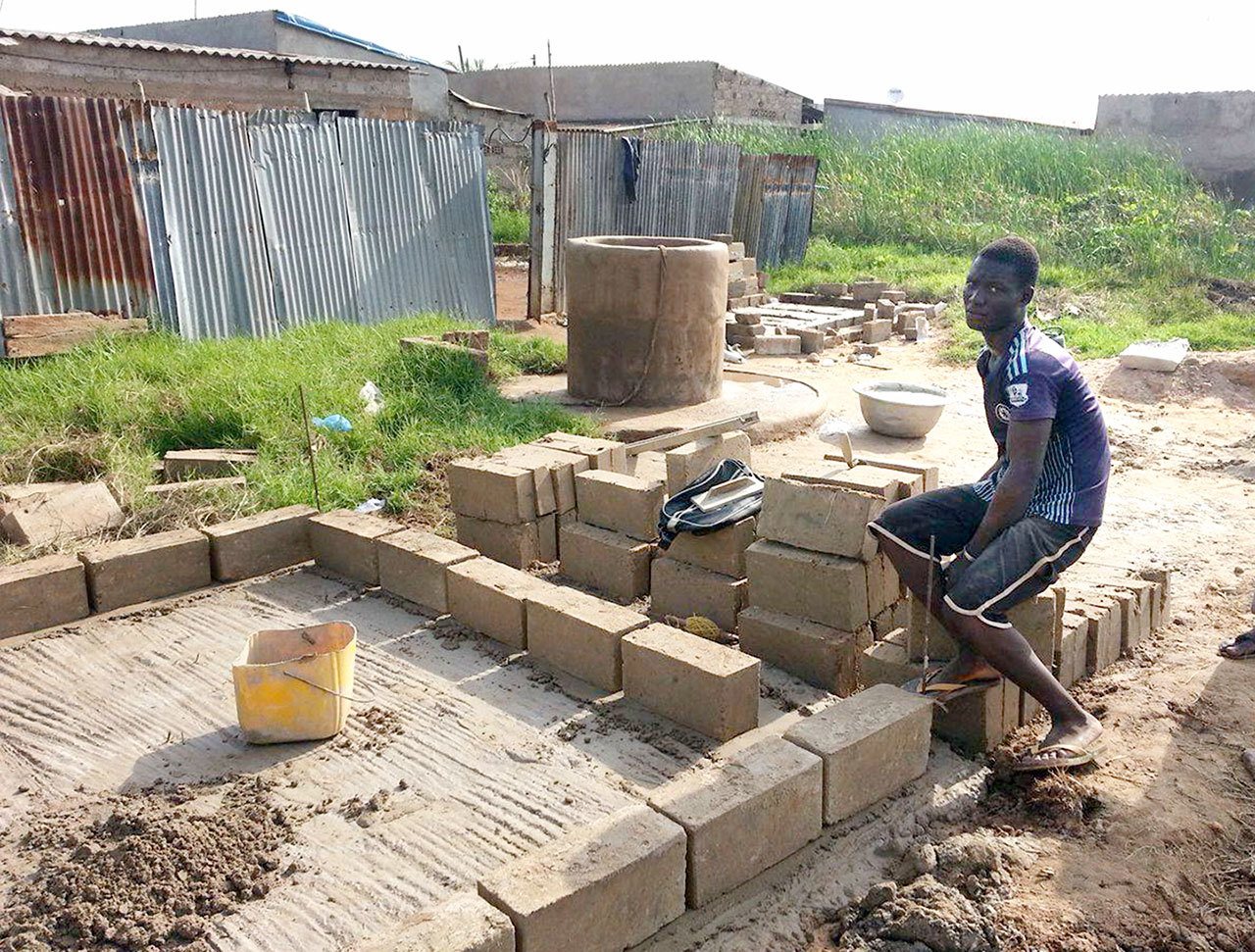
An unidentified man takes a break while working on a compost toilet for a family living in the village of Zogbedgi, Togo. Eight compost toilets have been built in the past two years, with plans to build 10 more. (Bedi Taouvik Boukari)
