
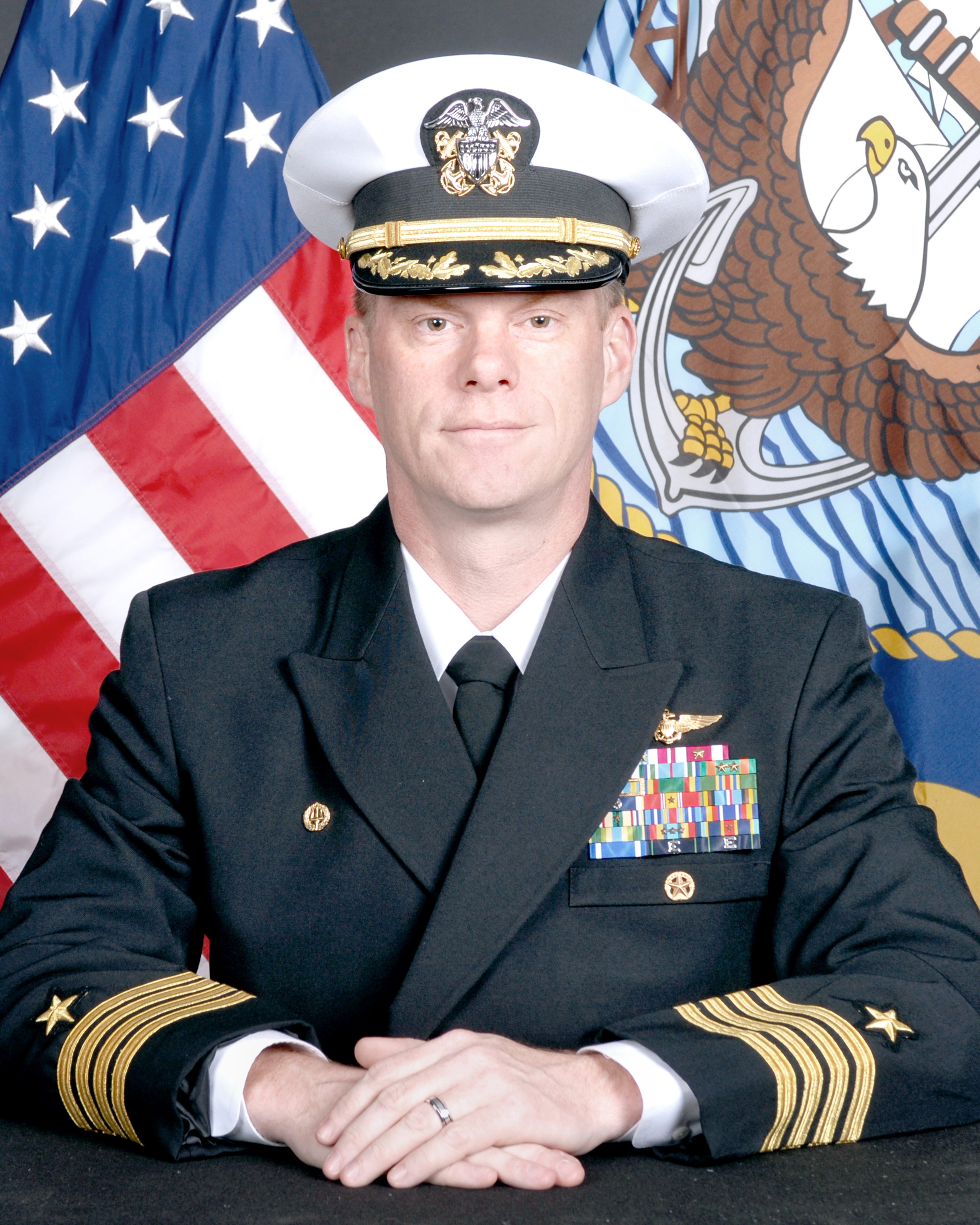
By Capt. Michael Nortier
EDITOR’S NOTE — Capt. Michael Nortier, the author of this guest column, is the commanding officer of Whidbey Island Naval Air Station. He can be contacted at 360-257-2286.
MANY PEOPLE MAY be unaware that our service members — our sons, daughters, friends and neighbors — are training in the skies above the Olympic Mountains to take the fight to the enemy on our behalf.
The Navy recently proposed a plan to provide more realistic training at substantial savings to taxpayers, but certain groups and individuals chose to spread misconceptions about the proposed training.
The training is about detecting, sorting and identifying certain electronic signals among the deluge of existing signal clutter and determining appropriate actions against signals of interest.
Our aircraft provide electronic support to soldiers and marines on the ground and our fellow air crew in the sky; this proposed change to existing training will enhance the Navy’s ability to provide that support.
The Navy flies over the coastal waters of the Pacific Ocean, Olympic Peninsula, the Cascade mountain range and Eastern Washington as we have for the past 40 years.
The proposed plan does not introduce new flight areas; it proposes using mobile training emitters on existing logging roads on national forest land to improve the training our air crews receive today.
The specific training these emitters provide enable air crew to safely and successfully counter enemy defenses when they fly into harm’s way.
The armed services have decades of experience successfully operating similar fixed and mobile emitters at a variety of locations across the nation.
It is extremely unlikely that the training conducted in the Pacific Northwest will adversely affect people, animals or the environment.
There are misrepresentations of the facts, and I would like to address some of what we have been hearing.
Myth: These emitters are dangerous.
Fact: The Navy uses the Institute of Electrical and Electronics Engineers “Standard for Safety Levels with Respect to Human Exposure to Radio Frequency Electromagnetic Fields, 3 kHz to 300 GHz” to make its determinations.
The IEEE standard serves as a consensus standard developed by representatives of industry, government agencies, the scientific community and the public.
In addition, there is a long history of these systems being safely employed to provide our aviators the training they need without incident or adverse effects.
Myth: The Navy is planning to bring many more planes to Olympic National Forest.
Fact: Electronic warfare training is already being conducted in Northwest.
The number, duration and frequency of aircraft flights in the operating area are only projected to increase by 10 percent, which equates to an average increase of one flight per day.
These are not low altitude flights, and most go unnoticed as our crews train in these areas today.
As the number and duration of flights are not expected to increase significantly, and the typical flight profile is not planned to change, there is no expected change in aircraft noise.
Myth: The Navy is planning to conduct war games.
Fact: There are no war games planned. The only change is the addition of a mobile transmitter to improve the training we currently simulate.
During these training missions, which already occur in these areas, the planes only receive signals; they are not broadcasting and will not be “jamming.”
The frequencies used by the mobile transmitters will be deconflicted by the Federal Communications Commission and will not impact other broadcast signals, so vital services will not be interrupted.
Myth: The Navy will be flying at low altitudes and at supersonic speeds.
Fact: The Navy has no intention of flying at low altitudes or at speeds above the sound barrier.
The mission requires the aircraft to be able to directly observe the emitters, typically flying at altitudes of 10,000 feet or greater.
Low altitude flight does not support the training.
Supersonic flight above the United States is controlled by the FAA — plus, when our planes conduct this training, they do not fly supersonic.
I hope this information is helpful.
You can find additional information at http://tinyurl.com/navytraining.
We strive to keep the public informed of our activities.
The ability to send a signal toward an aircraft and have the crew train to detect and identify the signal allows for more finely tuned skills to be used when lives are at risk.
This training is designed to protect and save American lives.
The young men and women who volunteered to protect our great nation, and, by extension, every one of us, deserve the very best equipment and training opportunities this country can provide.
We owe it to them.
________
This guest column appeared in the print edition of the Dec. 26-27 Peninsula Daily News.
