By Brian Melley
The Associated Press
KINGS CANYON NATIONAL PARK, Calif. — The thick scent of smoke hung in the midday air when a trail along the Kings River opened up to an ominous scene: flames in the trees and thick gray smoke shrouding canyon walls.
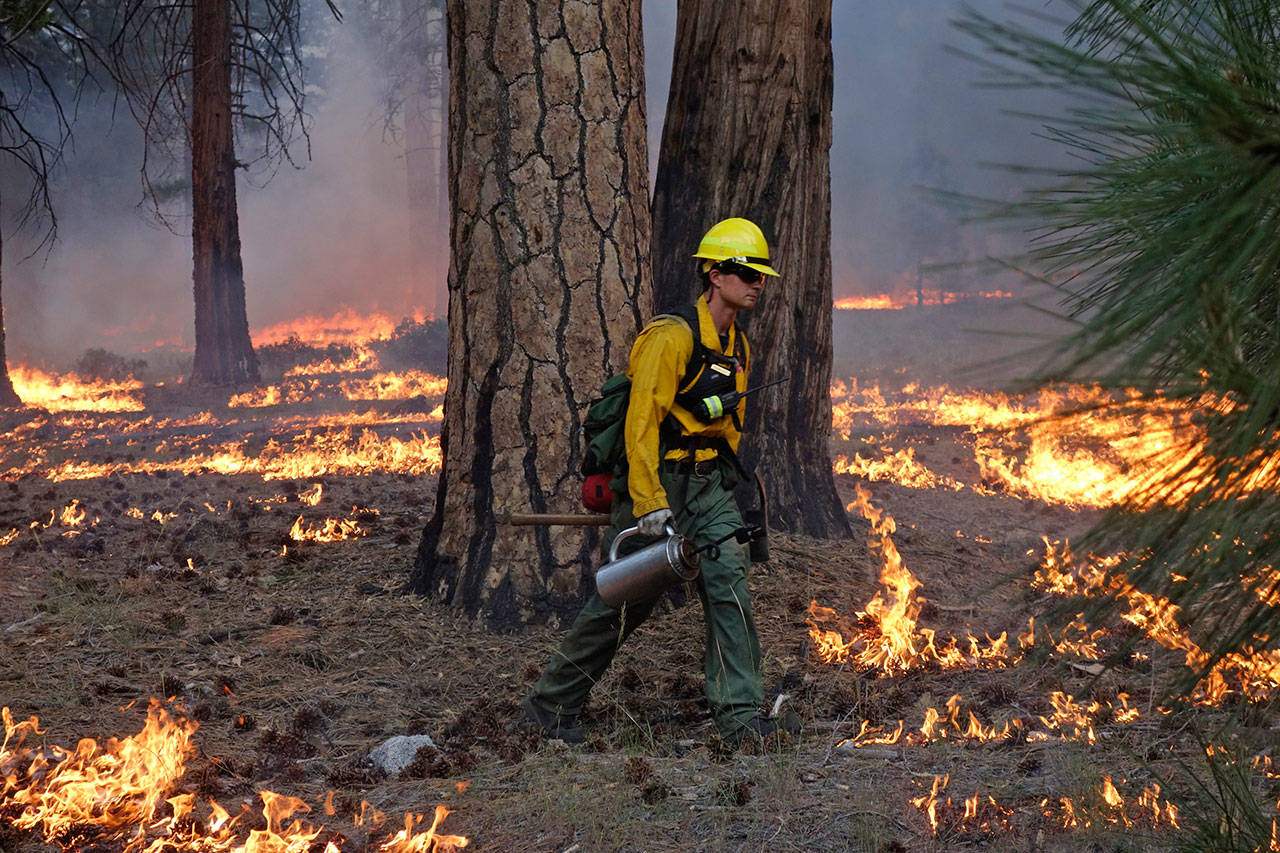
Firefighters were on the job. In fact, they had started the blaze that chewed through thick ferns, blackened downed trees and charred the forest floor. The prescribed burn — a low-intensity, closely managed fire — was intended to clear out undergrowth and protect the heart of Kings Canyon National Park from future wildfires that are growing larger and more frequent amid climate change.
The tactic is considered one of the best ways to prevent the kind of catastrophic destruction that has become common from wildfires, but its use falls woefully short of goals in the U.S. West. A study published in the journal Fire in April found prescribed burns on federal land in the past 20 years across the West have stayed level or fallen despite calls for more.
Prescribed fires are credited with making forests healthier and stopping or slowing the advance of some blazes. Despite those successes, there are plenty of reasons they are not set as often as officials would like, ranging from poor conditions to safely burn to bureaucratic snags and public opposition.
After a wildfire last year largely leveled the city of Paradise and killed 86 people, the state prioritized 35 brush and other vegetation-reduction projects that could all involve some use of intentional fire, said Mike Mohler, deputy director of the California Department of Forestry and Fire Protection.
Despite the push for more burns, there are disastrous reminders of prescribed fires blowing out of control — such as a 2012 Colorado burn that killed three people and damaged or destroyed more than two dozen homes.
Overcoming public fears by teaching about “good smoke, bad smoke, out-of-control fire and prescribed fire” is just one hurdle before firefighters can put match to kindling, Mohler said.
“It’s the difference between fire under our terms and fighting fire on Mother Nature’s terms,” he said.
It can take years to plan and clear federal, state and local environmental and air pollution regulations. A burn among giant sequoias once took 13 years to accomplish, said Michael Theune, a spokesman for Sequoia and Kings Canyon National Parks.
In the American West, where the landscape is steep and downed trees, brush and other fuels have built up over decades of fire suppression, the so-called burn window can be short because of hot, dry conditions.
Relaxing environmental restrictions has cleared the way for more prescribed fires in some cases.
Oregon recently changed air quality rules for planned fires to strike a balance between smoky winter skies and bad summer blazes. California proclaimed a state of emergency to allow it to fast-track brush clearing.
Most states and federal agencies in the West have ambitious goals they don’t achieve, said Crystal Kolden, a University of Idaho forest and fire science professor whose study concluded that not enough prescribed fires are being done in the region.
“They know they need to be doing more prescribed fire, they want to be doing more prescribed fire,” she said. “They are simply unable to accomplish that.”
Opponents cite the threat to wildlife and release of greenhouse gases. In California, some environmentalists opposed intentional burns because they can destroy natural drought-tolerant shrubs and replace them with flammable invasive weeds and grasses.
Rick Halsey of the California Chaparral Institute said re-introducing fire through prescribed burns is appropriate in the Sierra Nevada, where more frequent lightning-sparked fires and blazes historically set by Native Americans are believed to improve forests by clearing brush to allow taller trees to thrive and opening sequoia seed pods so they can reproduce.
But Halsey said prescribed fires don’t help much of the rest of the state. The fire that tore through Paradise showed how ineffective clearing underbrush can be — it roared across 7 miles that had burned just 10 years earlier.
“It was still grasses and weeds and shrubs, and that’s the model these prescribed burning advocates have used,” Halsey said. “They say if we have younger fuels on the landscape, we’ll have less fires or lower intensity fires, and we can use those areas to protect communities. And that has never happened in wind-driven fires.”
The state acknowledged in a draft environmental impact report that clearing vegetation may not slow or halt extreme fires.
But successful prescribed burns can save property from some future fires, supporters said.
Four years ago, Cedar Grove in the bottom of Kings Canyon escaped a massive lightning-ignited fire — flames burned up to where periodic prescribed burns had thinned undergrowth. About $400 million in property, including employee housing, lodging, campgrounds and a water treatment plant, was spared, said Theune, the parks spokesman.
Last winter was a very wet one in California, and that left brush and vegetation less volatile through spring. In Kings Canyon, firefighters returned in June to burn different segments along a narrow strip of pines, cedars and manzanita between the raging Kings River and a road that ends in the canyon.
With other firefighters standing by in case embers escaped, a half-dozen members of the park’s Arrowhead Hot Shots methodically dripped flame from gas-and-diesel torches to ignite dry pine needles, twigs and other accumulated material.
A mosaic-like pattern of fire crept through grasses, pine cones and dead branches. Downed ponderosa pines became occasional flashpoints. Teams with hoses doused flames that threatened to climb living trees.
Ideally, Sequoia and Kings Canyon parks would burn 10,000 or more acres a year, Theune said. The annual target is about a fifth of that, and the actual acreage burned often falls far short of that goal.
Over two days, the fire crew blackened the 218 acres targeted, doubling the total area burned last year in the two parks.
But it was merely 10 percent of the parks’ annual goal and just a tiny fraction of land in the West that could be treated with prescribed fire.
