
Final blast at Glines Canyon Dam sets Elwha River free
Published 6:17 pm Tuesday, August 26, 2014
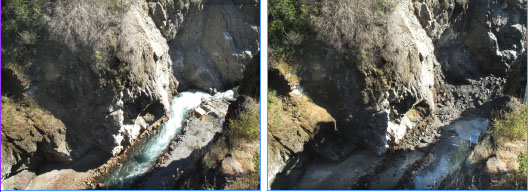
OLYMPIC NATIONAL PARK — The Elwha River is free.
The final 30-foot section of the Glines Canyon Dam was destroyed by an explosion at 4:12 p.m. Tuesday when crews with Barnard Construction Inc. of Bozeman, Mont., detonated charges at the site.
“It’s done,” said Barb Maynes, spokeswoman for Olympic National Park. “We accomplished what was planned.”
The blast set the waterway loose to return to its original riverbed in Glines Canyon for the first time since 1927.
The older, already destroyed Elwha Dam downriver was completed in 1913.
With both monoliths gone, the Elwha River is free to cut its own course — except for debris from Tuesday’s explosion — for the first time in more than a century.
“Concrete rubble remains and will be cleared from the channel in the coming weeks,” Maynes said.
Downriver from the blast, the Lower Elwha Klallam tribe celebrated the victory.
“It’s a good day. It was the last spot [blocking the] fish to access the rest of the river,” said Robert Ellefson, the Elwha restoration manager for the tribe.
“It has been the dream of tribal members for a hundred years,” Ellefson said.
The tribe will celebrate the river’s full opening in July 2015, during the traditional ceremony to welcome the Chinook salmon back to the Elwha River, he said.
Removing the 30-foot-tall stub of the dam was the last structural piece remaining of the $325 million Elwha River restoration project, which began in 2011 and will continue through 2016.
The destruction of the 108-foot Elwha Dam began in September 2011, and it was completely removed by March 2012.
The explosives packed into dozens of holes drilled into the Glines Canyon Dam’s remains demolished the mass of cement and rebar, much of which was covered in sediment washed down from the former Lake Mills that once existed behind the dam.
The site of the once-210-foot-tall dam built in 1927 is located 13 miles from the mouth of the Elwha River in Olympic National Park.
For the next six to eight weeks, Barnard Construction crews will scoop out concrete debris from the river channel to help re-establish the original riverbed levels and remove rebar and other debris left behind by the blasts.
Concrete from the dam will be trucked to the county road facility on Place Road where it will be pulverized and turned into road base.
Once the demolition and cleanup is complete, the park will continue replanting and restoration of the former lakebeds and begin working on the abutments on both sides of the dam site, which the park plans to open as public viewing areas — providing a 100-foot high viewpoint — by the end of 2014.
Plans include installing railings for visitor safety and interpretive signs, Maynes has said.
Removing the Elwha Dam, which was built 5 miles from the river’s mouth in 1913, was a slower process as demolition machinery ate away at the top of the dam notch by notch until it was reduced to a stub.
Both dams lacked fish ladders — a requirement in place at the time of their construction — and no longer produced enough electricity to be of use to the nearby communities that once depended on the river for all of their power needs.
The installation of the Elwha Dam eliminated the ability of salmon to access 65 of the 70 miles of salmon habitat.
Salmon runs on the river were reduced from more than 400,000 — including records of 100-pound chinook salmon — to only a few thousand, breeding in the lower tributaries and riverbanks.
A population of sockeye was trapped above the Elwha Dam, and colonized Lake Sutherland as kokanee sockeye, a smaller, freshwater variation of the species.
The kokanee are expected to begin returning to the sea and restore native populations of sockeye to the river.
Fish biologists have said that they expect all five salmon species native to the river will return.
Currently, the slope from the rapids near the former Glines Canyon Dam are too steep for the fish to get past the dam, but once the sediments are washed away to the level of the original streambed, a series of resting pools are expected to form along the canyon, enabling the fish to recolonize all 70 miles of river and tributaries.
Similarly, the millions of tons of sediment that should have been released from the Elwha River mouth has emptied into the Strait of Juan de Fuca to feed the beaches of Crescent Bay and Ediz Hook, were trapped behind the dams.
By 2011, the beaches were reduced to platter-sized cobbles and Ediz Hook was rebuilt with rip-rap by the U.S. Army Corps of Engineers, to preserve access to the U.S Coast Guard station at its tip.
Since the removal of Elwha Dam and the reduction of Glines Canyon Dam, more than 80 acres of beaches have been built by those sediments at the mouth of the river, and on nearby beaches.
________
Reporter Arwyn Rice can be reached at 360-452-2345, ext. 5070, or at arwyn.rice@peninsuladailynews.com.