
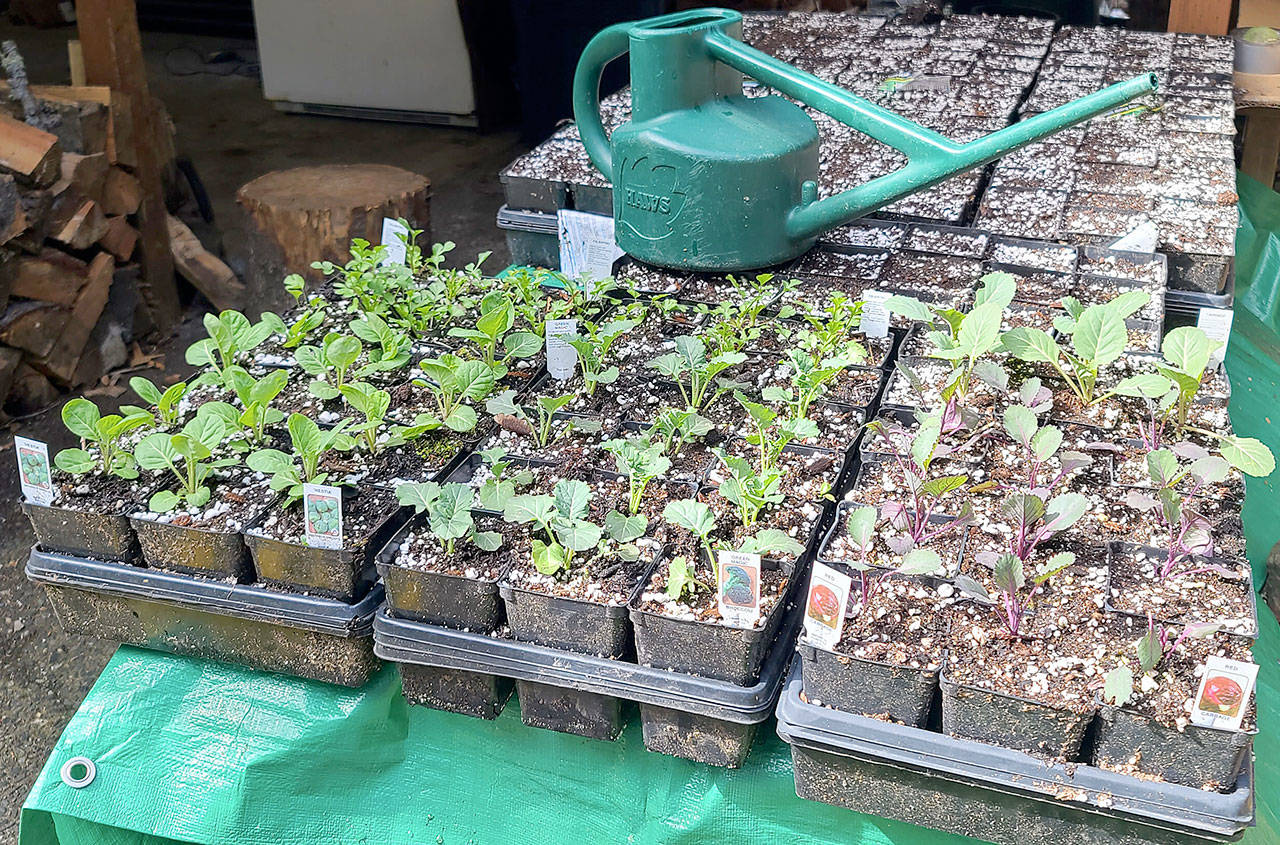
I PROMISED A New Year’s resolution to write more on sustainable, organic, healthy gardening — well here come my “free shots.”
Here we are, already into the spring season.
All of us are hoping for a return soon to normality.
Sports are one of the events humans love to follow and hence, we are in the height of March Madness as numerous folks mull over the fortunes of their hoops selections in the various brackets.
In the vegetable garden division of play, we have our own competing “brassica.” The contending members of this botanical brassica are composed of very familiar team names indeed: Broccoli, Brussels sprouts, bok choy, cabbage, cauliflower, collards, kale, kohlrabi, mustard, rutabaga and turnip.
I want to take today and the next two weeks to go over the “Cole Crop” division, as brassica are common called, because any of these individual members do extremely well here on the Olympic Peninsula.
One of them would win the title of best kitchen garden plant if given a chance in your garden.
In fact, most of you know I preach how the weather and climate of the Olympic Peninsula is perfect, the best for gardening in the entire U.S.
You want to maximize the advantages that our unique weather offers to gardeners, you would certainly feature the genus brassica in your produce garden lineup as permanent starters.
Our weather here is not only perfect, but perfectly suited for the brassica group of plants.
Not too long ago, the Sequim Dungeness Valley produced a majority of seeds for many members of the brassica genus, and even today we see the fields of cole crops all around the Peninsula.
The reason: Our weather here is so ideal for brassica because of our lack, actually total absence, of evening temperatures in the 80s and 90s, which causes this genus to bolt — the head flowers instantly and prematurely.
Because our evening temperatures never reach even 80 degrees, this plant thrives, and it’s love of cool evenings (days as well) means we can plant and sow very early, and harvest extremely late (November or December), making this garden genus harvestable for 9 to 10 months — all year round in cold frames.
Okay, it’s the perfect plant for here and my garden, but what exactly is brassica, and where did it come from?
Brassica is a genus of the mustard family (brassicaceae) of plants. It consists of more than 30 wild species, and numerous hybrids, along with a number of weeds and escapees from cultivation.
One needs only to drive around Sequim, or till up soil in that area, to see this escapee and weed phenomenon.
I am pushing this vegetable genus now because brassica contains more agricultural crops than any other edible genus and grows remarkably well over an extended duration of time on the Peninsula.
This genus is native throughout the planet, being found as indigenous plants in Europe, Asia and the Mediterranean, and is grown as produce worldwide.
Brassica derived from the Latin caulis, which means stem or cabbage, and all brassica share the trait of a strong stem with either a strong stem or dense head production.
These plants are cultivated worldwide because of their high nutritional value and can easily be steamed, stir-fried, boiled, microwaved, stuffed, pureed or enjoyed raw.
For storage, they freeze very well, with turnips, rutabagas and Kohlrabi wintering over nicely in root cellars, too.
Finally, many species now have been developed for use as a fall, winter and early spring ornamentals, and for their decorative and frilled/ruffled foliage, which is ideally suited as a garnish on the dinner plate.
But perhaps the best virtue of the brassica bracket is how well suited for rotation planting they are.
Two, three, four or five of each plant planted in the ground (or sown) every 10 days can provide for a bountiful harvest of vitamin rich and flavorful produce uninterrupted for many months.
So once again, mull over your likes and usages of turnip, bok choy, rutabaga, cabbage, cauliflower, broccoli, Brussels sprouts, kale, mustard and collards because in the next two weeks, we will offer a plant by plant analysis of each in this all star lineup — gardening March Madness like no other with April playoffs.
But as you play, please, please … stay well all!
________
Andrew May is a freelance writer and ornamental horticulturist who dreams of having Clallam and Jefferson counties nationally recognized as “Flower Peninsula USA.” Send him questions c/o Peninsula Daily News, P.O. Box 1330, Port Angeles, WA 98362, or email news@peninsuladailynews.com (subject line: Andrew May).
