
OUTDOORS: Additional halibut dates added
Published 1:30 am Thursday, July 16, 2026
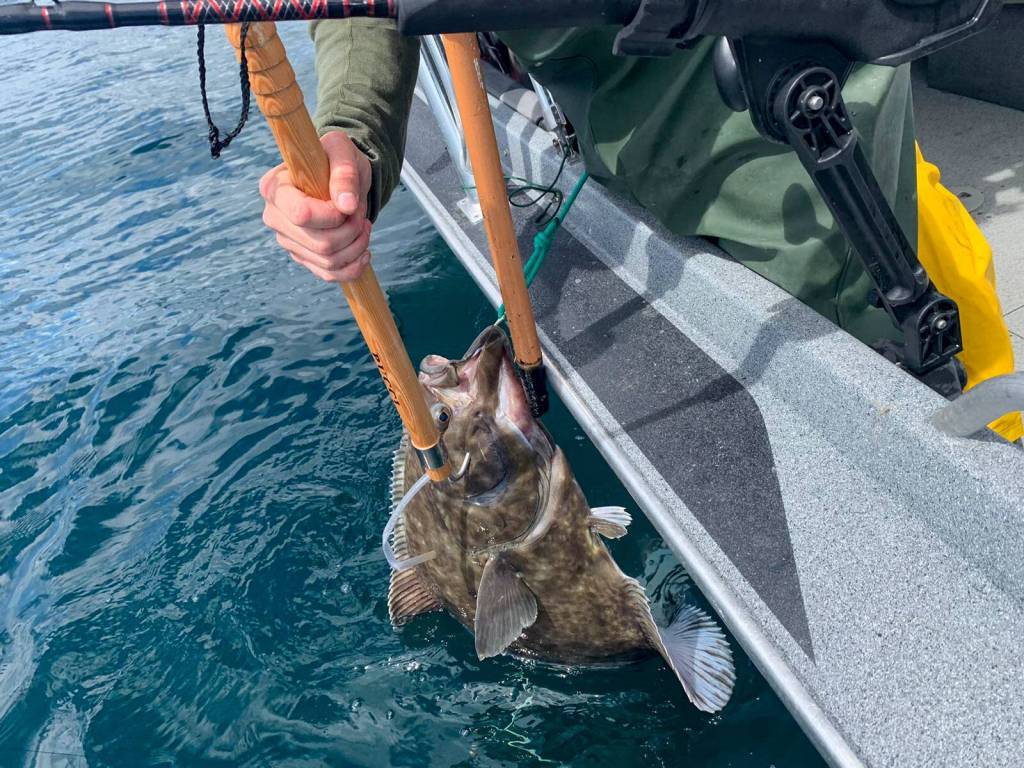
HALIBUT CATCH ESTIMATES show anglers found a little less success during the recently conducted halibut season compared to 2025, which means there is plenty of quota remaining to support a late-summer reopening from Aug. 16 through Sept. 30 in most marine areas.
“The halibut fishery caught a little less than half of the quota through June 30 — behind where we were this time in 2025,” said Heather Fitch, state Fish and Wildlife Department intergovernmental ocean policy coordinator.
“Last year, catches were slightly under the quota after the August and September openings; this year we can open the late season opportunity a week earlier in some areas.”
The 2026 recreational season is based on a statewide quota of 286,356 pounds. The catch quota of 1.65 million pounds in 2026 is the result of an allocation the International Pacific Halibut Commission approved Jan. 22 for fisheries in Washington, Oregon and California.
Additional 2026 coast and Puget Sound halibut dates, subject to available quota:
Marine Areas 5 (Sekiu and Pillar Point), 6 (East Juan de Fuca Strait) and 9 (Admiralty Inlet) will open daily from Aug. 16 through Sept. 30.
Marine Areas 3 (La Push) and 4 (Neah Bay): Open daily from Aug. 16 through Sept. 30.
In all marine areas open to halibut fishing, there is a one-fish daily catch limit and no minimum size.
Anglers must record their catch on a catch record card.
The annual limit is six halibut per angler. Possession limit is two daily limits in any form, except only one daily limit while aboard the fishing vessel. Anglers cannot fish for, retain, possess or land halibut into a port located within an area closed to halibut fishing. The only exception is that anglers can land halibut they lawfully retained in Marine Area 5 into a port within Marine Area 4 when Marine Area 4 is closed.
Halibut must be kept whole, or if filleted at sea, the full carcass must be retained. Whole halibut — or at a minimum, the entire carcass from head to tail — is necessary for collecting biological data required to estimate catch relative to the federal quota.
Fishery managers remind anglers that a descending device must be on board vessels and rigged for immediate use when fishing for or possessing bottomfish and halibut. Refer to WDFW’s webpage for information about descending devices. There are two helpful WDFW blogs about descending device requirements and rockfish identification and retention.
Creel staff will be at many coastal boat launches and access sites to gather information regarding fishing and crabbing trips. Anglers may be interviewed by multiple staff members who collect different information based on the species caught. The information these staff members collect is important for fishery management.
WDFW halibut managers will host a public webinar at 4 p.m. July 28 through Microsoft Teams and a follow-up meeting in October to review the 2026 season and invite ideas for structuring the 2027 season. Preliminary options will be presented during the Sept. 17-21 Pacific Fishery Management Council (PFMC) meeting in Vancouver, Wash. Final inputs for the 2027 season will occur during the Nov. 13-18 PFMC meeting in Garden Grove, Calif.
For more information, visit https://wdfw.wa.gov/fishing/regulations/halibut.
New WDFW police chief
Fish and Wildlife police have selected Michael Jewell, a 24-year veteran of the department, as the new departmental chief.
Over the course of his career, he has served as a field training officer, instructor, sergeant, and has been the North Central Region Captain since 2017. Jewell holds a bachelor of science degree in natural resource management from Washington State University and a master of public safety from the University of Virginia. In 2023, he completed the National Conservation Law Enforcement Leadership Academy and graduated as a member of the 288th session of the FBI National Academy.
Jewell replaces Steve Bear, who has led the program since 2017 and will retire this month. As chief, Jewell will oversee 186 personnel, including 154 commissioned officers.
As a result of the Legislature’s cuts, WDFW police lost 11 field officers as of July 2026. Despite the state’s population rising 50 percent since 1995, WDFW police has the same number of officers as 30 years ago.
Quiet at the hatchery
Hatchery fish are less likely than wild ones to return from the ocean to spawn — and one reason may be hatchery noise.
That’s a key finding of new research from Washington State University-Vancouver showing that hatchery-raised fall chinook that started life in noise-protected environments were more likely to complete the journey to the ocean and back than fish raised in noisy ones.
The work indicates that noise in a fish’s early life disrupts its ability to survive in the wild, and that the use of sound-dampening techniques in hatcheries could improve return rates.
Researchers studied Tule fall chinook raised at the Spring Creek National Fish Hatchery on the Lower Columbia River — a little more than an hour away from the WSU Vancouver campus. Tule Fall Chinook in the Lower Columbia are listed as threatened under the Endangered Species Act. The hatchery is near a train track and a state highway, so there is a relatively high amount of ambient noise.
The team examined the fish during the three months before their release. To their surprise, noise levels were not associated with significant differences in sensory development or swimming behavior, though there were moderate differences in fish size.
However, when they began tracking the return of adult salmon, they saw significant differences. Over the course of two years, fish raised in the quiet environment were slightly more likely to return than those raised in ambient noise, and nearly twice as likely as those reared with continuous white noise.
It does suggest that noise-dampening techniques, such as padding tanks with felt liners, could improve return rates, but there is a great variety among hatcheries and any such solutions would depend on each individual facility.
________
Sports reporter/columnist Michael Carman can be contacted at sports@peninsuladaily news.com.




Best of Olympic Peninsula