Rural residents object to proposed Sol Duc resort
Published 1:30 am Tuesday, February 24, 2026
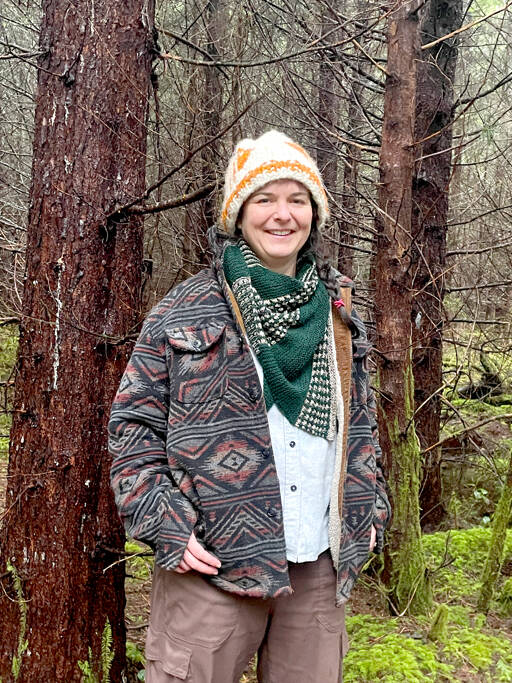
PORT ANGELES — People in the rural Sol Duc Valley say they choose to live there for its privacy, forested landscape and unspoiled surroundings.
Those qualities, they argue, are threatened by a proposal to build a 32-cabin resort — a project they contend would strain infrastructure and emergency services, disrupt wildlife habitat, affect safety and quality of life, and set a precedent for similar development.
On Feb. 5, more than 30 residents attended a Clallam County hearing examiner meeting to urge the denial of a conditional use permit application submitted by 9999 Grouse Glen LLC for its Luminary Resorts at Sol Duc project.
The county received the company’s application for a conditional use permit (CUP) on Nov. 21 for a getaway “designed for romantic, restorative stays” that “offers couples a tranquil retreat along with a small communal space for relaxed connection that harmonizes with the setting.”
Because recreational cabins aren’t specifically defined in the county’s zoning code, the proposal required approval through the CUP process.
In a Jan. 29 report, planning staff recommended approval of the CUP subject to 19 conditions that address phased development timelines, wildlife and habitat protections, stormwater and septic approvals, vegetative buffers and screening, fire safety compliance, access and road standards, lighting and signage limits, and the requirement for on-site management.
The project received a SEPA Determination of Non-Significance from the county’s Department of Community Development on Dec. 16, concluding it would not cause adverse impacts to soils, water quality, stormwater, wetlands, vegetation or wildlife habitat.
In prepared remarks at the hearing, Luanne Hinkle, 9999 Grouse Glen’s agent and representative, said, “The owners are committed to being good neighbors and to developing this project in a manner that is respectful of the surrounding rural community.”
Nonetheless, Hinkle said, the owners disagreed with a number of the proposed conditions, arguing they went beyond what county code requires. That included reducing the project from 32 cabins to 20, as well as the requirement of a wildlife study, noting that the county had already issued a Determination of Non-Significance.
Hinkle said the owners had proposed measures to address neighborhood concerns, including quiet hours, on-site management, property signage, road maintenance and limiting the size and operating hours of the community center on the site.
Attendees at the hearing sharply criticized the project, saying the staff report didn’t go far enough to restrict its scope and rejected Hinkle’s assurances that the company would address its concerns.
Grouse Glen Way resident Jody Cook said the numerous conditions in the report illustrated the extent to which the proposal conflicts with the area’s rural character and infrastructure.
“The recommendation relies heavily on future enforcement and management to mitigate impacts related to noise, traffic, lighting, trespass, fire risk and garbage,” Cook said.
“This reliance acknowledges that such impacts are anticipated and that, without constant oversight, the proposal would be incompatible with surrounding residential use.”
Brandon Miller said the project would burden an area already underserved community while providing little local benefit.
“Our fire, EMS and law enforcement in this area are short-staffed and stretched thin,” he said, adding that “having dozens of transient visitors unfamiliar with local terrain, weather, wildlife predictably increases emergency call volume and response risk.”
The proposal included no plan to offset the impacts associated with a resort of that size, he noted.
He also raised concerns about ownership and long-term community impacts, saying “profits leave, decision making leaves and the community absorbs the long-term impacts.”
The project’s “32 short-term rental units do not serve local housing needs, do not support workforce stability and do not strengthen long-term community resilience,” he said.
Following the hearing, planning staff issued a Feb. 11 addendum to their report, clarifying two conditions and adding two new ones: prohibiting mirrored or reflective exterior surfaces in response to concerns about impacts on wildlife, and limiting operations from April 1 to Sept. 20 rather than year-round use.
Hinkle said the owners viewed the project as requiring ongoing accountability and communications to monitor impacts and respond to issues if they arise, she said.
Hinkle said a full-time, on-site manager who would live at the property is “probably more responsive having someone live onsite than many Airbnbs in the area,” she said.
The planning department conditions and assurances from 9999 Grouse Glen were not good enough for Heather Cantua, who lives on Bear Creek Road.
“When you say that the manager is going to manage disputes and problems, what you’re really saying is they’re going to be calling the cops,” Cantua said on a visit to the proposed site.
She criticized what she described as Luminary’s lack of meaningful engagement with the community, arguing that if the company were truly invested in the area, it would prioritize local workforce participation and partnerships within the local economy.
The possibility of sourcing materials locally — including the Makah Tribe’s partnership with the Composite Recycling Technology Center in Port Angeles to produce cross-laminated timber panels, the planned opening of a mill in Forks and locally manufactured shingles — had not been explored.
She called the mirrored cabins “pre-fab junk.”
“They’re doing this as cheaply as possible,” she said.
One potential and significant obstacle to the project is water — or the lack of it.
Among the conditions, planning staff require Luminary to obtain state approval for a Group A public water system — defined as one serving 15 or more connections or 25 or more people per day for at least 60 days a year — and to meet state Department of Health standards for design, testing and ongoing monitoring.
“We can’t go forward until we get that approval,” Hinkle said. “If the state says, ‘No, you can’t do it,’ we won’t do it.”
Other than that, she said, “It’s still not a done deal. If the owner doesn’t agree with a particular condition, it can still be argued against applicable code.”
Luminary has until Wednesday to submit a written response to Hearing Examiner Stephanie Marshall. Public comments also will be accepted through that date.
9999 Grouse Glen’s conditional use permit application can be found here and the hearing examiner documents can be found here. To submit a public comment, email enrique.valenzuela@clallamcountywa.gov.
The proposed Luminary Resorts at Sol Duc would occupy a 20.9-acre parcel zoned Rural Woodland 5, which allows one dwelling per 5 acres and certain rural-compatible lodging uses with a conditional use permit. The designation is intended to preserve the area’s forested, rural character.
Plans call for 32 prefabricated, 480-square-foot mirrored cabins manufactured in Guangdong, China, each with a sauna, outdoor deck and fire pit. The proposal also includes pickleball courts, a 4,800-square-foot communal building and a small caretaker residence.
The proposal outlines a five-phase development scheduled between 2026 and 2031, with cabins, infrastructure and amenities constructed over that period.
999 Grouse Glen was registered in Washington on July 17, 2025, with Rui Yang and Xiangdong Xu listed as governors under Momo Holdings, LLC. The development team includes Enchanted Havens New Luminary Resorts founder “Richard” and operations lead “Lydia” (whose last names were not available). Denise Foley of Sequim-based New Phase Contracting is the contractor.
The company operates Luminary Resorts at Hilltop in Cold Spring, Texas, which features similar mirrored-cabins where nightly rates range from $289 to $429 plus fees and taxes. Hinkle said she estimated a base nightly rate of about $350 at the Sol Duc site.
________
Reporter Paula Hunt can be reached by email at paula.hunt@peninsuladailynews.com.