
SEQUIM — Joy Helmer is on a mission to create more heart-to-heart connections in the Sequim community.
With recent tragedies such as the Parkland, Fla., shooting that killed 17 people in February, Helmer felt compelled to spread the word about the power of compassionate listening to Sequim School Board members, district parents and teachers.
She presented the idea of a compassionate listening training session to the School Board on March 19 with the hopes of encouraging community members to learn tools that allow them to deeply listen to one another and help resolve conflict.
“I was upset [about recent shootings] and felt like I had to understand this,” she said.
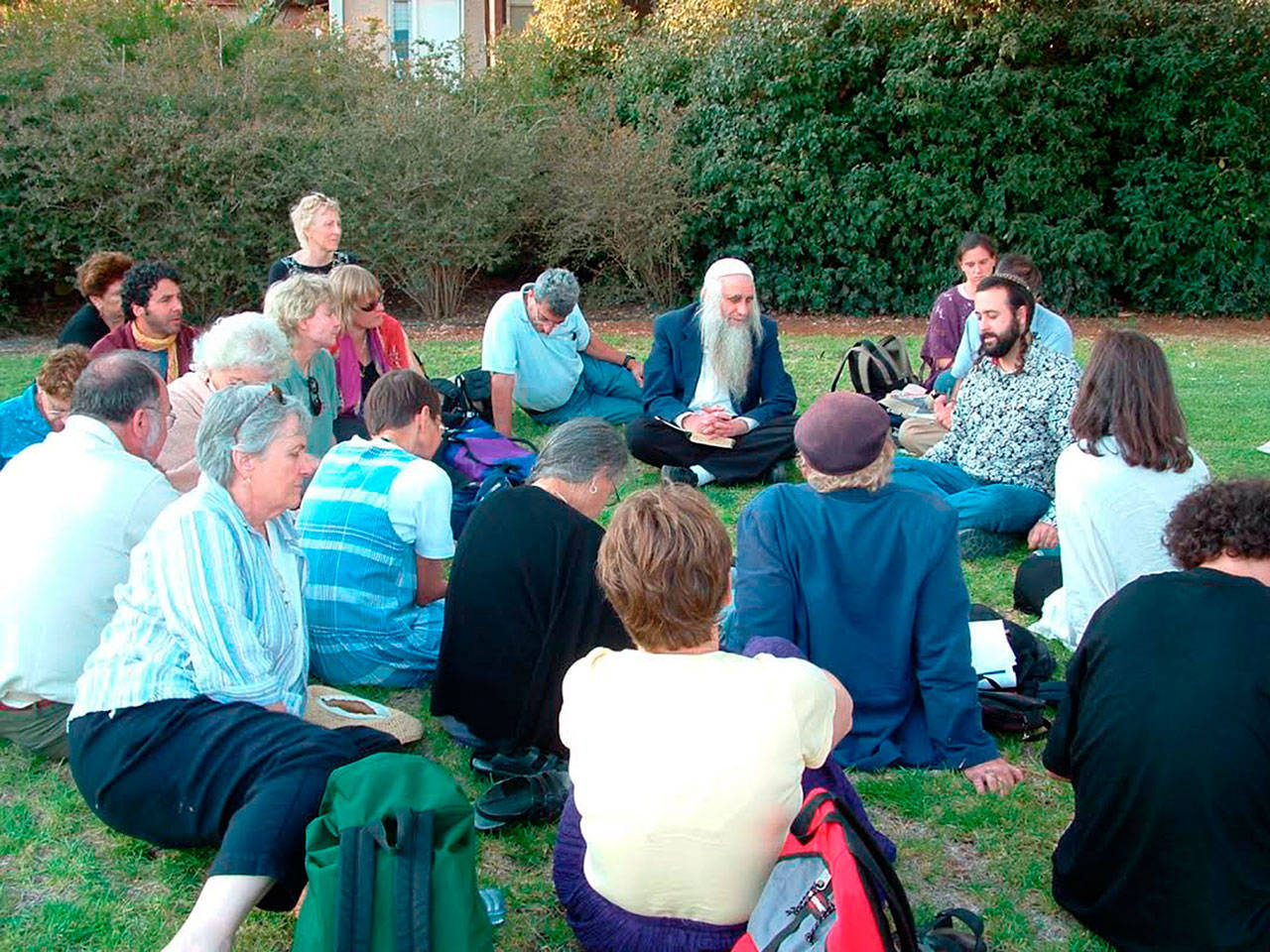
She has organized a free compassionate listening training session from 9 a.m. to 4 p.m. Saturday, April 7, at Sequim City Hall, 152 W. Cedar St., to give community members a chance to learn these skills of deep listening and listening to connect.
“This ability to connect is incredibly valuable,” Helmer said.
“I love this idea because it’s creating a better future.”
Those who are interested in registering for the training session can contact Helmer at 206-601-6563 or email joyousdancer47@gmail.com.
Attendees are asked to arrive no later than 8:40 a.m. to complete registration. A $5 fee is asked to guarantee a seat and will be returned at the end of the day.
The training session will be facilitated by Seattle resident Andrea Cohen, a senior compassionate listening trainer and curriculum developer of 20 years.
The training is derived from the teachings of the Compassionate Listening Project developed in the late 1990s by Leah Green in Kitsap County.
The project is adapted from citizen diplomacy efforts in the Middle East and the writings of Gene Knudsen Hoffman and her teacher, Buddhist monk Thich Nhat Hanh.
Compassionate Listening was adapted in 1996 to serve the U.S. in academic, public and private settings and trains people to deeply listen to one another and suspend judgment to initiate humanizing contact and create compassion for those on all sides of conflict.
“Our practice is heart-based tools for transforming conflict,” said Green, Compassionate Listening founder and executive director.
“It really flows out of a concept that our heart is our greatest resource for reconciliation and peace building, whether it’s with our parents, or our neighbors, or anything else.”
Green said compassionate listening is an embodied approach and life-long practice based on the field of neuroscience and the heart and brain connection.
“When we’re anchored in our heart, it’s called coherence,” Green said.
“We’re actually changing the brain waves of the people that we’re interacting with, and when we’re in coherence we bring other people into coherence.”
Green said it is in this calm and centered place, especially in a collective, that is able to transform those in conflict.
“When you’re in coherence you have the highest access of the frontal lobes of the brain,” she said. “Meaning: wisdom of seeing the whole and solutions so it gets us out of that polarized thinking.”
Those who have been trained in this practice of compassionate listening, such as Helmer, Green and Cohen said this training works because it has helped them resolve conflicts in their own personal lives.
Helmer was a psychiatric nurse for many years and was estranged from her family for more than a decade. She said these skills helped her mend relationships in her family, talk to patients when she was a psychiatric nurse and in her trans-partisan groups where she brings members from opposite political parties together to hold discussions.
Cohen has used these tools in her work with Jewish and German reconciliation efforts — among many others. Green originally used this practice in Israel and Palestine reconciliation work in the early 1990s and still today.
“We used compassionate listening as the framework applied to the work we began [in Israel and Palestine] in 1990,” Green said.
“If it works in a war zone, we knew it could work anywhere.”
Helmer’s target audience for the training session in Sequim is teachers, parents, law enforcement, mental health practitioners or anyone who wants to learn these skills.
Helmer hopes these skills can help neutralize the polarized political climate in our society and maybe even reduce the number of mass shootings that are happening in schools.
“I’m hoping people try it out,” Helmer said.
“If these practice were in schools we would see such a profound shift in our generations,” Green said.
The skills taught in this training session are meant to be used and applied in a person’s everyday life, from his or her family, workplace, community and more.
“I go so far to say it’s skills for the 21st century,” Green said.
“Individuals can learn it and it will have a really beneficial effect in their life, but when groups of people come together, it can do things like seek out the marginalized people in a community.”
For more information about the Compassionate Listening Project, visit https://www.compassionate listening.org/.
