
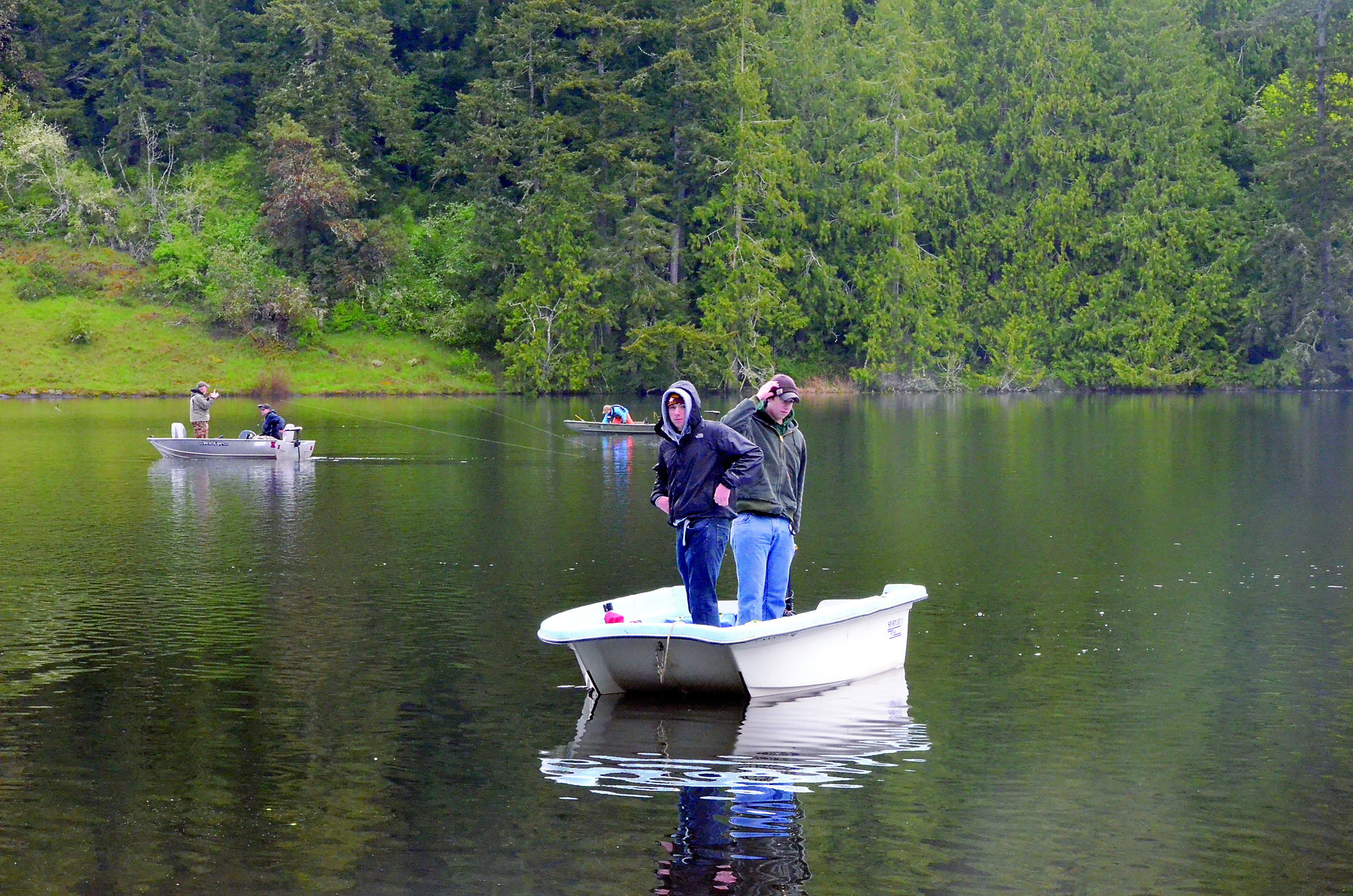
PORT TOWNSEND — Anderson Lake has been closed because of high levels of a potent nerve toxin.
Washington State Parks closed the lake Thursday, the Jefferson County Public Health Department announced in a news release.
The lake is closed to all recreation, including fishing, boating and swimming. Visitors are urged to keep pets out of the water.
The rest of Anderson Lake State Park remains open for hiking, biking and horseback riding.
A sample taken from Anderson Lake on Monday was found to contain 17.8 micrograms per liter of anatoxin-a, a nerve poison that can kill within 4 minutes of ingestion.
The state recreational criteria is 1 microgram per liter.
Trace amounts of the toxin microcystin were also found, the county health department said.
Microcystin is a toxin from blue-green algae that can lead to liver damage if consumed over a long period of time.
Heavy bloom
The lake has a heavy bloom of blue-green algae, according to Michael Dawson, lead environmental health specialist for the Jefferson County Water Quality Program.
The bloom contains three toxin-producing species: anabaena, aphanizomenon and microcystis.
The county has not sampled Gibbs Lake, a catch-and-release trout lake near Chimacum, nor Lake Leland, near Quilcene, this year, as they have not shown signs of blue-green algae so far.
The lake in the 410-acre Anderson Lake State Park has been plagued with intermittently high levels of dangerous toxins from blue-green algae since two dogs died after drinking the water on Memorial Day weekend in 2006.
The county health department has monitored area lakes for blue-green algae since 2007.
Opened in late April
The state Department of Fish and Wildlife opened Anderson Lake for recreational fishing April 25, and anglers enjoyed trout-fishing there until Thursday’s closure.
Toxin levels had remained below recreational criteria in April.
However, the bloom of blue-green algae steadily worsened, Dawson said.
Blue-green algae, which occurs naturally, can begin at times to produce toxins in a process researchers still don’t understand.
To check the status of Jefferson County lakes, see http://tinyurl.com/PDN-JeffCoLakes or call 360-385-9444.
For fishing seasons and regulations see the state Department of Fish and Wildlife website at www.wdfw.wa.gov/fishing.
Toxin-producing blue-green algae has not been spotted in Clallam County. Report algae blooms in Clallam County by phoning 360-417-2258.
For more on Anderson Lake State Park, see www.parks.wa.gov/240/Anderson-Lake.
