
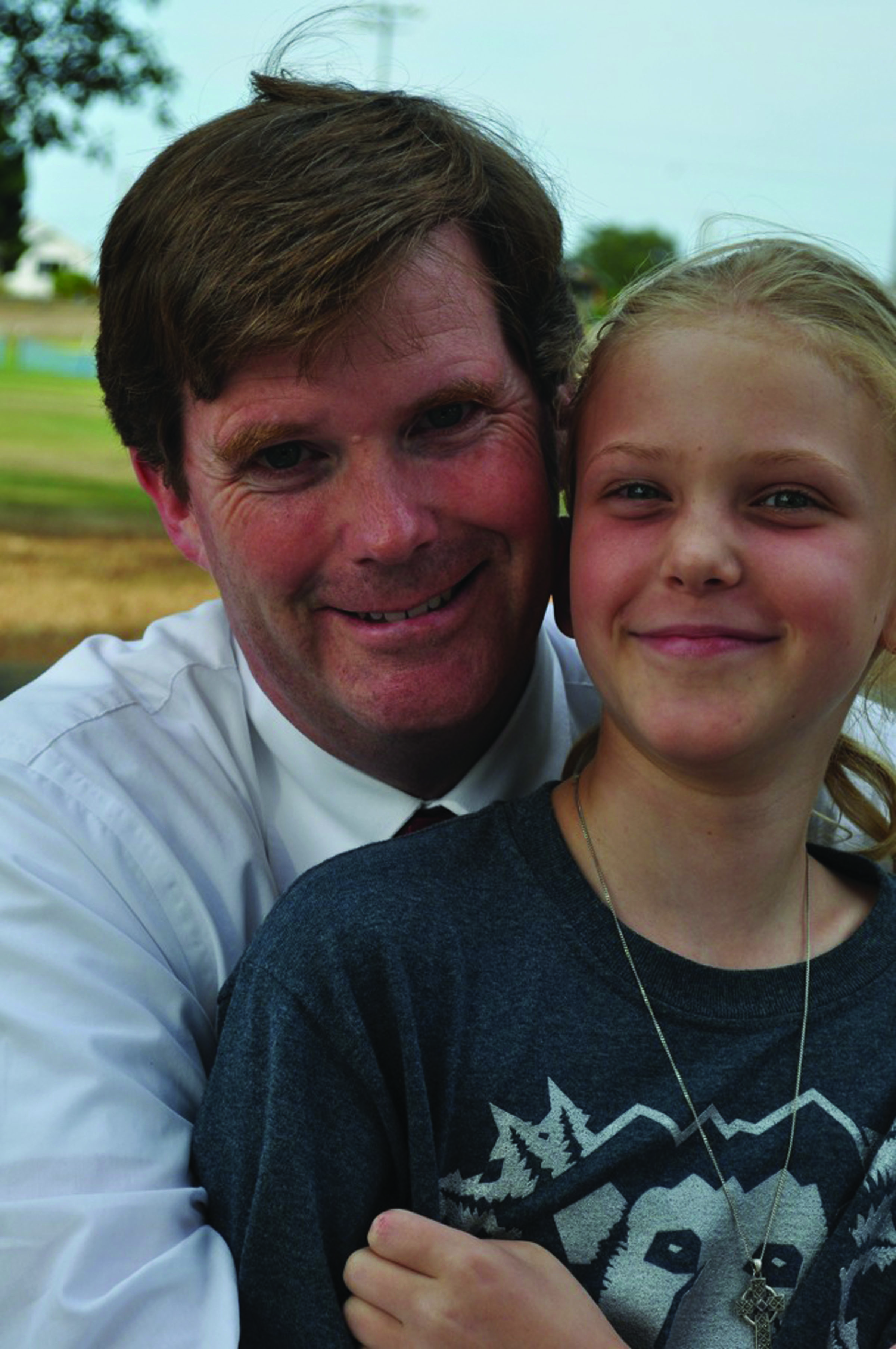
PORT ANGELES — Type 1 diabetes may just make Madeline Irwin the most health-minded 9-year-old you’ll ever meet.
The life-threatening illness has given her an acute awareness of her body, what she puts into it, and how her body puts that food and drink to use.
When she was diagnosed with the disease three years ago, a clinician worried Madeline hadn’t understood all the grim facts that had been thrown at her during a four-day orientation to her unwelcome malady.
Madeline responded by drawing a picture of her pancreas, labeling all its functions — and dysfunctions and malfunctions — and showing it to her astonished nurse.
“She summarized all of her training with a picture,” her mother recalled.
Sitting at a picnic table in Shane Park with her younger brother Liam, mom Holly and dad Patrick, she was matter-of-fact about how her immune system attacks her own insulin-producing cells.
“Basically, diabetes is complicated,” she said, head cocked in serious thought.
“That’s putting it the short way.”
Then she flashes a smile that’s like a sunbreak on a midwinter morning and takes off running after Liam on coltish legs.
That leaves it to her mother and father to explain why they’ve joined a Type 1 diabetes support group led by Christina Hurst, health programs manager at Clallam County Health and Human Services and herself the mother of a teenage son who has Type 1 diabetes.
“It wasn’t that long ago that if you were given a Type 1 diabetes diagnosis, it was pretty much a death sentence,” Holly Irwin said, adding that people discussed the disease in whispers.
In Type 1 diabetes (formerly called juvenile-onset or insulin-dependent diabetes), a patient’s immune system destroys the body’s insulin-producing cells, so the patient must inject insulin for his or her body to absorb sugar and produce energy.
It accounts for 5 to 10 percent of people who have diabetes. It cannot be prevented.
In Type 2 diabetes (formerly called adult-onset diabetes), the patient’s body doesn’t use its own insulin properly, and may make less and less insulin. It commonly occurs during adulthood but is appearing more frequently in children.
Type 2 often can be prevented, delayed or controlled through diet and exercise.
Holly has talked with older diabetes patients who, before disposable syringes were available, had to sharpen their own needles on whetstones so they could inject themselves with insulin. That’s the human hormone that governs glucose levels.
“Nowadays it’s not a great disease, but we have technology that makes it much easier to live with,” she said.
Under her Camp Leo for Children with Diabetes T-shirt, Madeline wears a glucose pump at her waist, its thin tube inserted beneath her skin. On her shoulder is a lifesaver-shaped glucose monitor that keeps track of her blood sugar.
If her glucose drops suddenly, it sounds an alarm. If she’s not awake to hear it, it shuts off the pump for two hours.
The pump and monitor are a far cry from the frequent finger pokes and shots Madeline once endured, but they’re just the dawn of the promise of an artificial pancreas.
Already, the computer that controls her pump has shrunk from a laptop to the size of a cell phone.
Eventually scientists may be able to encapsulate insulin-producing pancreatic cells to shield them from the autoimmune disorder and implant them in Madeline’s body.
That’s just the technology side. Experts are tracking the genetic markers that people with diabetes display to learn how they throw “switches” that trigger pancreas-killing antibodies and to develop vaccines to counteract the malfunction.
Such research could transform diabetes care from treating its symptoms to preempting its causes.
“It’s the best time to have one of the worst diseases around because there’s so much happening,” Holly said.
That doesn’t mean Madeline’s parents don’t measure the ingredients of every meal — hers, Liam’s and theirs for good measure.
Liam has shown one marker for Type 1 diabetes, Patrick Irwin said. Three markers indicate a person is susceptible to developing the disease.
“You’re not just making a sandwich anymore,” Holly said. “You’re having to measure out the carbs in the bread, figure out the peanut butter and the jelly.”
The Irwins also experience nights with little sleep when Madeline’s glucose levels ride a roller coaster, all the harder to treat because they lag hours behind the insulin doses that moderate them.
And some days, the same amount of carbohydrates produces wildly different amounts of blood sugar.
Thus, the support group for all the family.
“It’s a group for anybody with Type 1 diabetes, from parents of kids to people who’ve had it 30-40 years,” Holly said.
It’s important “just to know that there’s support locally, whether it’s a new family or someone who’s had it for a long time.”
Holly calls the process “developing your new normal.”
Normal is just how Madeline acts on a sunny summer afternoon, even when she contemplates her illness.
“I have to get poked all the time [for glucose testing],” she said, “but you get used to it.”
Madeline has given reports to her classmates about Type 1 diabetes — warning them at the start that she’ll quiz them at the end.
Her friends are understanding and supporting, she said, “as long as they listen enough.”
She’ll prepare another report now that she’s entering fourth grade.
Madeline enjoyed attending Camp Leo last month in Enumclaw, a camp where organizers say Type 1 diabetes is the norm, not the exception, for children and where she’s made a best friend.
For Patrick and Holly, there’s still the specter of what Type 1 diabetes once did to people — or could do to Madeline if she doesn’t control it.
“Our hope is not to have the complications like blindness or amputations,” Holly said, voicing the unspeakable.
For her part, Madeline wears her medical alert bracelet with the same nonchalance as she wears the tiny Celtic cross her grandmother gave her.
“I can test my own blood sugar now,” she said.
“And after awhile the needles stop hurting — or start hurting less, I should say.”
And there are compensations, like knowing where her pancreas is, what it does, what it doesn’t do and even why not.
“I know a whole lot more science,” she said before dancing away to chase Liam, “than a whole lot more people.”
_______
Reporter James Casey can be reached at 360-452-2345, ext. 5074, or at jcasey@peninsuladailynews.com.
