
‘My Heart Is Good’ tells ‘an untold story’
Published 1:30 am Tuesday, November 11, 2025

While the landmark case is officially known as “U.S. v State of Washington,” anyone interested in fishing and human rights in the Northwest calls it the Boldt Decision.
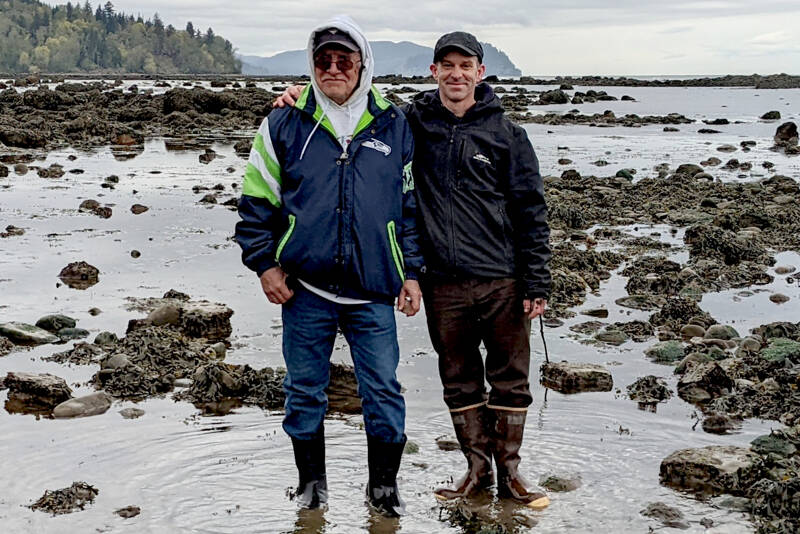
U.S. District Judge George Boldt’s 1974 ruling redirected the lives of people such as Ron Charles, a S’Klallam tribal leader who tells his story in “My Heart Is Good: Treaty Rights and the Rise of a S’Klallam Fishing Community,” a new book from Empty Bowl Press of Chimacum.
Charles, along with co-author and anthropologist Josh Wisniewski, will discuss the book and answer questions in three public events in the coming week:
• At ʔaʔkwustəŋáw̕txw House of Learning, the Peninsula College Longhouse in Port Angeles, at 12:35 p.m. Wednesday in a presentation that also will be available on Zoom via the Studium Generale link at pencol.edu.
• At the Friends Meetinghouse, 1841 Sheridan St., Port Townsend, at 4 p.m. Friday.
• At the Port Gamble S’Klallam Tribe Culture Day at the Village Green in Kingston at 4 p.m. Saturday.
The authors will sign copies of “My Heart Is Good” at each event, while the book also is available at emptybowl.org and local bookstores, including Imprint Bookshop in Port Townsend.
“The Boldt Decision hit the Pacific Northwest like a tsunami, challenging a social order that had steadily expanded white fisheries while restricting the tribal catch. It was chaos for the tribes as well,” said historian Carmel Finley, adding that “My Heart Is Good” offers many insights into the tumultuous time that followed the ruling.
The Boldt decision gave Washington tribes the right to half the catch, and non-tribal fishers the right to the other 50 percent, and the tribes and the state would co-manage the fishery.
Charles, 82, said he hopes the book will provide a better understanding of how people have learned to work together.
“I have the book in my hands,” he added, “and I am so pleased and relieved that it is done.”
Charles said too that he lived through an exceptional time period, and he is grateful for the opportunity to pass along his experience to the next generation.
“My Heart Is Good,” by centering on Charles’ story, shows how one small tribal community transformed into the stable commercial fishing community it is today, noted Empty Bowl co-publisher Holly Hughes.
“While other historical accounts focus on the ‘fish wars’ and the events leading up to the Boldt decision, this (book) describes what followed,” she said.
“Ron played a significant role in those years, working with other tribes and the state, to set up co-management of the fisheries with the goal of sustaining the fisheries for all.
“As we face a future of declining resources, we can all learn from the traditional knowledge and sense of reciprocity with the land and sea that the tribes offer.”
Wisniewski, a fisherman as well as an anthropologist of fisheries history, devoted about 10 years to recording Charles’ oral history. “My Heart Is Good” is based on interviews Wisniewski conducted, while aside from providing historical context, he sought to stay in the background, to elevate Charles’ voice.
The book’s title comes from the minutes of the 1855 Point No Point Treaty negotiations.
“It is part of a longer statement made by the S’Klallam leader Chitsamahan, who was also known as Chetzemoka, or the Duke of York,” Wisniewski noted.
“My heart is good, because I have heard the paper read and since I have understood Governor Stevens, particularly as I have been told I could look for food where I please not in one place only,” Chetzemoka said.
This is key, Wisniewski added, “because it demonstrates that the S’Klallam people understood that the treaty preserved all of their pre-existing rights and opportunities to harvest as they had done prior to the arrival of Euro-Americans in the Northwest.”
The Boldt Decision affirmed those rights, as well as tribal sovereignty.
“My Heart Is Good” focuses on one tribal leader’s experience, and on the development of tribal fisheries management, “an untold story,” Wisniewski said.
“Today the state and the tribes are co-managers of fisheries; not just salmon but shellfish as well,” he added.
“This is a story told through the experiences of one who was there from the beginning.”
________
Diane Urbani de la Paz is a freelance writer and photographer who lives in Port Townsend.


Best of Olympic Peninsula