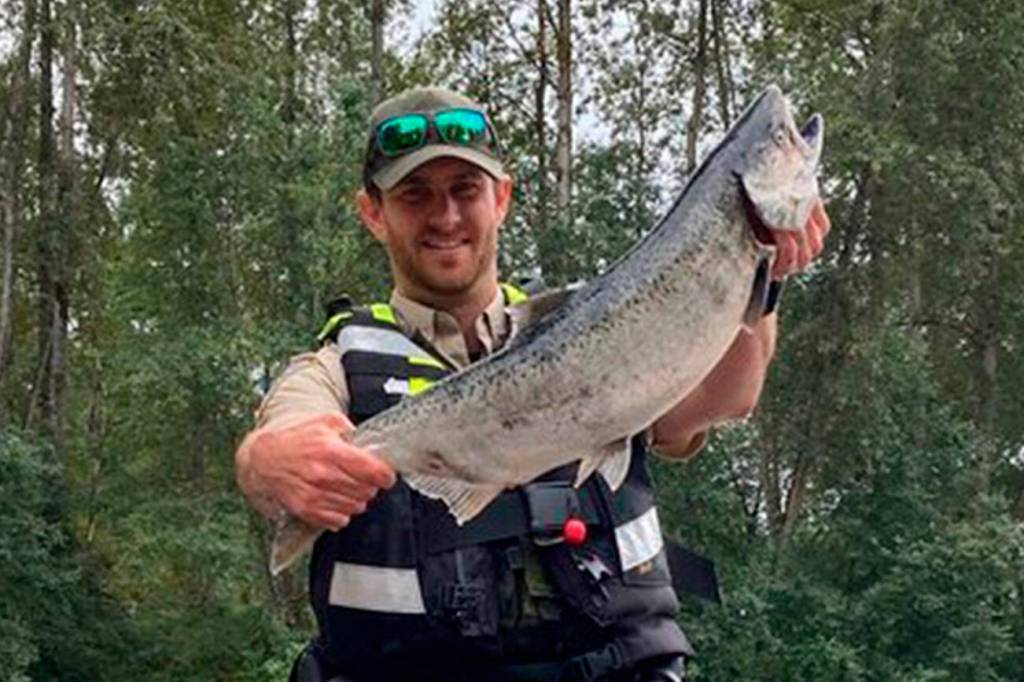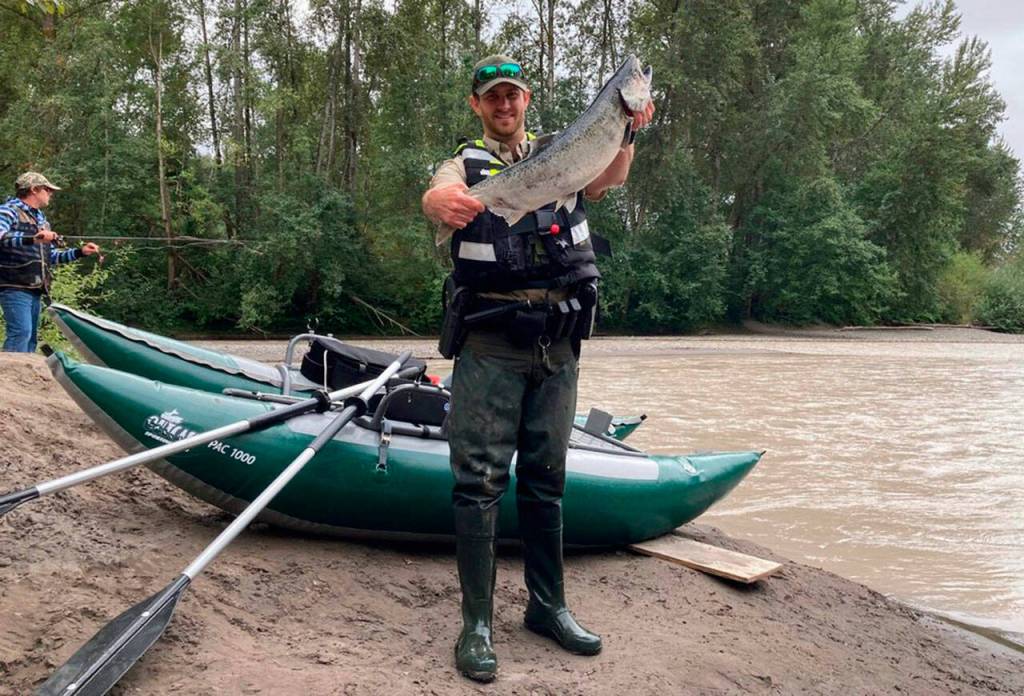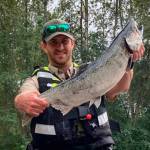
New rafts donated to Washington Department of Fish & Wildlife were used to great effect this summer, fishing advocates say, providing the means to effectively patrol smaller rivers. On a day when a number of citations for violations were written, WDFW officer Patrick Murray holds up a wild chinook an angler had kept after cutting off the adipose fin. (Courtesy of WDFW)

New rafts donated to Washington Department of Fish & Wildlife were used to great effect this summer, fishing advocates say, providing the means to effectively patrol smaller rivers. On a day when a number of citations for violations were written, WDFW officer Patrick Murray holds up a wild chinook an angler had kept after cutting off the adipose fin. (Courtesy of WDFW)

Fishing groups’ donation supports wildlife law enforcement teams

Regional wildlife law enforcement have more tools to patrol the Olympic Peninsula’s rivers and coastlines thanks to a collaboration of Washington state fishing advocates.

The Wild Steelhead Coalition, the Wild Salmon Center and Wild Steelheaders United (Trout Unlimited) recently joined forces to donate a package of equipment — including rafts, trail cameras, waders and boots and a drone — to support state Department of Fish & Wildlife law enforcement teams working on the Pacific Coast and Olympic Peninsula, Wild Steelhead Coalition representatives said in December.

Enforcement needs

“It is necessary for Fish and Wildlife Police to increase enforcement presence and utilize state-of-the-art equipment to ensure resource protection,” WDFW Capt. Dan Chadwick said in a statement

Chadwick oversees Region 6, including Clallam, Jefferson, Grays Harbor, Kitsap, Mason, Pacific, Pierce, Thurston and Wahkiakum counties.

“Partnerships with local and statewide community organizations like Wild Steelhead Coalition, Trout Unlimited and Wild Salmon Center are essential in maintaining safe and properly managed recreation opportunities for the residents and visitors to Washington state,” he said. “We appreciate their generous donations of equipment, which will allow our officers to monitor secluded areas with the use of cameras and to access these remote areas with rafts and personal wading gear.”

In 2019, the Wild Steelhead Coalition donated a collection of trail cameras, spotting scopes and a new raft and oars to the Fish & Wildlife team responsible for safeguarding the rivers, coastal waters and forests of the Olympic Peninsula and Hood Canal.

Over the following two years, the cameras and raft allowed law enforcement officers to greatly expand their reach and led to increased enforcement against illegal fishing, hunting, logging and other wildlife violations and numerous poaching arrests, state fishing advocates said.

Encouraged by this, the Wild Steelhead Coalition reached out to colleagues at the Wild Salmon Center and Wild Steelheaders United of Trout Unlimited and to associates at Simms, Outcast Boats and Sawyer Paddles & Oars to expand the impact of the original donation with a larger gift in 2021.

Donation

The new donation included a pair of small one-person rafts, multiple sets of waders and boots for game wardens, new oars for an existing drift boat, almost 40 trail and security cameras and a drone.

“We are proud to be collaborating with conservation and industry partners to provide this new equipment to WDFW law enforcement,” Greg Topf, board chair of the Wild Steelhead Coalition, said. “Washington’s game wardens are the first line of defense for the shared, public resources all of us value and want to see safeguarded for the future. We have immense respect for their work and know how much these boats, cameras, and drone will expand their reach and ability to protect wild steelhead and salmon when these key coastal fish populations need it most.

“Our earlier donation meant more poachers were caught and more fish were protected. We can’t wait to see the impacts of this larger set of tools during the coming years.”

Combined, Wild Steelhead Coalition representatives said, the equipment has a value of more than $20,000 and gives law enforcement the ability to survey a much wider geographical area than before — particularly with the addition of the drone.

The donation means cameras can be spread throughout the region, to be used on the Olympic Peninsula, Hood Canal and throughout the Chehalis River Basin; a few will also go to North Puget Sound, where they may be deployed on the Skagit and Sauk rivers and other watersheds depending on the need, fishing advocates said.

The goal, they said, is not only to offer protections for Washington state’s struggling wild steelhead and salmon populations, but also help state teams protect big and small game animals and non-game wildlife, prevent illegal timber harvesting and more.

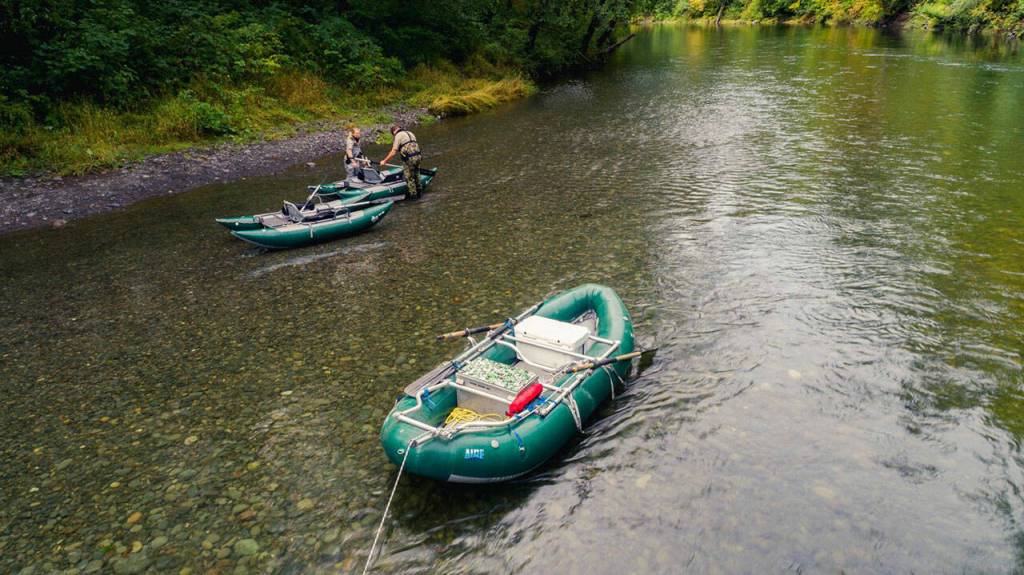
A photo taken by a newly-donated drone shows rafts provided to state wildlife law enforcement teams by three fishing advocate groups in 2021. (Ed Sozinho/for Wild Steelhead Coalition)

A photo taken by a newly-donated drone shows rafts provided to state wildlife law enforcement teams by three fishing advocate groups in 2021. (Ed Sozinho/for Wild Steelhead Coalition)

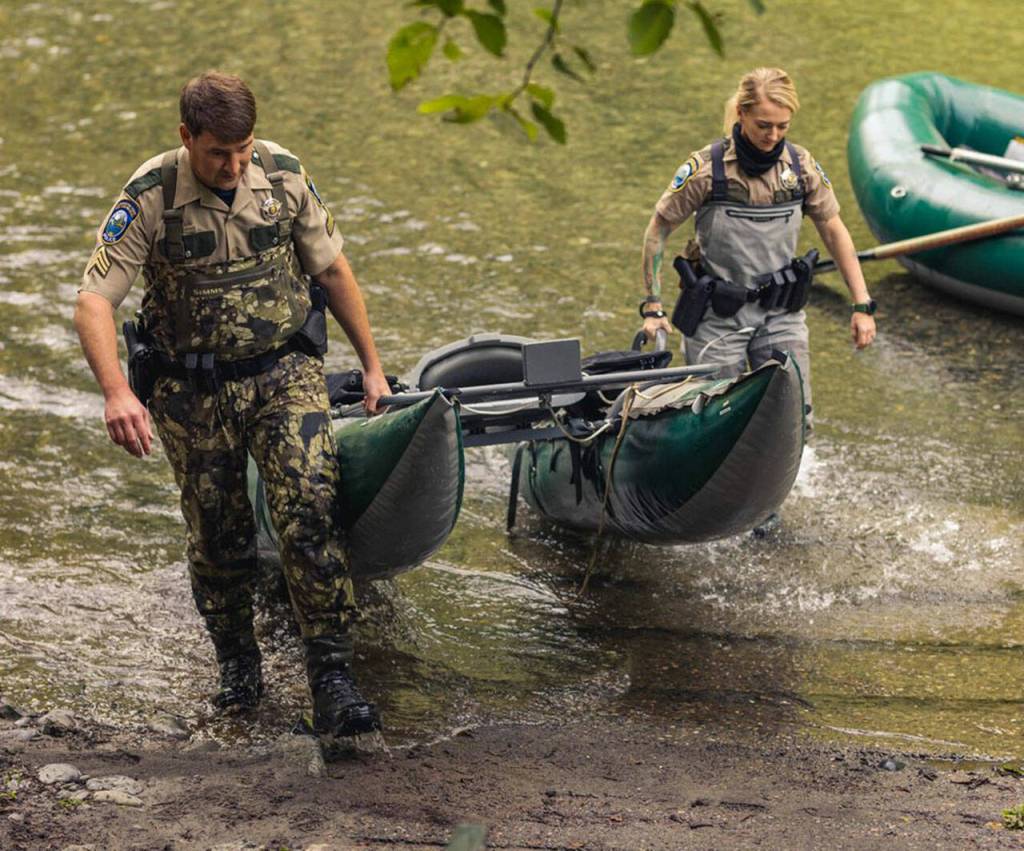
Sgt. Kit Rosenberger and officer Tierra Wessel of the Washington Department of Fish & Wildlife haul one of the new rafts recently donated to WDFW teams by the Wild Steelhead Coalition, the Wild Salmon Center and Wild Steelheaders United (Trout Unlimited). (Ed Sozinho/for Wild Steelhead Coalition)

Sgt. Kit Rosenberger and officer Tierra Wessel of the Washington Department of Fish & Wildlife haul one of the new rafts recently donated to WDFW teams by the Wild Steelhead Coalition, the Wild Salmon Center and Wild Steelheaders United (Trout Unlimited). (Ed Sozinho/for Wild Steelhead Coalition)

More in News

Dan Willis of Port Townsend, a docent at the Point Wilson Lighthouse at Fort Worden State Park, conducts a tour for interested visitors on Thursday. The lighthouse was built in 1878 when Congress approved $8,000 for the light and foghorns. Although the facility is still an active U.S. Coast Guard station, the equipment is monitored and operated remotely and no keepers are present. Regular tours on Saturdays and Sundays will resume in May. (Steve Mullensky/for Peninsula Daily News)
Lighthouse tour

Dan Willis of Port Townsend, a docent at the Point Wilson Lighthouse… Continue reading

EMT Teresa DeRousie, center, was recognized for her long service to Clallam County Fire District 2. Presenting the award were Deputy Fire Chief Kevin Denton, left, and Chief Jake Patterson. (Clallam County Fire District 2)
Clallam 2 Fire Rescue hosts awards banquet

Clallam 2 Fire-Rescue recognized career and volunteer members during… Continue reading

Construction set to begin on new marine life center in Port Angeles

Groundbreaking event scheduled for April 8 at Pebble Beach Park

A seal pops its head out of the water as a dory rower propels his craft in the calm waters of the Salish Sea. Whidbey Island is in the distance. Today’s high temperature is forecast to be in the low 50s with partly cloudy skies. Rain is set to return this weekend. (Steve Mullensky/for Peninsula Daily News)
Rowing on the Strait

A seal pops its head out of the water as a dory… Continue reading

Fire protection may impact insurance rates

New protection class considers nuanced data

The view looking south from Hurricane Ridge, where variable winter weather has limited snow coverage and contributed to pauses in snow sports operations in recent weeks. (Washington’s National Park Fund)
Lack of snow has impact at Hurricane Ridge

Water equivalent well below average for February

Port Angeles secures grant to aid in salmon recovery

State Department of Commerce to provide city with $109,000

Tickets still available for United Way of Clallam County fundraiser

Pajamas are encouraged, teddy bears are optional and comfort… Continue reading

Interviews set for hospital board

At least seven candidates up for commissioner seat

Port Angeles asks for fee to cover lodging tax contracts

Resolution sent to committee for administrative costs

Climate action group is guiding reduction goals

Reduced emmissions require reduced transportation footprint