
OUTDOORS: Keep two kings daily off Sekiu starting Saturday
Published 1:30 am Friday, July 17, 2026
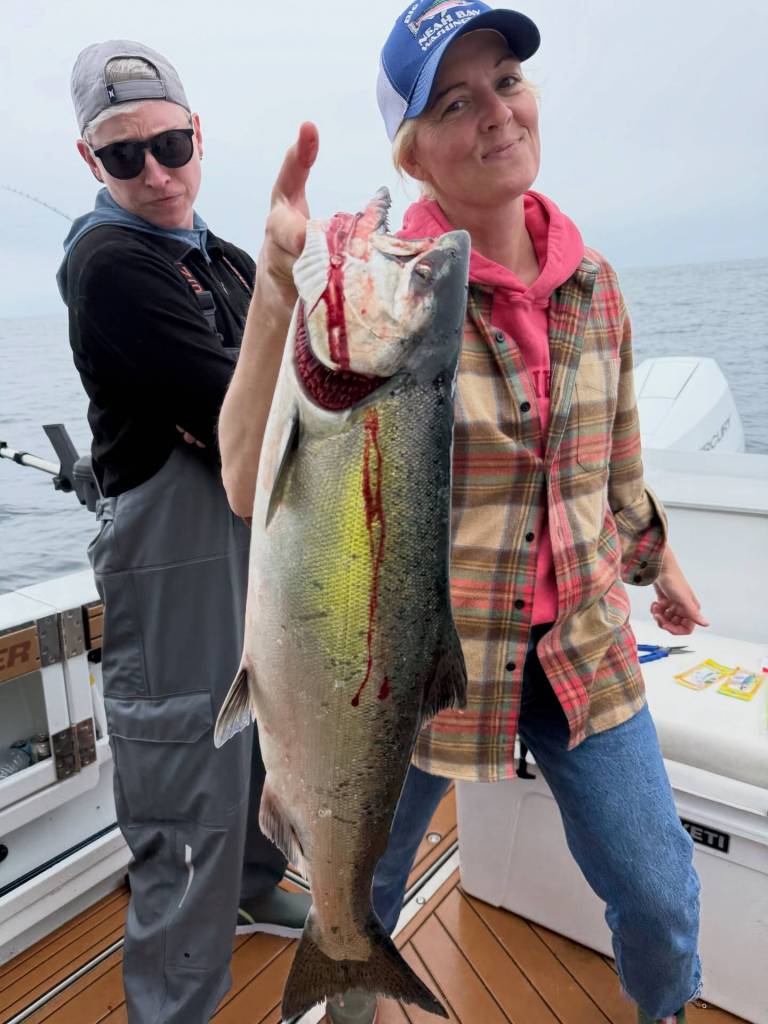
THE ALTERED, EVERY-other-day fishing schedule adopted for Sekiu (Marine Area 5) hatchery chinook season has had its impact: Angler pressure and king catch estimates are seriously low.
Catch estimates for the Marine Area 5 chinook fishery indicate the fishery has reached 15 percent of the total legal-sized encounters limit (657 of 4,323) through July 11.
Based on estimates to date, sufficient total legal-size encounters remain under fishery guidelines to allow the fishery to open seven days per week and allow retention of up to two hatchery chinook per day.
The state Department of Fish and Wildlife arrived at this decision in consultation with the Puget Sound Sportfishing Advisory Group and representatives of the Sekiu fishing community.
Kings must be a minimum 22 inches in size to retain, while there’s no size limit for other salmon. Anglers must release chum, sockeye, wild coho and wild Chinook.
The up to two king limit runs through July 31.
Fish it or miss out
Cold, rain, thunder and lightning did absolutely nothing to quell the horde of anglers descending upon Mid Channel Bank off Port Townsend and Possession Point at the southern tip of Whidbey Island for the chinook opener in Marine Area 9 (Admiralty Inlet) on Thursday.
The fishery continues through today with anglers working toward the Marine Area 9 summer hatchery chinook harvest quota of 2,650. Additional fishing days are based on catch quota availability, but, based on the reductions in king harvest placed on Marine Area 10 (Elliott Bay), I’d expect every one of those 2,650 kings to be snapped up and the season to wrap quickly.
In creel reports taken at the Port Townsend Boat Haven Ramp, 65 kings were landed by 127 anglers for a 0.51 fish-per-angler average.
A total of 390 anglers fishing out of Everett landed 253 chinook (0.65 average) and 152 coho.
Seattle anglers also headed north to fish Marine Area 9 while Area 10 was open. Sixty anglers were counted with 40 kings and 14 coho at the Shilshole Public Ramp in Ballard.
PA stays warm
Fishing remains hot off of Port Angeles with 30 anglers checking in with 25 kings at the Port Angeles West Ramp and 22 anglers catching 16 kings at the Ediz Hook Ramp on Thursday.
Neah Bay (Marine Area 4) anglers reached 34 percent, or 4,394 of the 13,110 chinook guideline, and 6 percent, or 688 of the coho quota of 10,700, as of July 12.
Pinniped removal bill
Booming populations of pinnipeds (harbor seals, California sea lions and Steller sea lions) have thrived in state waters under the 1972 Marine Mammal Protection Act. However, this conservation success has led to intense predation on threatened salmon and steelhead, causing a major ecological imbalance.
Because pinnipeds are abundant and widely known to be predators of both juvenile and adult Pacific salmon, these marine predators have been implicated as a primary factor contributing to continued depressed populations of salmon.
Northwest states and select tribes now have authorization to remove a small percentage of the overall populations of Californias and Stellers, thanks to previous MMPA amendments, but all of the focus is on the Columbia River at Bonneville Dam and Willamette Falls, where 508 and 54 have been removed since 2008, respectively.
House Resolution 9637, the Protecting Columbia River Salmon Act, from Rep. Marie Gluesenkamp Perez, D-Vancouver, would do so by modifying the Marine Mammal Protection Act, and it would give authorized tribes in southwest areas of the state discretion on how to kill California and Steller sea lions.
“I have local fishermen telling me that nearly every salmon they pull out of the river have wounds from sea lions,” Gluesenkamp Perez said. “The fact is, politicians in DC aren’t out on our rivers, they’re still living in a world of 1970s data points. If we want to keep things in balance, we need to restore agency to our Tribal partners and their designees.”
Substitute Strait of Juan de Fuca for river in the above paragraph and you hear similar stories.
The Makah Tribe signed the Treaty of Neah Bay in 1855, expressly reserving their rights to hunt whales, seals and other sea mammals.
The 1972 legislation curbed those hunts, unless hunters obtain highly complex federal waivers, which occurred when the tribe successfully hunted a gray whale in 1999.
Tribal positions support pinniped removal since salmon are a crucial part of Makah cultural, ceremonial and economic identity — so it would be beneficial to all to see the tribe and other area tribes such as the Jamestown S’Klallam and Lower Elwha Klallam lobby for inclusion in the bill or be part of another bill for our northern waters.
The bill has received a “Statement of Administration Policy” from the Trump Administration.
A SAP is how a president or their advisors communicate their views on a bill in Congress.
In this case, the administration said it “strongly supports passage of H.R. 9637” because of its expanded flexibility to remove sea lions and meshes with Executive Order 14276, Restoring American Seafood Competitiveness.
“If H.R. 9637 were presented to the President, his senior advisors would recommend that he sign it into law,” the SAP states.
To contact Rep. Emily Randall, D-Bremerton, visit https://randall.house.gov/contact.
________
Sports reporter/columnist Michael Carman can be contacted at sports@peninsuladaily news.com.

Best of Olympic Peninsula