YOUTH SPORTS: Fast action saves young Sequim athlete after cardiac arrest on field
Published 12:30 am Wednesday, May 27, 2026
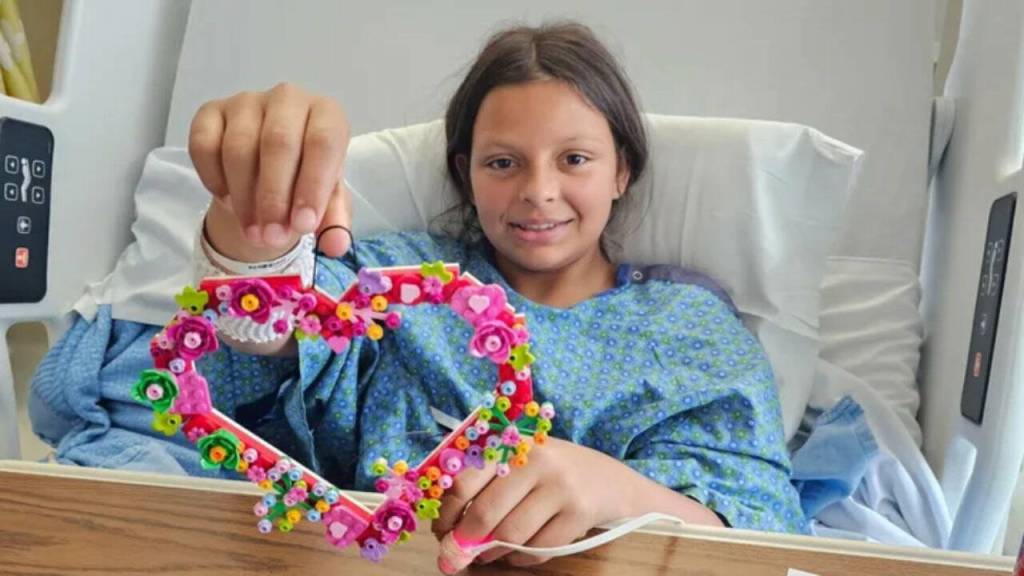
SEQUIM — A terrifying medical emergency on a Sequim soccer field is a powerful reminder of how training, swift action and having medical equipment on hand can save a life.
When 12-year-old Ashtyn Messinger collapsed suddenly during soccer tryouts at Carrie Blake Community Park on May 17, coaches and parents leapt to assist, calling 911 and beginning CPR and using an automated external defibrillator to revive the sixth-grader before she was airlifted to Seattle Children’s Hospital.
Today, Ashtyn is recovering after undergoing surgery to implant a subcutaneous implantable cardioverter defibrillator, known as an S-ICD, in her chest. Her parents said they are overwhelmingly grateful to the people they believe saved her life.
“I wholeheartedly believe it was the quick thinking, the fact that they had the AED there, and a mixture of all those things that saved our daughter’s life,” said Ashtyn’s mother, Charmaine Messinger.
Ashtyn, who is homeschooled but well-known in Sequim’s youth sports community, plays elite basketball and soccer and recently started softball. Her father, Caleb Messinger, coaches youth sports. Charmaine and Caleb own the popular local food truck Southern Nibble. Their family of four includes Ashtyn’s brother, 10-year-old Wyatt.
According to Charmaine, she and Ashtyn had arrived at soccer tryouts shortly before 4 p.m. that day. Ashtyn had complained that her cleats felt tight, so Charmaine briefly left to buy a pair in a larger size while her daughter participated in warmups.
Just minutes later, Caleb received a frantic phone call while working at an event near Port Angeles.
“We were up in the mountains working the NW Cup downhill mountain bike race,” he said. “There’s basically no phone service up there [at Dry Hill]. I got this random call from a number I didn’t recognize, and I almost didn’t answer it. One of our friends from soccer said, ‘You need to get here now.’”
Charmaine was already on her way back to the field when she, too, received an urgent call telling her something was wrong with Ashtyn.
“When I arrived, everybody was kind of standing by the road waiting for the ambulance,” she recalled. “I looked out on the field and she was just laying there.”
Sequim Middle School teacher and coach Kelli Mishko had already begun CPR.
“She told me Ashtyn wasn’t breathing,” Charmaine said. “I just dropped to my knees and begged God to let her breathe.”
Moments later, Ashtyn began breathing again.
According to Charmaine, Mishko later provided a detailed written account to assist doctors trying to piece together exactly what happened.
The team had just completed light dynamic warm-ups and gathered into a huddle when Ashtyn suddenly collapsed face-first onto the ground.
At first, coaches believed she might be experiencing a seizure. Within seconds, however, they realized she was not breathing.
Mishko immediately directed someone to call 911 and began chest compressions while another person retrieved the AED stored on site. The device instructed those rendering aid when to administer two shocks before Ashtyn regained signs of responsiveness.
Charmaine credits Mishko’s quick actions — along with the coordinated response from other adults on scene — for the fact that Ashtyn is alive today.
“I truly believe she saved my daughter’s life,” Charmaine said in an interview. “Her professionalism, bravery and quick thinking were incredible.”
She also praised Kelsey Chapman, a Port Townsend emergency room nurse and Sequim Junior Soccer coach who assisted during the emergency, along with other parents and coaches who worked together calmly during the crisis.
“It was basically a miracle that all these people were there,” Charmaine said. “Without them, we would probably be having a very different outcome.”
The availability of an AED at the field also proved critical.
Charmaine said that when Ashtyn first began playing youth soccer years ago, one of the first questions she asked league officials was whether an AED was available on site. She said league organizer Erin Henderson assured her that an AED was always kept at Carrie Blake Park for emergencies.
“That machine saved her life,” Charmaine said.
Doctors later told the family that rapid CPR and defibrillation are crucial during sudden cardiac arrest because permanent brain damage can begin within minutes.
No warning
Born with congenital heart disease, Ashtyn underwent open-heart surgery as a newborn at the Medical University of South Carolina after doctors discovered multiple serious heart defects, including an interrupted aorta and holes in her heart.
Charmaine explained that Ashtyn also has dextrocardia, meaning her heart is positioned on the opposite side of her chest.
Despite those early medical challenges, Ashtyn had remained highly active throughout her childhood.
“She always passes her checkups with flying colors,” Charmaine said. “Nothing has ever given us any indication that something like this would happen.”
She said Ashtyn’s longtime cardiology team at Seattle Children’s had consistently cleared her for sports participation.
Chad Celestres, Sequim Little League assistant coach for the Wolves, Ashtyn’s softball team, said the collapse shocked everyone who knows her.
“She’s super active,” Celestres said. “If there had ever been concerns before, we would have been cautious. This happened when she was basically standing in a circle.”
Celestres, who organized a GoFundMe online fundraiser for the family, was not present when the incident happened, but said that Ashtyn briefly stepped out of the team huddle because she felt dizzy before collapsing.
Doctors at Seattle Children’s later performed extensive testing, including echocardiograms and electrocardiograms, but found no obvious structural explanation for the cardiac arrest.
“Everything anatomically looks great,” Charmaine said. “There’s no tearing. No explanation.”
Doctors now believe the episode may have been caused by an electrical problem within the heart rather than a structural defect. Ashtyn is now being treated by an electrophysiologist in addition to her longtime cardiologist.
As a precaution, surgeons implanted an S-ICD device, a defibrillator, designed to automatically shock her heart if another dangerous rhythm occurs.
The surgery took place just days after the incident.
“They tested it out and it works,” Charmaine said.
Bouncing back
Despite the frightening ordeal, Ashtyn seemed to bounce back quickly, and her personality quickly re-emerged in the hospital. Charmaine recalled her daughter joking with nurses and asking her father to bring sushi to the intensive care unit late at night.
“The doctors and nurses were kind of laughing about this girl ordering sushi at midnight in the ICU,” Charmaine said.
Celestres said Ashtyn’s determination has remained clear throughout her recovery.
“She was fighting not to take pain medication because she wanted to be tough,” he said. “She’s a fighter.”
The incident deeply affected many of the children who witnessed it, he said.
Although Ashtyn is home-schooled, Charmaine said she is closely connected with local students through sports and the family business.
“She’s a popular kid,” Charmaine said. “In a small community like Sequim, it doesn’t matter if you’re home-schooled. Everybody knows everybody.”
Charmaine said the overwhelming support from the community has helped sustain the family during an extremely difficult time. Church members from Gardiner Community Church have delivered meals and offered prayers, while donations to the online fundraiser had reached $8,115 at the time the Gazette went to press.
The donation page can be found at gofundme.com/f/AshtynMessinger. Celestres created the GoFundMe campaign shortly after learning Ashtyn had been airlifted to Seattle.
“We know they’re private business owners,” he said. “Nobody is prepared for those kinds of medical costs.”
He said he initially hoped the fundraiser might raise $1,000 but has since been overwhelmed by the community response, with donations inching ever closer to the $12,000 goal by press time.
“People I haven’t talked to in a year were donating,” he said. “It’s been amazing.”
The family said they hope sharing Ashtyn’s story will encourage more schools, sports leagues and organizations to obtain AEDs and train adults in CPR.
“This can happen to anybody,” Charmaine said. “You don’t even have to have a heart condition.”
Celestres agreed.
“All leagues and organizations should have emergency plans ready for these situations,” he said. “If they didn’t have that AED and people who knew CPR, we would have lost her.”
For now, Ashtyn faces several weeks of recovery before doctors determine when she can safely return to sports. Her family fully expects she will eventually be back on the field and court doing what she loves.
“They’re not going to hold her back,” Celestres said. “That’s just who she is.”
Charmaine said the experience has strengthened her appreciation for the Sequim community and those who acted without hesitation when her daughter needed them most. Both she and Caleb referred to Mishko and Chapman as “superheroes.”
“We just want to thank them so much,” Caleb said. “I can’t wait to see them. I want to give them a hug.”