OUTDOORS: Sekiu takes brunt of king cuts
Published 1:30 am Thursday, April 16, 2026
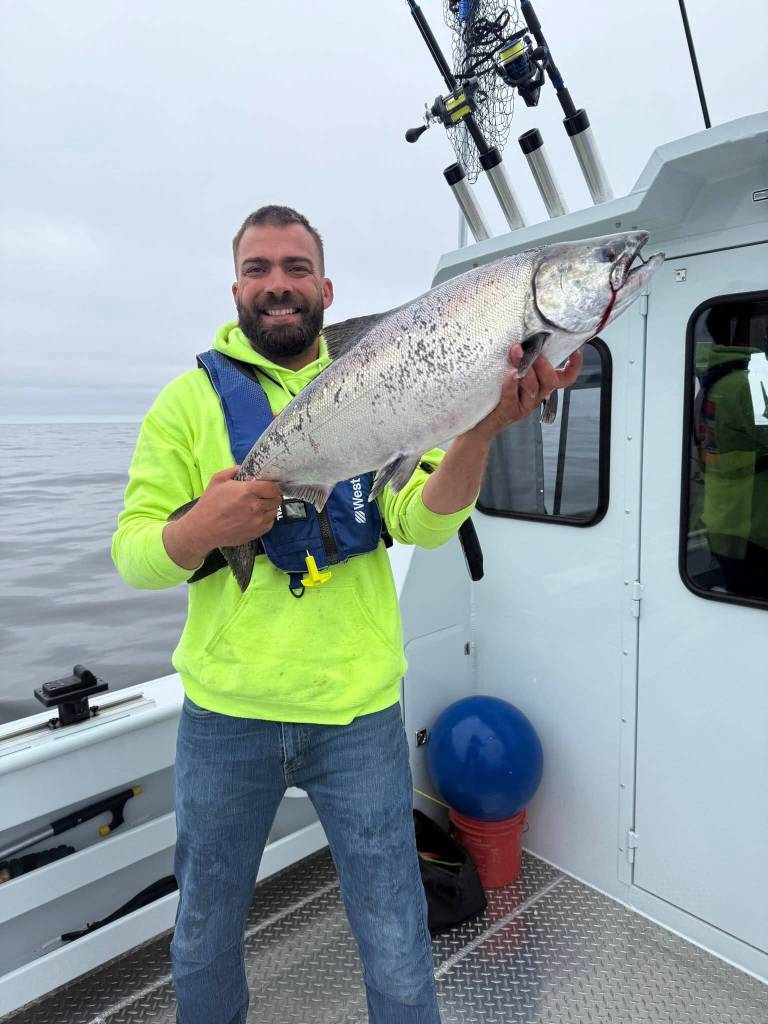
A SUMMERTIME CHINOOK quota reduction in exchange for the return of an April blackmouth fishery is the ultimate outcome for Marine Area 5 (Sekiu) after the recently completed North of Falcon salmon season negotiations.
Tentatively set to begin July 1, anglers will be able to fish through 4,323 total legal size encounters, with the actual hatchery chinook quota dipping from 3,506 to 2,506.
The April blackmouth hatchery chinook fishery returns after taking this year off due to low returns to the North fork of the Nooksack River. Next April, anglers can have their shot at 2,658 total sublegal encounters.
State Department of Fish and Wildlife fishery managers and tribal interests aligned several 2026 Puget Sound marine area summer hatchery chinook fisheries to begin on the same date this summer to spread out fishing pressure.
Area 6
Marine Area 6 (East Strait of Juan de Fuca west of a true north/south line through the No. 2 Buoy immediately east of Ediz Hook) also is set to open July 1 through Aug. 15 with a two-fish limit, release chum, wild coho, wild kings and sockeye.
Anglers will fish toward a total legal-size encounter limit of 10,952 fish.
The fishery switches to hatchery coho from Aug. 16 through Sept. 24 and then opens to all coho from Sept. 25 through Oct. 15.
Marine Area 9
Pencil in July 16-18 for the Marine Area 9 (Admiralty Inlet) hatchery chinook fishery.
Anglers will jockey for a harvest quota of 2,650 hatchery chinook, with a daily limit of one hatchery king of a minimum 22 inches in size and a two-fish limit overall while releasing chum, wild kings and wild coho.
If any quota remains, and with the cuts in Marine Area 10 I wouldn’t expect this, additional days will be added.
A hatchery coho fishery with a two fish limit will run from Aug. 1 to Sept. 18 and all coho will be on the board from Sept. 19-30.
Ocean anglers
Marine Area 4 (Neah Bay) will be open seven days per week from June 20 through June 30, all salmon except coho, and the daily limit is one salmon, release all coho.
The fishery opens to all salmon beginning July 1.
Open seven days per week from July 1 through Sept. 30, all salmon. Beginning July 1, the daily limit is two salmon. The subarea guideline is 13,110 chinook (12,600 in 2025), with a subarea quota of 10,700 marked coho (10,370 in 2025). Beginning Aug. 1, no chinook retention east of the Bonilla-Tatoosh line and no chum retention.
Marine Area 3 (La Push): Open seven days per week from June 20 through June 30, all salmon except coho, and the daily limit is one salmon, release all coho.
Open seven days per week from July 1 through Sept. 30, all salmon. The subarea guideline is 2,200 chinook (2,280 in 2025), with 2,680 marked coho subarea quota (2,590 in 2025). Beginning July 1, the daily limit is two salmon. Beginning Aug. 1, no chum retention.
Fisheries North of Cape Falcon (in northern Oregon) are limited mainly by the need to constrain catch of Washington coastal coho, Lower Columbia River natural coho, and Lower Columbia River natural tule Chinook. In encouraging news, Queets River spring/summer Chinook, which was declared overfished in 2023, continues to meet the criteria of “not overfished-rebuilding” (same as in 2025), and no stocks are currently classified as overfished.
The ocean sport fishery north of Cape Falcon opens in mid-June and continues through September, unless salmon quotas are met earlier. The Chinook quota is 54,000 (compared to 53,750 last year) and the coho quota is 102,900 marked coho, (compared to 99,720 last year).
Kids’ Fishing Day
The Water Demonstration Pond at Carrie Blake Park will be the venue for Sequim’s annual Kids Fishing Day on Saturday.
It is sponsored by the North Olympic Peninsula chapter of Puget Sound Anglers in conjunction with the state Department of Fish and Wildlife and the city of Sequim.
Fishing will begin at 8 a.m. and conclude at 2 p.m.
The club will provide rods and reels, bait, volunteers to bait hooks and remove fish, and cleaning, icing and bagging fish. No fishing license is required for kids ages 15 and younger. There is a two-fish limit, and all anglers should be accompanied by an adult.
Razor clam digs
• Saturday: 7:41 a.m.; -1.5 feet; Long Beach, Twin Harbors, Mocrocks (Long Beach Razor Clam and Shellfish Festival).
• Sunday: 8:26 a.m.; -1.8 feet; Long Beach, Twin Harbors, Copalis.
• Monday: 9:14 a.m.; -1.7 feet; Long Beach, Twin Harbors, Copalis.
• Tuesday: 10:07 a.m.; -1.3 feet; Long Beach, Twin Harbors, Mocrocks.
• Wednesday: 11:06 a.m.; -0.8 feet; Long Beach, Twin Harbors, Mocrocks (digging extended until 2 p.m.).
• Thursday: 12:11 p.m.; -0.2 feet; Long Beach, Twin Harbors, Copalis (digging extended until 2 p.m.).
Kelp workshops
Fish and Wildlife and partners including the state Department of Natural Resources, Northwest Straits Commission and Asia Pacific Cultural Center invite participation in a series of workshops on kelp gathering and conservation around Puget Sound.
The workshops are part of a new social science research project working to better understand human interactions with, connections to, and uses of kelp. Participation in the project will inform future kelp management, conservation, harvesting opportunities, and communications and outreach. Participants will include recreational and commercial seaweed harvesters, individuals or organizations involved in kelp conservation, and other stakeholders, partners, or interested members of the public.
Adults around the Puget Sound region are invited to participate in a series of eight in-person workshops focused on kelp. The workshop series will take place from May through October.
People interested in participating should sign up for information at https://tinyurl.com/PDN-Kelp26.
Each workshop will last between 1.5-2.5 hours. Participants may be reimbursed for their time and contributions to the project.
Puget Sound, the Strait of Juan de Fuca, and Strait of Georgia are home to 22 kelp species.
________
Sports reporter/columnist Michael Carman can be contacted at sports@peninsuladaily news.com.