OUTDOORS: Ocean salmon season starts June 20; Anglers host Region 6 staffers for fisheries talk
Published 1:30 am Friday, June 12, 2026
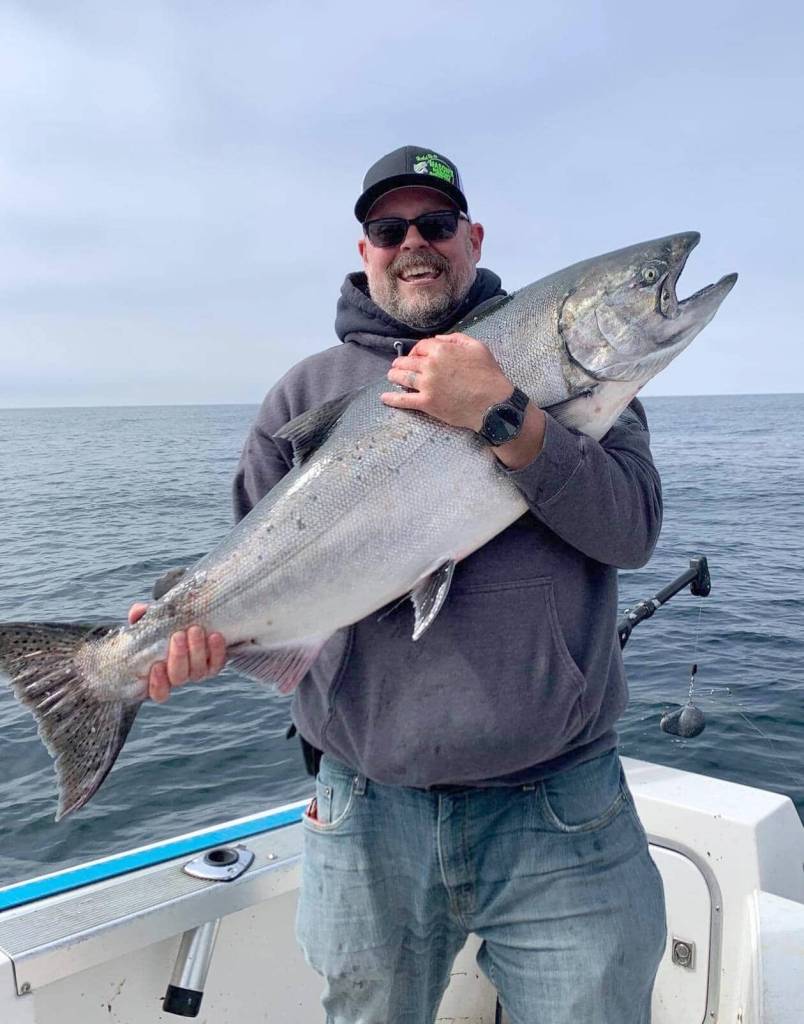
SUMMER SALMON SEASON begins June 20 off of La Push and Neah Bay (Marine Areas 3-4) when recreational anglers can target the big kid on the block, chinook.
The Pacific Fishery Management Council (PFMC) approved a recreational Chinook catch quota of 54,000 fish, up slightly from last year’s quota of 53,750. The PFMC, which establishes fishing seasons in ocean waters 3 to 200 miles off the Pacific coast, also adopted a quota of 102,900 hatchery-marked coho for this year’s recreational ocean fishery, up from last year’s quota of 99,720.
For Neah Bay, that breaks down to a chinook guideline of 13,110 chinook compared with 12,600 in 2025, and the hatchery coho quota is 10,700 up from 10,370 in 2025.
“These quotas represent strong forecasts for key chinook and coho stocks that drive fisheries off the Washington coast and should provide good recreational fishing opportunity in the ocean this summer,” said Kyle Adicks, the state Department of Fish and Wildlife’s intergovernmental salmon manager.
In-season management will be used to sustain season length and keep harvest within the overall chinook and hatchery-marked coho recreational total allowable catches in all four marine areas. These areas could close earlier if the respective guideline or quota is met.
Both Marine Area 3 (La Push) and 4 (Neah Bay) will be open seven days per week from June 20-30 with a one salmon daily limit. Anglers must release all coho. The chinook minimum size is 24 inches. Other salmon species have no minimum size.
Beginning July 1 to Sept. 30, the daily limit will rise to two salmon.
Anglers must release wild coho. The chinook minimum size is 24 inches, and the hatchery-marked coho minimum size is 16 inches. Other salmon species have no minimum size. Anglers must release chum beginning Aug. 1.
The Marine Area 3 Chinook guideline is 2,200 (2,280 in 2025) and the hatchery coho quota is 2,680 (2,590 in 2025).
Marine Area 4
Open seven days per week beginning June 20 to June 30. The daily limit is one salmon. Anglers must release all coho. The Chinook minimum size is 24 inches. Other salmon species have no minimum size.
Open seven days per week beginning July 1 to Sept. 30. The daily limit is two salmon. Anglers must release wild coho.
The chinook minimum size is 24 inches, and the hatchery-marked coho minimum size is 16 inches. Other salmon species have no minimum size.
No Chinook retention east of Bonilla-Tatoosh line is allowed beginning Aug. 1.
Anglers must release chum beginning Aug. 1.
Waters east of a true north-south line running through Sail Rock are closed in June and July. Kydaka Point Area (area bounded by a line from Kydaka Point to Shipwreck Point) closed to salmon fishing through Aug. 15.
Anglers can now choose to use an electronic catch record card (eCRC) to record and report salmon, steelhead, halibut and sturgeon.
No cell service is required. Anglers can save entries, and information will automatically submit once your device reconnects.
Fish and Wildlife still offers paper reporting options for anglers who prefer it, but paper licenses and catch record cards will look different this license year compared to past years.
The eCRCs and 2026-2027 fishing licenses are now available in the MyWDFW and Fish Washington mobile apps.
Fisheries meet Anglers
State Department of Fish and Wildlife Region 6 fisheries staffers will discuss area fisheries management issues at a town hall meeting hosted by the North Olympic Peninsula chapter of Puget Sound Anglers on Wednesday.
The meeting will be held at the Sequim Elks Lodge, 143 Port Williams Road, with doors opening at 6:30 p.m. and the meeting starting at 7 p.m.
Region 6 Fish Program Manager Chad Herring will be joined by Kathryn Sutton, strait biologist, Jon Lovrak, regional hatchery operations manager, and Bridget Mire,the regional communications consultant.
After brief introductions, the meeting will go into a town hall-style question-and-answer format.
Area hatchery programs, stock status and trends, stock assessment programs in local watersheds and freshwater fisheries are all topics that will be covered.
As the Region 6 fish program manager, Herring can speak to fisheries management issues at the state and federal levels.
A short business meeting and raffle drawings will follow the discussion.
Raffles are for members only, but visitors can join the chapter at the meeting to participate.
An individual membership is $25 and a family membership is $35.
A subscription to The Reel News monthly newspaper is included as a membership bonus.

Best of Olympic Peninsula