
RACE TO ALASKA: Third time was a charm for Port Angeles’ Kuehl
Published 4:45 pm Thursday, July 9, 2026
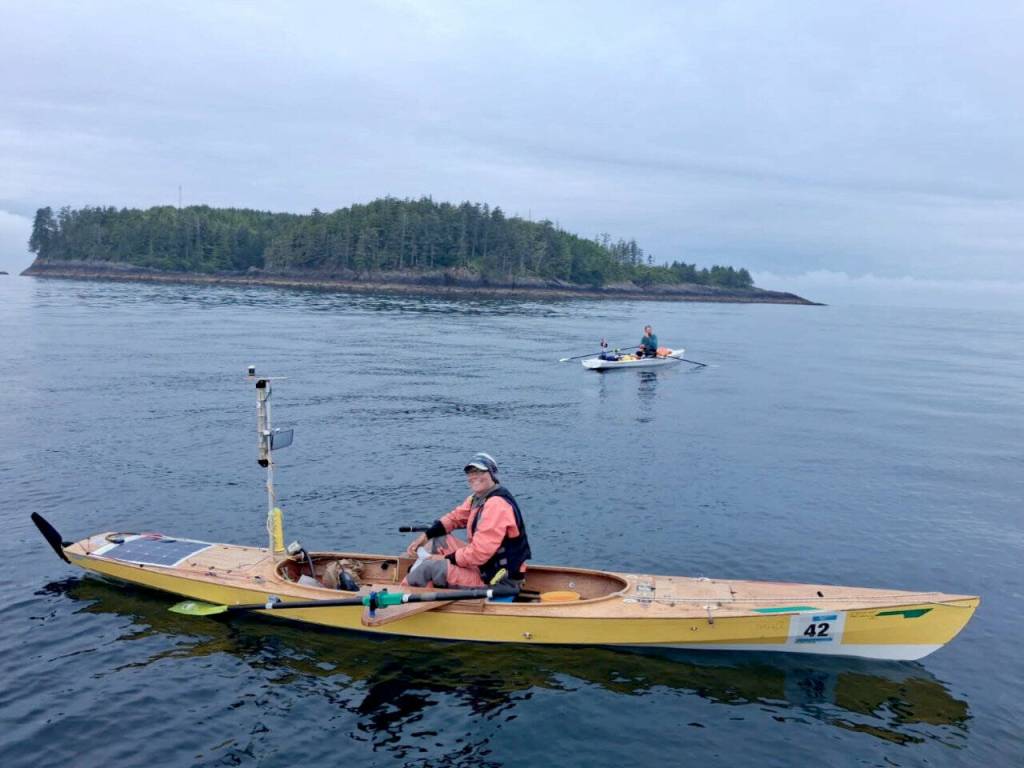
KETCHIKAN — Port Angeles’ Lillian Kuehl, who, unlike the other boaters in the Race to Alaska, spent three weeks looking at where she had just been, rather than gazing ahead to where she was going.
Kuehl, the only local boater in the race, and kayaker Nathaniel Greene of Friday Harbor were the final two racers to make it to Ketchikan at 5:22 p.m. Wednesday afternoon, after spending 21 days, 6 hours and 22 minutes en route either on the water or finding places to sleep.
Kuehl and Greene were the 32nd and 33rd — and final — boaters to make it to Ketchikan. A total of 69 boats began the race in Port Townsend, with 67 taking off from Victoria.
The winner was Northbound Nutters, a trimaran team from Friday Harbor, in 5 days, 8 hours and 4 minutes.
Earlier Wednesday, the kayak Belly Full of Tea paddled by Esther Wheeler of Sydney, Australia, arrived in Ketchikan. Wheeler became the first woman to complete the 750-mile race solo, winning a $2,000 special prize. Also making history Wednesday was stand-up paddleboarder Eric Strickland (“Team Apple Bottom Boy”) of Bainbridge, who arrived an hour after Wheeler as only the second stand-up paddleboard to complete the race.
Kuehl was the only rower to finish the race.
It was Kuehl’s third attempt to row her wherry Lillian Signed up to Suffer from Port Townsend to Ketchikan. The furthest she had made it before was Bella Bella, B.C., about 60 percent of the way to Ketchikan. She had finished the race years ago in a sailboat along with her father and brother.
“I’m feeling great, being in a dry bed with a roof over my head,” she said Thursday morning.
Along the way, Kuehl found a variety of places to sleep. She actually set up her wherry with a tent, but it would only work in dry weather with calm water. She spent about one-third of her nights sleeping onboard. Other times, she found beaches to camp on, shared tents with others and was able to find a hotel one night.
“Other nights, I’d find random little cabins. Another night, I knocked on a stranger’s door,” she said.
The difference this year from prior year’s was preparation and practice. A lot of practice.
“I crossed the Strait of Juan de Fuca maybe 10 times,” she said, “getting more comfortable with the larger waves.”
Still, throughout the long race to Ketchikan, she had plenty of doubts creeping in.
“There’s a lot of uncertainty the whole time. You just have to accept it is what it is,” she said. “There were times I thought I would make it, there would other times I didn’t — including when I was 10 miles from the finish line,” she said.
Kuehl has plans to keep competing in rowing for the Olympic Peninsula Rowing Association.
“I’m really excited to do shorter rows on flatter water,” she said.



Best of Olympic Peninsula