
OUTDOORS: Swells likely to impact Neah Bay salmon opener
Published 1:30 am Friday, June 19, 2026
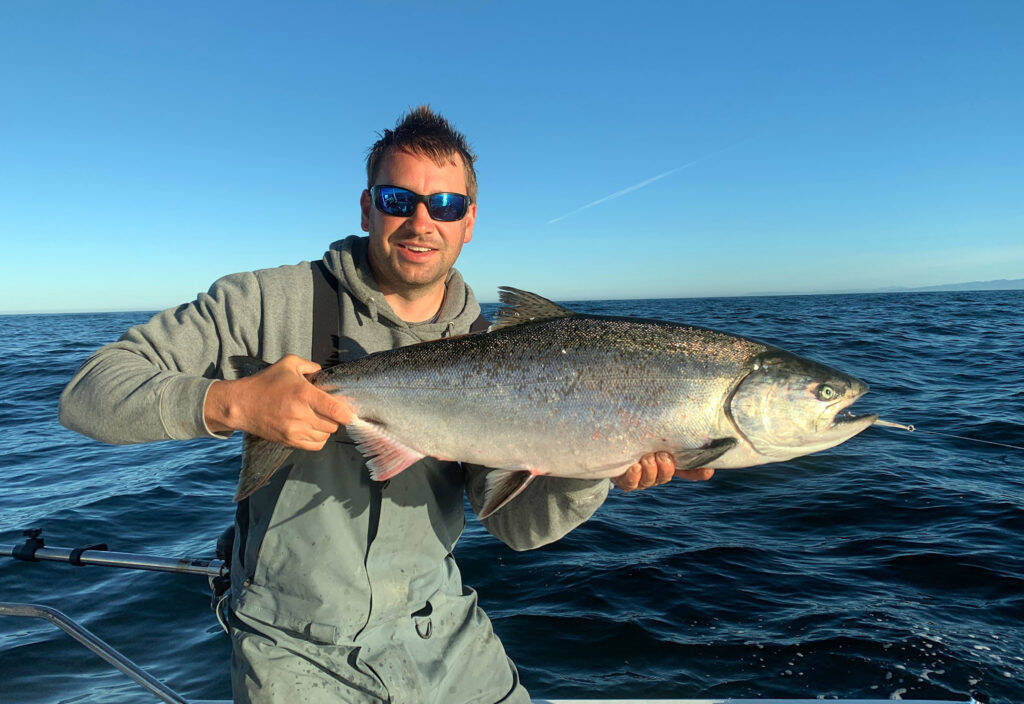
SALMON FISHING OPENS today off Neah Bay and La Push, but many anglers may stick closer to shore or leave the kings for another day despite a weekend forecast of sunny skies with temperatures in the upper 60s.
Why? The swell predictions for this weekend could provide beautiful ocean conditions or a topsy/turvy foaming whitecapping mess, depending on what the wind does.
Predictions indicate swells could reach 7.8 feet at 6.8 seconds along with winds up to 15 mph.
What does that number mean?
Let’s first look at a no-wind day. A 7.8-foot swell at 6.8 seconds is seriously steep, and the way out is apt to be a rough ride, depending on your hull.
But things get very interesting if the wind blows. Since the swell is already so steep, a little wind very quickly makes it even steeper and forms whitecaps almost immediately.
A 10-knot breeze can do that. A 15-knot breeze creates a very steep whitecapped sea that is absolutely no fun to be in. The combined chop and swell grows tall and scary. At 20 knots plus, it is a truly scary sea and potentially dangerous.
A 7.8-foot swell at 6.8 seconds can turn from smooth sailing to a snarling beast in minutes. It’s because the swell is already steep, and it catches the wind so well.
Now consider a 7.8-foot swell at a 14-second interval. That is an entirely different animal. The swells are gentle and widely spaced. On the way out, you can make good speed. And if the wind starts to blow, it takes a much longer time to develop a chop. The swells are so widely spaced and gentle, the wind has little to bite into, so it takes longer for a chop to develop. Plus, the gentle slope of the swells is nowhere near steep enough to tumble over in whitecaps.
Another good rule of thumb is if the swell is more than 3 feet at less than 6 seconds apart with winds over 15 knots, small boats should stay at home or on the trailer.
Albacore already?
Quilcene angler Ward Norden checked in after checking up on Pacific Ocean temperatures.
“The ocean temperatures off our coast are already good for albacore, but I think it might be a bit early for them to show up,” Norden said. “On the other hand, these conditions have been good for a couple weeks for some bluefin tuna to be around.
“These same conditions are not very good for the coho that begin returning in late July. Numbers of returning coho to the Straits and the Sound should be excellent this fall, as I mentioned before, but they will likely be a pound or two smaller than last year.”
Puget Sound shrimp
A shrimp opener has been added to Marine Area 12 (Hood Canal).
All shrimp species, including spot shrimp, will be harvestable from 9 a.m. to 1 p.m. July 7.
Shellfish closure grows
Shellfish samples from Oak Bay tested by the state Department of Health were found to have high levels of the biotoxin that causes Paralytic Shellfish Poisoning (PSP). Therefore, Oak Bay has been closed for the recreational harvest of all species of molluscan shellfish, including clams, oysters, mussels and scallops.
The Oak Bay closure came Thursday, less than a week after Hood Canal and areas north to Mats Mats Bay closed to shellfish harvest. Very high toxin levels have been observed at some sites, and the affected area has been increasing in size. Jefferson County Public Health has posted Danger — Toxic Shellfish signs at public access points in the area.
Previously, lethal levels of PSP in shellfish samples collected near Union in Mason County led to a closure to all clam, mussel, oyster and scallop (and other mollusk) harvest on all public beaches within Marine Area 9 (Admiralty Inlet) south of a line from Foulweather Bluff to Olele Point, including Port Ludlow, Mats Mats Bay, Quilcene Bay and on all public beaches within Marine Area 12 (Hood Canal) until further notice.
PSP is a naturally occurring marine toxin produced by a species of algae. Shellfish can accumulate the toxin without showing any visible signs of contamination. PSP cannot be detected by sight, smell or taste and can only be identified through laboratory testing. Cooking, freezing or cleaning shellfish does not destroy or remove the toxin.
Check the state Department of Health’s Shellfish Safety Information map at www.doh.wa.gov/ShellfishSafety.htm or or call the Biotoxin Hotline at 1-800-562-5632 before harvesting shellfish.
Halibut catch
Puget Sound (Marine Areas 5-10) halibut catch estimates sit at 36,077 pounds through June 14, or 44.8 percent of the area’s overall quota of 80,512 pounds.
The North Coast (La Push and Neah Bay) sits at 37,811 pounds through June 14, or 28.8 percent of the North Coast’s quota of 131,149 pounds.
There’s plenty of quota left to fish on, and the state already is planning for added dates in August and September.
Fish and Wildlife will discuss recreational halibut late-season planning at a public meeting from 4 p.m. to 5 p.m. June 30.
August and September halibut fishing dates will be discussed.
The meeting will be held on Microsoft Teams. To join, visit https://tinyurl.com/PDN-Halibut26 with Meeting ID: 259 718 810 461 658 and Passcode: Po7YS366.
________
Sports reporter/columnist Michael Carman can be contacted at sports@peninsuladaily news.com.


Best of Olympic Peninsula