
Alternative forestry planned for newly protected forest in East Jefferson County
Published 12:01 am Monday, September 8, 2014
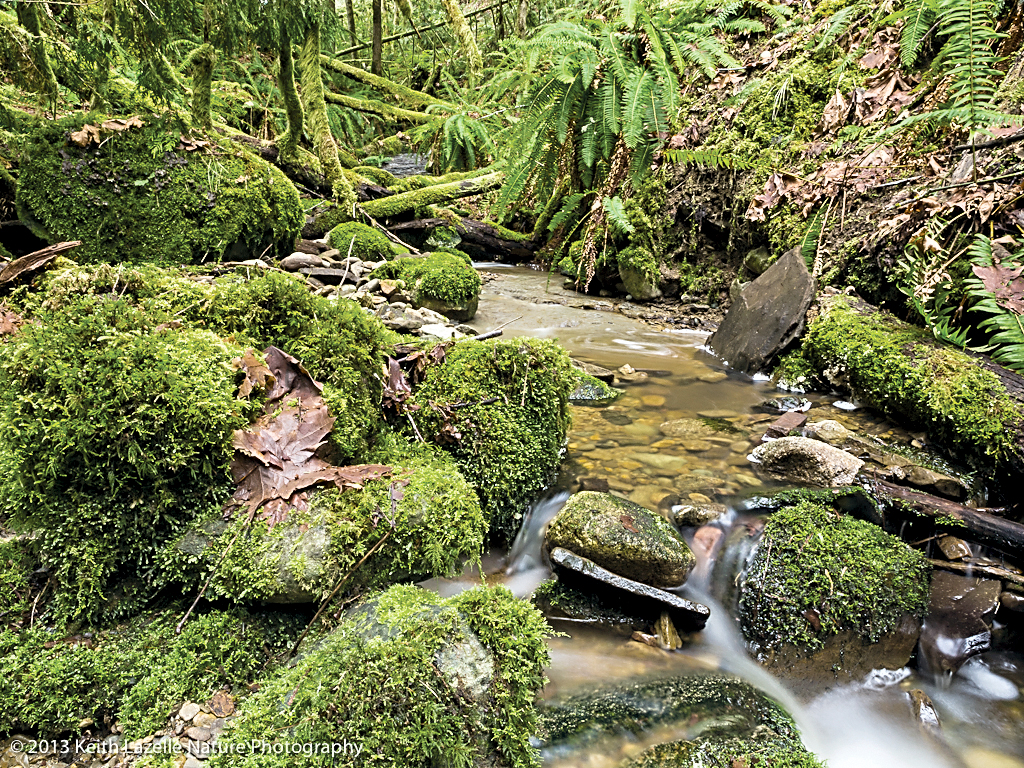
QUILCENE — A new addition to the Tarboo Wildlife Preserve will be a model for alternative forestry methods, the Northwest Watershed Institute said.
The inclusion of the 80-acre Tarboo Forest last month also brings the total acreage preserved to 238 acres in the institute’s Tarboo Wildlife Preserve along Tarboo Creek norest of Quilcene, said Peter Bahls, director of the Port Townsend based nonprofit organization.
The conservation easement with Jefferson Land Trust for the Tarboo Forest protects the forest’s volume of timber as of a 2011 timber cruise by Cronin Forestry, but allows for selective harvest of some of the additional growth since then, Bahls said.
“We are looking to demonstrate that it is possible to restore old growth forest habitat conditions, while also providing some jobs and high quality forest resources — kind of a middle ground between industrial clear-cuts and “no touch” protection,” Bahls said.
A plan developed by Kirk Hanson, forester for Northwest Natural Resources Group, will be used in the forest, which is certified by the Forest Stewardship Council for sustainable forestry, Bahls said.
“If you think of banking as metaphor, this model of forestry protects the principle and allows it to continue to grow, while harvesting a part of the interest,” Bahls said.
“The result, we hope, will be better and better habitat, and higher quality timber over time.”
Sarah Spaeth, executive director of Jefferson Land Trust, said the project “fits well with the goal of conserving working forests.”
The addition marks the culmination of a larger forest conservation effort, Bahls said.
With help from conservation lenders, including the Wildlife Forever Fund and local residents, the institute purchased a 78-acre forest parcel in 2011.
The previous owner — Sorn Nymark, the owner of ANE Forests of Puget Sound — was planning to clearcut and sell the land for development, according to Bahls.
“Over six years of discussions, NWI persuaded Mr. Nymark to sell the property with forest intact, splitting the purchase of about 200 acres with Leopold Freeman Forests LLC,” Bahls said.
In the spring of 2014, the institute purchased an adjoining 2-acre tract that was threatened by development and so owns 80 acres.
As a matching contribution to a grant from Jefferson County’s, Leopold Freeman Forests LLC donated a conservation easement to Jefferson Land Trust of its adjoining 158 acres for wildlife habitat and sustainable forestry.
The forestland, know as “Carl’s Forest,” is owned by the Scott and Susan Freeman family, who named the tract in honor of Susan’s father, Carl Leopold, son of conservationist Aldo Leopold.
The 238-acres of protected forest includes tributaries to Tarboo Creek — the main freshwater source of Tarboo-Dabob Bay, two miles downstream.
“The conservation effort also represents a practical way for people to offset their carbon emissions locally and take a small step to combat global warming,” Bahls said.
According to a carbon assessment done by Northwest Natural Resources Group, the protected forest is storing at least 37 metric tons of carbon per acre — equivalent to the annual CO2 output of over 2,000 passenger vehicles, Bahls said.
To repay loans and to cover the cost of placing a conservation easement on the property, the institute had to raise $620,000 by this month.
More than half of the funding was granted through Jefferson County’s Conservation Futures Program. Over two years, Jefferson Land Trust was granted $334,000 from the program to purchase the easement from the institute.
More than 100 people, most of them Jefferson County residents, as well as several foundations — including the Mountaineers Foundation and Wildlife Forever Fund — donated the remaining $286,000 needed, Bahls said.

Best of Olympic Peninsula