
Couple sell Dabob Bay property to protect it from development
Published 12:01 am Friday, March 1, 2013
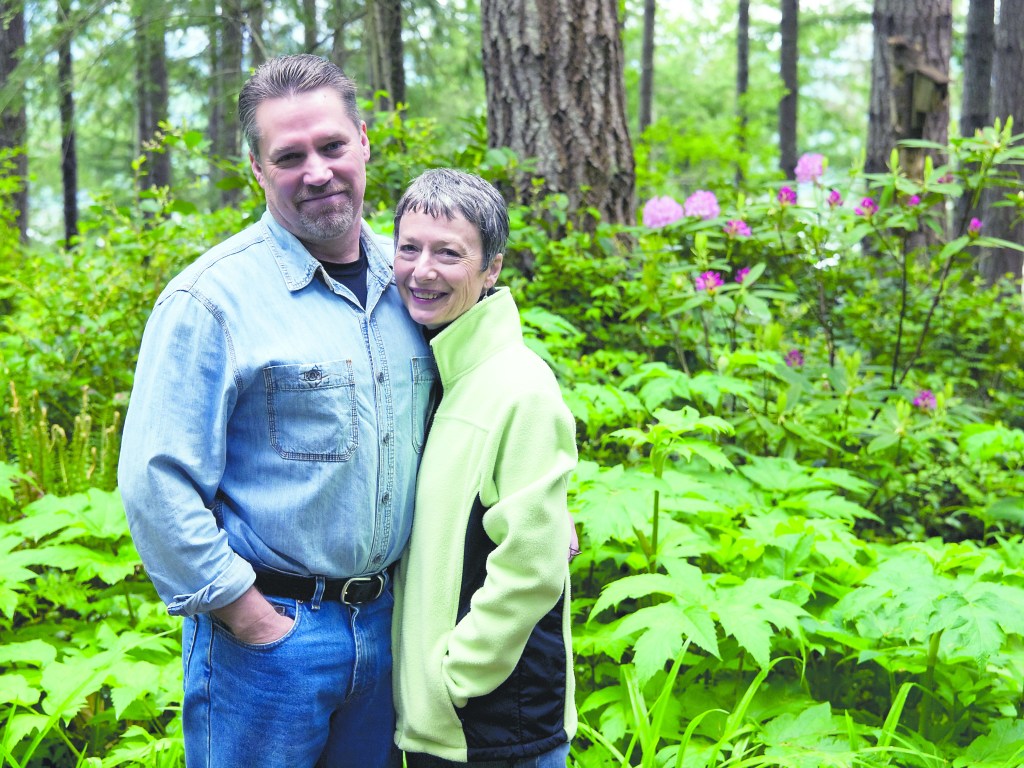
DABOB BAY — Nature photographer Keith Lazelle and his wife and artist agent, Jane Hall, have set up long-term protection from development for their 18 acres of shoreline property on Jefferson County’s Dabob Bay.
The December action is part of a larger conservation effort within the proposed boundaries of the Dabob Bay Natural Area at the north end of Hood Canal, northeast of Quilcene, said Peter Bahls, executive director of the Northwest Watershed Institute, which helped complete the arrangement.
The couple sold two undeveloped parcels, one on each side of their home, to the state Department of Natural Resources to be permanently protected as part of the natural area project.
Then, they sold a conservation easement to the Jefferson Land Trust that covers the 6-acre property where they live.
Lazelle and Hall continue to own and live on the middle parcel that contains their house, but the conservation easement ensures that their property will be permanently protected in a natural condition outside of a surveyed 1-acre “building envelope” that includes their existing home, garage and other improvements.
Provisions in the easement also allow for some limited pruning and cutting of trees along the shoreline bluffs to maintain a filtered view.
Working together
The Northwest Watershed Institute, a nonprofit based in Port Townsend, was the project manager for the easement project and worked closely with the land trust, landowners, the U.S. Fish and Wildlife Service and the state Department of Ecology to complete the project, Bahls said.
In 2009, DNR expanded the proposed boundary of the natural area from 350 acres to a total of 6,284 acres.
The project includes all the aquatic lands within the bay and most of the surrounding forested slopes, south to Broad Spit County Park, that drain directly to the bay.
Within this proposed boundary, DNR is working with willing landowners to purchase lands to add to the natural area, as well as with Ecology, the land trust, the Northwest Watershed Institute and the Nature Conservancy of Washington.
Bahls said Dabob Bay is one of the least developed and biologically important salt-marsh estuaries remaining in Puget Sound, as well as a major shellfish farming area.
The 18 acres preserved by Lazelle and Hall include steep forested bluffs on the east side of Dabob Bay as well as flat land on top of the bluff supporting older forests of Douglas fir, salal, evergreen huckleberry and the unusual phantom orchid, Bahls said.
Kingfishers and bald eagles often are seen in the area.
The bluffs also are “feeder bluffs” that deliver sand and gravel to replenish the beaches and maintain the numerous salt-marsh spits of Dabob Bay, Bahls added.
Funding for the acquisitions came from federal grants. Lazelle and Hall also donated to the project by selling the conservation easement for significantly under its appraised fair market value.
Dabob Bay land acquisitions, including Lazelle’s and Hall’s, are being made possible by $6.7 million in grants from the National Oceanic and Atmospheric Administration’s Coastal and Estuarine Land Conservation Program and the U.S. Fish and Wildlife Service’s National Coastal Wetlands Conservation Program.

Best of Olympic Peninsula