
DIANE URBANI DE LA PAZ: Foundation grows opportunities
Published 1:30 am Wednesday, November 3, 2021


Nearly sixteen years ago, I was a freshly hired Peninsula Daily News reporter walking into Judith Pasco’s classroom at Sequim High School. There, in the course of an interview with Pasco, I learned about a similarly brand-new partnership: the Mujeres de Maiz Opportunity Foundation (MujeresdeMaizOF.org).
Then a Spanish teacher at Sequim High, Doña Pasco had gathered a small group of fellow educators to form the nonprofit organization. This was 2006; it all began with funding one scholarship for one young woman in Chiapas, Mexico. Mujeres de Maiz — Spanish for women of corn, Mexico’s staple food — allied itself with an established women’s sewing and weaving cooperative based in that southernmost state.
From the start, Mujeres has been about helping girls and women find their power. Through fundraisers in Sequim, including a dinner every November and the Mexican Breakfast and Men with Guitars concert in springtime, the organization has expanded far more than Pasco imagined.
In 2021, 13 women and girls are continuing their educations on Mujeres scholarships. In six communities around the city of San Cristóbal de las Casas, children’s enrichment programs are established. These villages also have mini-libraries, a few laptop computers — and that most essential of school-related services, eye examinations and glasses for those who need them.
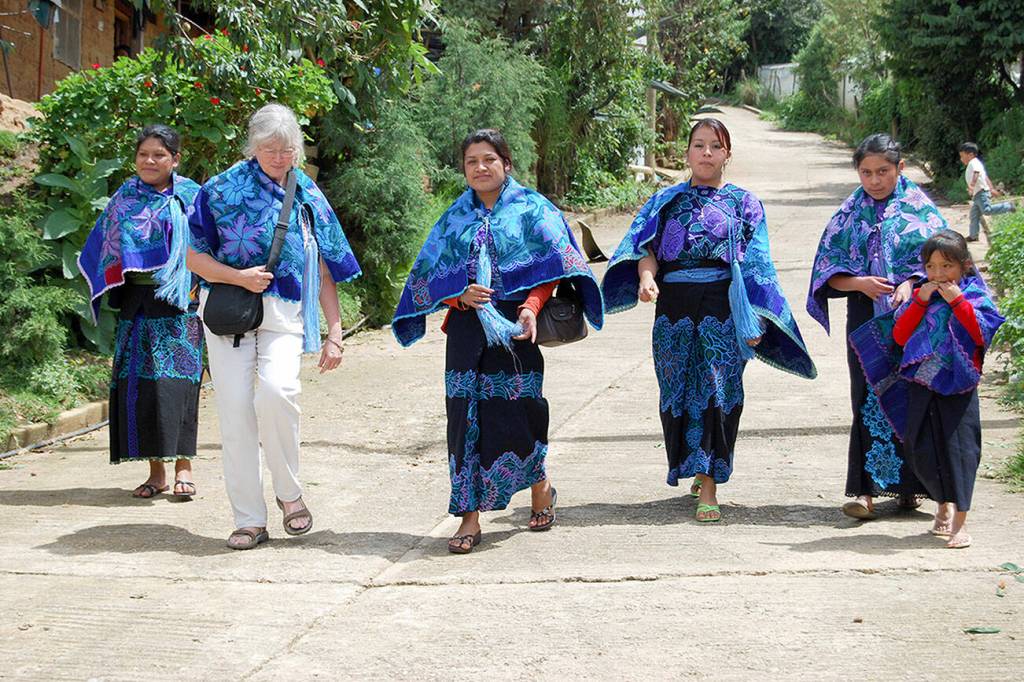
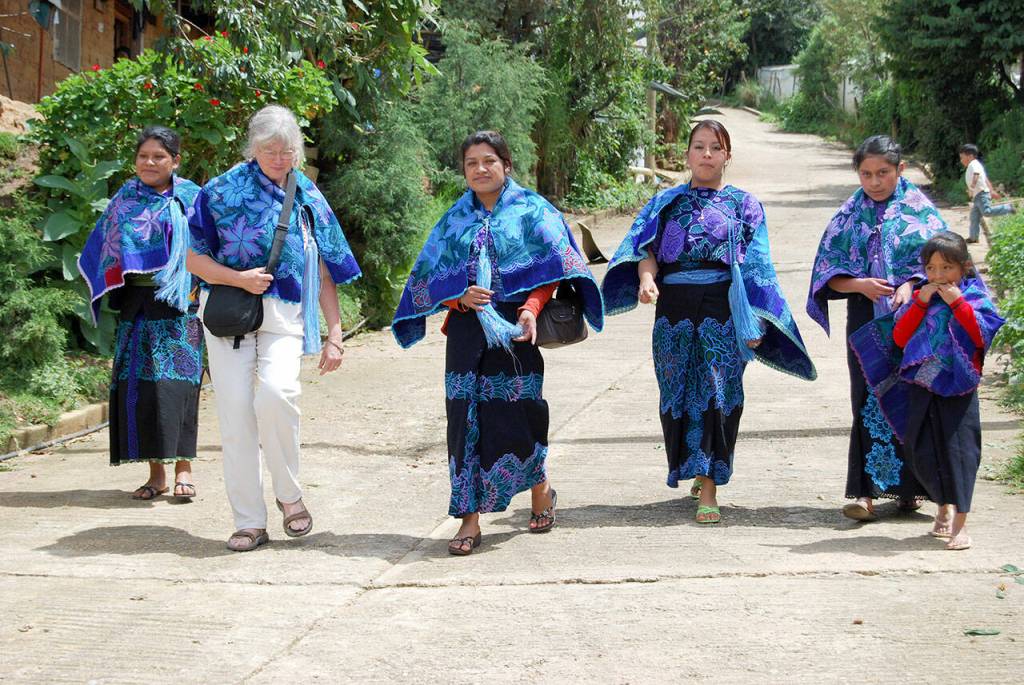
I traveled to Chiapas in July 2008 to meet the women of the cooperative. In the village of Zinacantán, I marveled at their resplendent everyday attire: embroidered blouses and woven skirts in a dark-blue motif set off by the brilliant green hills encircling the town.
In the years since, I’ve watched Mujeres de Maiz flourish. Thanks to the close collaboration between supporters here and the families in Chiapas, there have been 58 girls and women who benefited from Mujeres scholarships. They have completed a total of 253 years of education, ranging from sixth grade through university graduation. Women from Zinacantán and neighboring towns have gone into nursing, law, teaching, architecture and computer science.
Pasco, meanwhile, retired from classroom teaching. She’s in her 70s, and to me, she looks as energized and travel-enthused as ever. She goes to Chiapas at least once a year, and this past June had an especially nourishing visit with six current and former scholarship recipients.
Normally right about now, Mujeres holds its Dia de los Muertos fundraiser. The pandemic scrubbed that; instead, online auctions were held earlier in the year. Then came the fall newsletter with an article titled “The Future of Mujeres.”
“This is a difficult subject to broach, but broach it we must,” Pasco wrote.
“The board and I have been discussing this and have agreed on a five-year wind-down plan. In five years I’ll be closing in on 80, the board members are aging as well … We have considered other options, but there is no one to take Mujeres over and manage it.”
But there’s good news, she added.
“We have been careful with your donations, and in recent years we’ve taken in more than we’ve spent.” Mujeres has enough saved to cover the next five years of scholarships and programs — and toward the end of that period, “we will engage with communities to find ways to help them continue.”
That is how Mujeres rolls. That’s how it has succeeded: by engaging, listening, partnering. The “scholarship girls,” as they’re affectionately called, continue to work and teach in Mexico, spreading the wealth of their educations.
“In five years, Mujeres will have had a 21-year-run,” Pasco notes in the newsletter. She added that she and the board hope to have one more Mexican Breakfast in Sequim next March. Stay tuned.
________
Jefferson County senior reporter Diane Urbani de la Paz can be reached at 360-417-3509 or durbanidelapaz@ peninsuladailynews.com. Her column runs the first and third Wednesdays of the month; the next one will appear Nov. 17.


Best of Olympic Peninsula