
Where bills stand in state Legislature
Published 1:30 am Sunday, February 23, 2020


By Rachel La Corte
The Associated Press
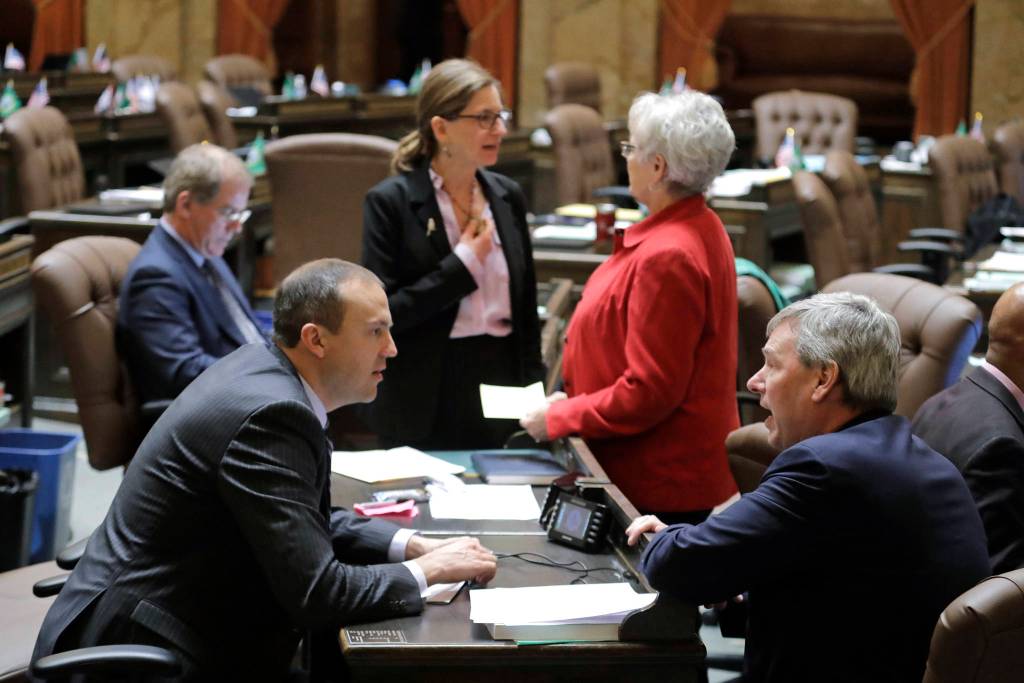
OLYMPIA — State lawmakers are more than halfway through their 60-day legislative session and have cleared a key deadline for policy bills while receiving good news on the revenue front ahead of the release of the House and Senate’s supplemental budget proposals.
A revenue forecast Wednesday showed state revenues will increase by about $606 million more than expected through the middle of the current two-year budget cycle that ends mid-2021, with total revenues topping out at about $52.3 billion. The state is projected to have about $4.1 billion in total reserves in that time frame.
Democratic budget writers said homelessness and housing, early learning and mental health all will benefit from the updated forecast. House and Senate Democrats plan to release their supplemental budget proposals Monday.
Democrats hold a 28-21 majority in the Senate and a 57-41 edge in the House.
The legislative session is scheduled to end on March 12, and many bills not considered necessary to implement the budget needed to be passed off the floor of their chamber of origin by Wednesday in order to still be alive in the Legislature. However, no bill is ever truly dead, since lawmakers can decide a bill is necessary to implement the budget and exempt from deadlines or use other parliamentary maneuvers to resurrect measures.
The first bill signed into law was a measure that changes the structure of a new business and occupation tax surcharge levied on some professional services and technology companies in order to create a more stable revenue stream for the state’s college grant program.
Here’s a look at where other bills stood as of Thursday:
Still alive
• Homelessness measures: The House and Senate have passed several measures addressing housing and homelessness, including a House bill that authorizes county or city legislative authorities to impose the local sales and use tax for housing and related services and eliminates the requirement that voters approve the tax; a Senate bill that expands use of the affordable housing property tax levy to include affordable home ownership and foreclosure prevention programs for low-income households; a House bill that allows residential tenants to pay initial move-in fees, including deposits, nonrefundable fees, and last month’s rent in monthly installments; a Senate bill prohibiting local governments from limiting the number of unrelated persons occupying a home; and a Senate bill extending the period in which the Department of Corrections may provide rental vouchers to an offender qualifying for earned early release and transferring to community custody from three to six months.
• Carbon cap: Legislation that seeks to fully reinstate Gov. Jay Inslee’s plan to cap carbon pollution in the state by giving additional authority to the state Department of Ecology on who it can regulate has not yet come up for a vote in either the House or Senate but Democratic leaders said there is a fiscal element, and therefore it is still alive.
The proposal is a response to a recent state Supreme Court ruling that said the state’s Clean Air Rule cannot apply to companies that sell or distribute petroleum or natural gas because they don’t make their own emissions.
• Office of Firearm Violence Prevention: A measure to collect statewide data on firearm violence and create a grant program for prevention programs passed the Senate and is awaiting action in the House.
• Consumer data privacy: A measure that would give consumers the right to manage how information held by private companies is used has passed the Senate and is scheduled for a House committee hearing.
The bill is called the Washington Privacy Act and would require businesses or other entities that control or process the identifiable data of more than 100,000 people during a calendar year to allow consumers to find out what data is stored about them, correct errors or request deletion.
• Insulin costs: The House and Senate have each passed measures that cap the total-out-of-pocket cost of insulin to $100 a month for two years, create work groups to study pricing and create a centralized purchasing process for insulin based on the approach used by the state to purchase childhood vaccines.
• Facial recognition technology: A measure that would prohibit the use of facial recognition technology for ongoing surveillance and limit its use to instances when facial recognition surveillance would possibly provide evidence of serious criminal offense has passed the Senate and heads to the House for consideration. Under the measure, a search warrant would be required by law enforcement or other government agencies before using the technology.
• Low carbon fuels: A bill requiring fuel producers and importers to reduce greenhouse gas emissions associated with gasoline and other transportation fuels has passed the House and awaits action in the Senate, though no public hearing has been scheduled as of yet.
The bill directs Ecology to adopt a clean fuels program requiring require fuel producers to reduce the carbon emissions associated with their products to 10 percent below 2017 levels by 2028 and 20 percent below 2017 levels by 2035.
• Sports betting: A bill allowing sports gambling in tribal casinos has passed the state House and is now being considered by the Senate.
• Hair discrimination: A measure that seeks to ban race-based discrimination against hair texture and hairstyles has passed the House and awaits a hearing in the Senate.
The bill amends the Washington Law Against Discrimination so that the term “race” includes traits historically associated or perceived to be associated with race, including hairstyles like afros, braids, locks and twists.
• Plastic bag ban: A proposed ban on plastic bags has passed the Senate and awaits action in the House. The proposal would ban single-use plastic carryout bags and require retailers to charge for recycled or reusable bags in an effort to fight plastic pollution. Bags given out inside stores for things like loose parts, bulk foods, and fruits and vegetables would be exempt.
• Death penalty: A measure to remove the death penalty from state law has passed the Senate for the third time in three years and awaits action in the House. The measure seeks to make permanent a 2018 state Supreme Court ruling that struck down capital punishment as arbitrary and racially biased. If passed by the house, capital punishment would be removed as a sentencing option for aggravated murder and mandating instead a sentence of life in prison without parole.
• Vape ban: A measure to make the state’s temporary ban on flavored e-cigarette juice permanent has not yet received a vote by the full House or Senate, but is considered tied to the budget and still alive. The initial ban was imposed amid concern over a lung illness that appeared linked to vaping. Since then, the U.S. Centers for Disease Control has said that the outbreak appears to have been linked mostly to vitamin E acetate in vaping products containing THC, the main active ingredient in cannabis. The temporary ban enacted in October was lifted earlier this month.
Likely dead
• Assault weapons ban: A proposal to ban assault weapons, including semi-automatic rifles, received a public hearing in the House but never received a vote, and a Senate companion bill never received a hearing.
• High capacity magazines: Proposals to ban high-capacity gun magazines were voted out of their policy committees but didn’t reach full votes in either the Senate or House.
• Felon voter rights: After starting debate on the last day to pass the bill, majority Democrats abruptly adjourned after they realized they did not have enough votes to pass a measure that would have automatically restored voting rights to convicted felons once they are released from prison.
• Odd-numbered year elections: A measure that would have eliminated elections in Washington state in odd-numbered years never received a vote to advance out of a House committee.
• Advisory votes: An effort to repeal the requirement that non-binding tax advisory votes appear on ballots for future elections was passed out of committee but never came up for vote by the full Senate.


Best of Olympic Peninsula