
WEEKEND REWIND: Straw-bale home set to be built in Port Angeles to provide demonstration of green construction alternative
Published 12:01 am Saturday, April 2, 2016
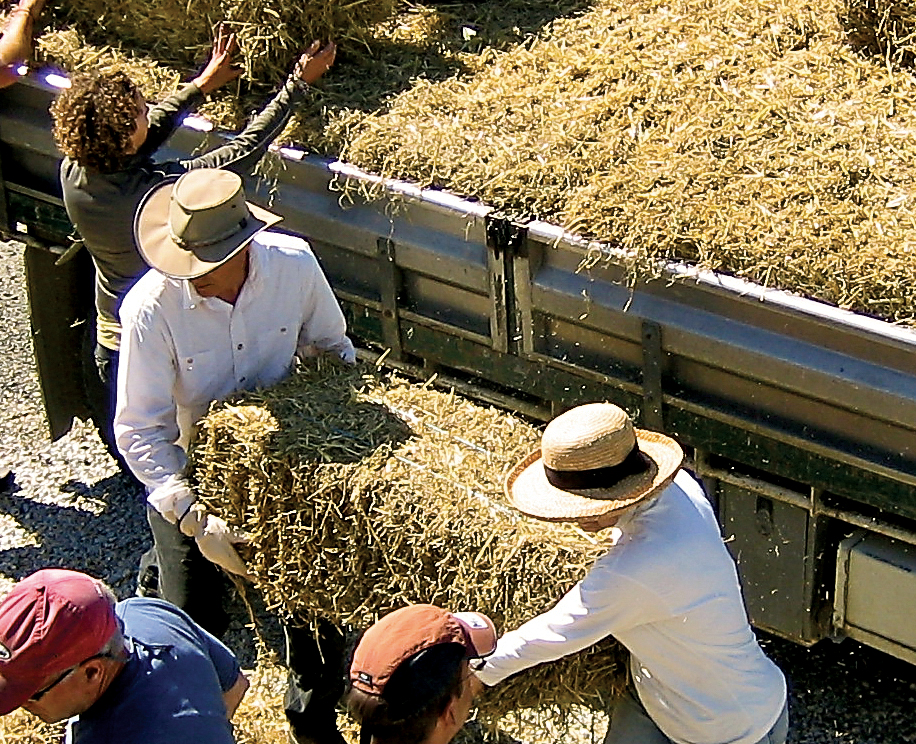
PORT ANGELES — Michael and Spring Thomas want to demonstrate how strong a house built of straw can be.
Straw bales, that is.
Compressed and covered in plaster, straw bales stay dry, resist fire and keep energy bills down by providing superb insulation, said the pair, who are founders of the IronStraw Group, a Sequim-based nonprofit organization.
They plan to begin construction of a model straw-bale house this month on property on East Fifth Street near the Peabody Creek ravine in Port Angeles.
Michael, 68, and Spring, 69, will live in the 1,600-square-foot home once it is completed.
They are currently renting a traditionally built home in Sequim.
The new home will include three bedrooms, 2 ½ baths, a free-standing wood-burning stove and various types of flooring on top of a plywood deck above a crawl space, Michael said.
Relatively easy to build — and cheap to maintain — straw-bale homes are especially useful for seniors who want to age in place, meaning that they stay in their own homes as they grow older, the Thomases said.
But they are excellent for all ages and demographics, the pair added.
“We advocate for sustainable building and build environmentally-friendly and energy-efficient homes for all people,” Michael said.
“Our current project in Port Angeles is a model home . . . specifically focused on seniors and their needs.”
They are seeking volunteers to help them build their home and intend to use the construction process to educate area residents about how to build such sustainable residences for themselves.
Straw-bale homes use straw as insulation in lieu of common materials such as fiberglass.
Straw-bale construction is considered “green” due to its smaller impact on the environment than traditional stick-built homes, Michael said.
“Straw is a waste product — a byproduct of growing grain for food and is annually renewable,” he said.
“We don’t have to wait for a tree to grow. We get a new supply of straw every year, sometimes twice a year.
“Straw is grown locally almost everywhere,” he added. “It is non-toxic, biodegradeable, and leftover bales are usable on site for gardening, animal bedding or other uses. None goes to a landfill.”
Straw-bale constructed residential structures are “naturally warm in winter and cool in summer,” and lead to lower energy bills, “which almost yearly are incrementally rising,” Spring said.
“Integrated with solar or wind power, they’re a dream to live in,” she said.
“They’re like building with big Lego blocks and are user-friendly. Once one learns the system of how to do it, they’re personally empowered.
“As in all kinds of construction, doing it correctly makes for a long-lasting structure.”
Straw-bale construction is a “very friendly technique to use,” Michael added.
“Stacking the three-foot-long bales like big Legos is quick and easy.”
And plumbing and wiring the home is no different than traditional homes, he added.
Although comparable to stick built homes in initial price, straw-bale homes are less expensive overall than traditional homes, Michael said.
“There are many aspects about straw-bale homes that make them cheaper,” he said.
“Because the straw-bale walls are great insulation for example, it allows for using smaller heating units.”
Also, “passive solar design elements become more effective with the super insulated shell used in all our designs so the owner’s ongoing energy costs are reduced,” he said.
“We need to think affordable, both in cost to build and in cost to live in. Our straw-bale homes will always cost less in energy usage throughout the lifetime of the house.”
There are “many aspects of sustainable building that go into each of our projects that are inter-related or complimentary,” Michael said.
“We take into consideration the owner, their needs, the geographic location, and the specific site — among other things — in order to design the best house possible with all the options available.”
A major component of that is keeping the straw dry — no easy task in the damp climate of the North Olympic Peninsula, Michael said.
“Straw needs to be kept dry just as most building material does, so we build very specifically for each site and the climate,” he said.
“We have been doing this for over 20 years all over the Pacific Northwest and New Zealand in all climates, so we know how to keep the straw dry.”
And — contrary to intuition — straw-bale homes are fire-resistant, Michael said.
“Straw-bale walls are completely covered with one to two inches of plaster,” he said.
“Testing has been done to show that earth-plastered straw-bale walls achieve a one-hour fire rating and stucco plastered walls achieve a two-hour fire rating,” meaning they can resist exposure to fire for that amount of time.
Straw-bale homes have greater fire-resistance than the usual drywall, the two say on their website.
For more information, or to volunteer, call 360-775-9245 or visit www.ironstraw.org.
________
Reporter Chris McDaniel can be reached at 360-452-2345, ext. 56650, or cmcdaniel@peninsuladailynews.com.