Volunteers trap European green crabs
Published 1:30 am Tuesday, September 10, 2019
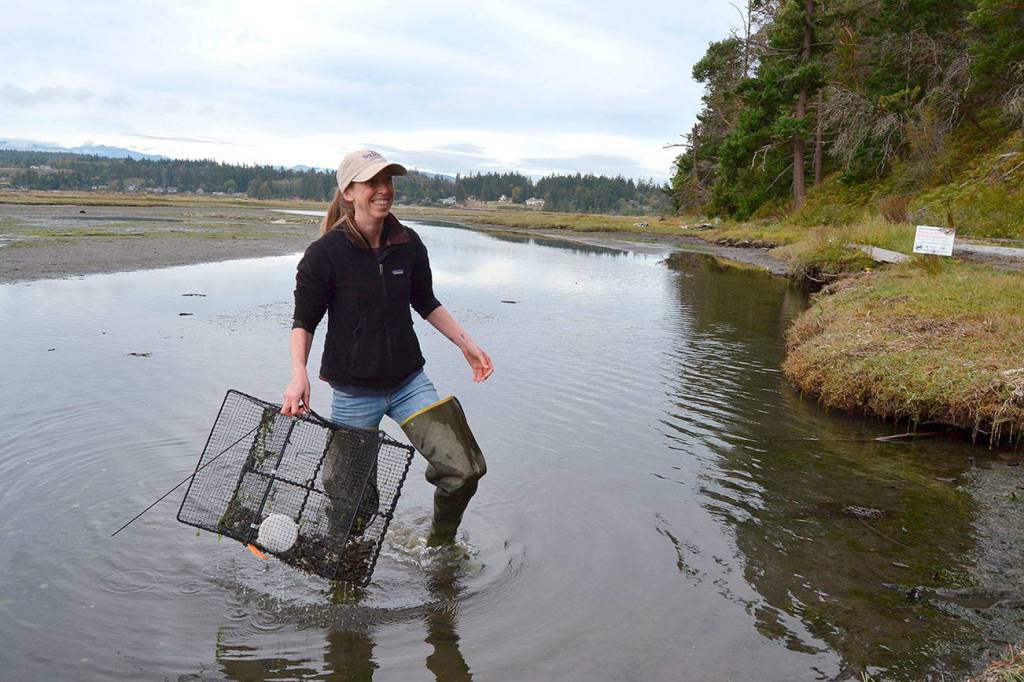
The invasive European green crab continues to keep a presence on the North Olympic Peninsula.
The highest Peninsula counts so far this season have been on the Makah reservation on the West End, where 988 green crabs have been found, and at the Dungeness Wildlife Refuge, where volunteers have discovered 56, said marine ecologist Emily Grason, Crab Team program manager for Washington Sea Grant, last week.
Those areas have had the largest totals for European green crab captures across the Salish Sea, she said.
Two were found at Sequim Bay, while volunteers found none at Pysht so far this season, which is from April to early October.
Two green crabs have been found at Jefferson County sites, Grason said.
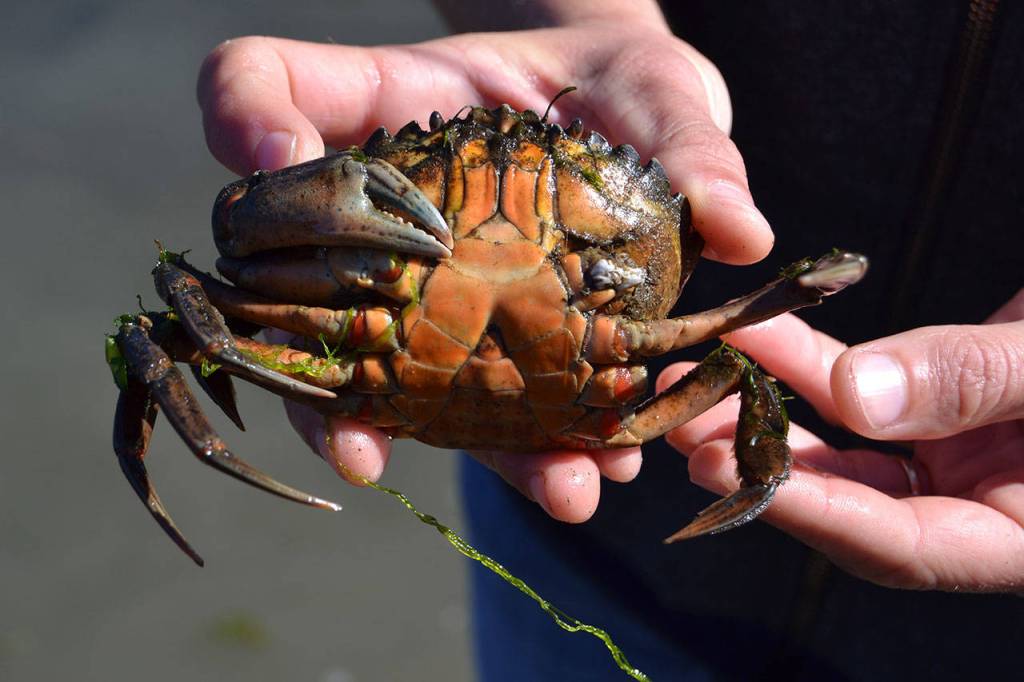
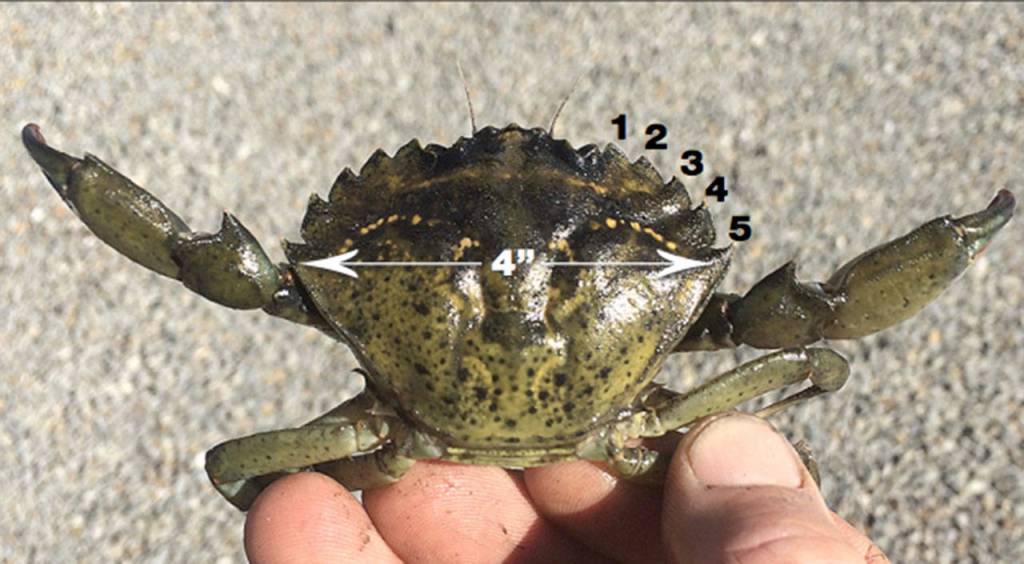
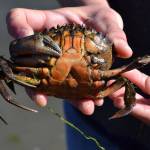
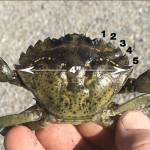
The green crab, distinctive for its five spines on the side of each eye, competes with such native species as Dungeness crab. Scientists list the crab as one of the world’s most invasive species and blame it for damaging the U.S. East Coast’s clamming industry.
The origin of the green crabs in Washington state isn’t clear, but they might have washed in as larva, possibly from Sooke on Vancouver Island, the Washington Sea Grant website says.
Washington Sea Grant’s Crab Team was launched as an early detection network in 2015 after the state Department of Fish & Wildlife mandated monitoring for the crab.
West End invasion
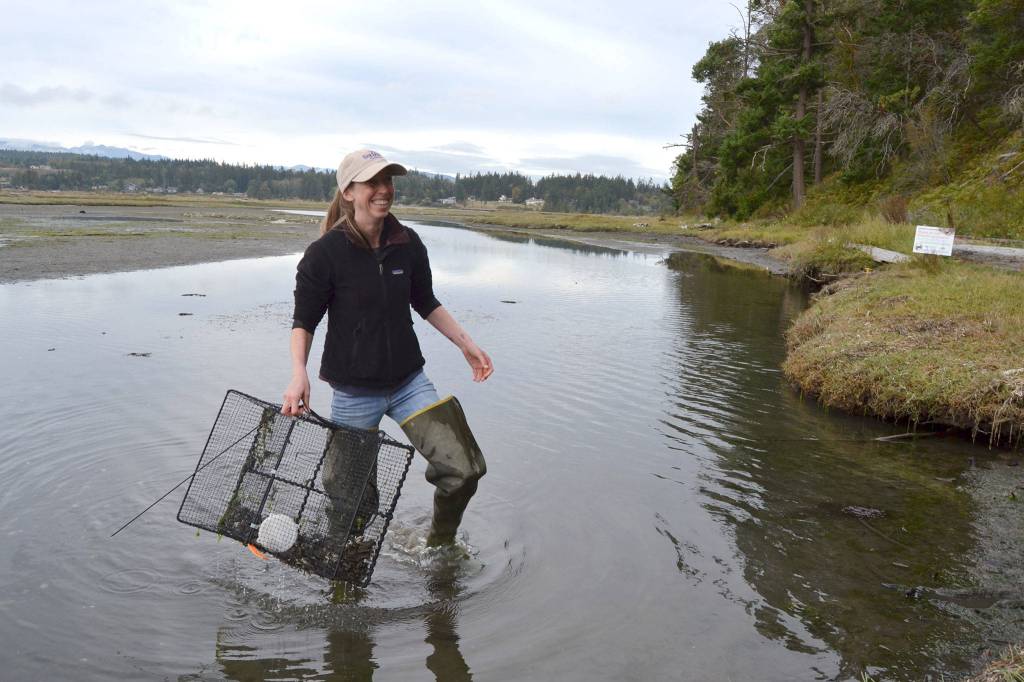
On the West End, Makah tribal staff continue to find the invasive crab by the trap load.
Of the 988 captured so far this year, 642 were in the Tsoo-Yess River, 342 in the Wa’atch River and four in the rocky inter-tidal area near Tsoo-Yess Beach, said Adrianne Akmajian, marine ecologist with Makah Fisheries Management.
Akmajian said 166 crabs were caught by hand.
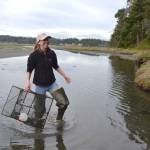
“Hand catches are quite fun,” she said. “My staff will wade in the rivers or in the side channels or tide-pools, which often disturbs the crabs. We use a net or just our hands to grab them.”
Her staff even went snorkeling to catch some crabs by hand on the Tsoo-Yess River, she said.
Akmajian’s 10-year-old stepdaughter caught 46 green crabs in her shrimp trap, too.
The smallest green crab they’ve found was 9 millimeters while the largest was 92 millimeters.
Akmajian said the totals are about three times as many males as females; no females with eggs have been caught.
Traps are set in Neah Bay, but no green crab have been discovered there yet.
Akmajian said the crabs found at Tsoo-Yess Beach “might signal that the crabs are moving out to other habitats.”
She said, “I think by the end of our official trapping season, which began in April, we will have caught more crabs total than we did all last year.”
Last year, the Makah Tribe captured 1,030 green crabs.
Tribal members began trapping specifically for the invasive species in 2017 after a passer-by discovered a green crab near the Wa’atch River and reported it to Washington Sea Grant. This led to intense trapping efforts to catch 34 green crab.
For this year’s efforts, 10 volunteers have assisted staff from Sequim, Port Angeles, Forks and Neah Bay for more than 250 hours.
Dungeness area
For the third consecutive year, resource managers at the Dungeness Wildlife Refuge are capturing the crab.
Lorenz Sollmann, deputy project leader of the Washington Maritime Complex of the U.S. Fish and Wildlife Service, said last week that staff and volunteers have trapped 56 green crab this season so far — down from 69 in 2018 and 96 in 2017, when the crabs were first discovered on the Dungeness Spit.
That’s 221 green crabs over three years. None, however, had been captured between 2001 — when trapping began — and 2016.
Sollmann said the captures wouldn’t be possible without 30 dedicated volunteers.
“Their time commitment in support of this project is seven times more than the refuge staff has been able to provide with two refuge staff dedicated to this project,” Sollmann said.
“These staff members are also working on the five other refuges this office manages, so the volunteers make all the difference in the world.”
This season, volunteers and staff set 2,118 traps. The 42 males and 14 females captured have an average size of 65 millimeters.
Sollmann said captures have slowed since mid-June, with most days bringing just one or two crabs.
Jefferson County
The total for Jefferson County was at two green crabs captured this year.
When volunteers with Washington Sea Grant’s Crab Team spotted a 77-millimeter male green crab at Kala Point Lagoon during routine monthly trap sampling Sept. 8, 2018, it was the first green crab captured there since survey trapping began in 2015.
The state Department of Fish & Wildlife staff followed the site with intense trapping and found another male green crab in Scow Bay between Indian and Marrowstone islands.
Grason said no more green crabs have been captured in those areas this year.
Captured elsewhere
Elsewhere four have been captured in Samish Bay (three in January, and one in early August) and five in Whatcom County (one in Squalicum Harbor, one in Drayton Harbor and three in Chuckanut Bay).
Grason said in an Aug. 14 blog post that the lower numbers are consistent with Canadian colleagues at early detection sites.
“We hope that these findings signal that green crab arrivals are infrequent, with a small number of larvae getting washed in irregularly,” Grason wrote.
“That situation would afford us the best chance to prevent or reduce the potential economic and ecological damage green crab could cause if they were to become established.”
On the North Olympic Peninsula, Crab Team continues to coordinate monitor sites with the Lower Elwha Tribe at the Pysht River, Dungeness Landing, Washington Harbor and Jimmycomelately Creek in Sequim Bay and Discovery Bay, and Kala Lagoon and Indian Island in the Port Townsend area.
Grason emphasized the need to support removal efforts in Dungeness and Neah Bay areas.
“The work both the Makah and [Wildlife Refuge] are doing at their respective sites is incredibly important and needs to continue in order to benefit the entire Salish Sea,” Grason said.
“In some ways they are the ‘front lines.’ ”
Sea Grant has 55 early detection sites, including Indian Island County Park run by small teams of volunteers.
Grason said resource managers believe low capture totals at new sites represent an invasion is still early enough that they “have a much better shot at controlling their numbers than if we were pulling up hundreds at a time.”
She added: “Hard work and luck: these are the two critical ingredients we need to effectively manage this global invader.”
How to help
Identification points for European green crab can be found at wsg.washington.edu/crabteam/greencrab/id.
Anyone who thinks they have found a green crab is urged to take photos and email them to crabteam@uw.edu, but leave the crab in place to avoid accidentally killing native crabs.
Volunteers for 2020 can email that address to join a training workshop in March.
________
Matthew Nash is a reporter with the Olympic Peninsula News Group, which is composed of Sound Publishing newspapers Peninsula Daily News, Sequim Gazette and Forks Forum. Reach him at mnash@sequimgazette.com.