
U.S. judge: Government can keep killing salmon-eating birds in Columbia basin
Published 1:30 am Wednesday, September 7, 2016
The Associated Press
PORTLAND, Ore. — A federal judge has ruled that the U.S. Army Corps of Engineers can continue killing double-crested cormorants that prey on Columbia River salmon and steelhead in a move that shows just how complex the debate has become over how to best sustain imperiled fish species emblematic of the Pacific Northwest.
Following the ruling made public Thursday, the Audubon Society of Portland on Friday called the decision “deeply disappointing.”
Along with other groups, it contends that hydroelectric dams pose the greatest threat to the fish and says it is unnecessary to reduce the number of fish predators by shooting thousands of cormorants and spreading oil on thousands of nests to prevent cormorant eggs from hatching.
“It is time for the government to stop this slaughter and recognize that its cormorant killing program rests on a foundation of broken laws,” said Bob Sallinger, conservation director of Portland’s Audubon Society.
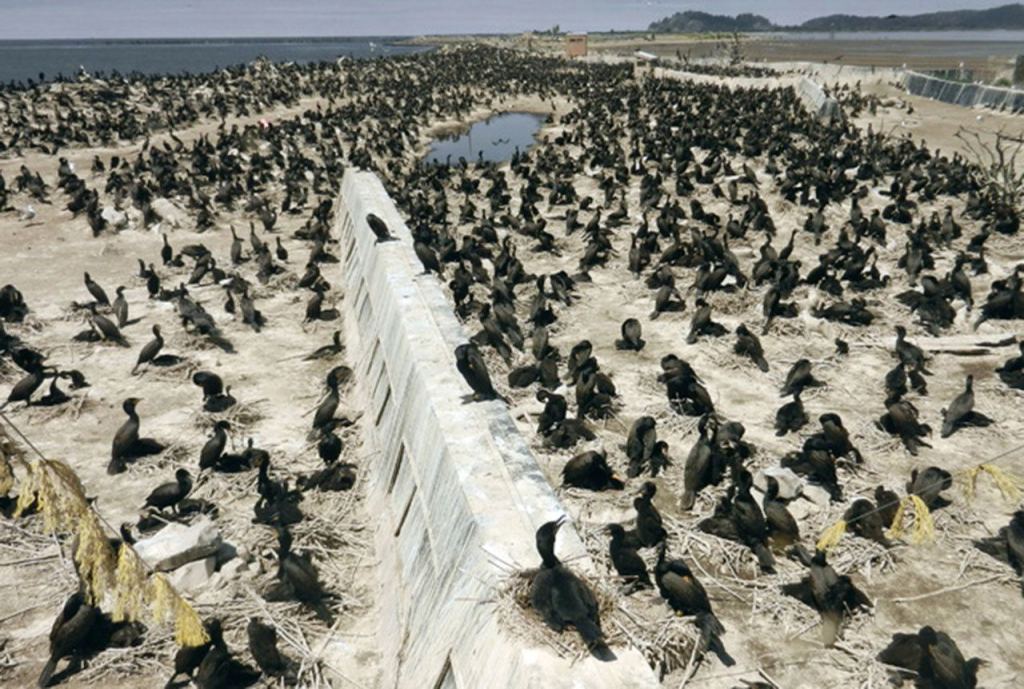
The birds on East Sand Island at the mouth of the Columbia River between Oregon and Washington constitute North America’s biggest double-crested cormorant nesting colony.
Federal agencies blame them for eating millions of juvenile salmon as they migrate down the Columbia toward the ocean. Thirteen species of salmon and steelhead on the Columbia and Snake rivers have been listed as federally protected species throughout the past 25 years.
U.S. District Court Judge Michael Simon chastised the federal agency for failing to consider alternatives before deciding to kill the birds and acknowledged it isn’t clear exactly how many juvenile fish are saved each year because of the reduction of the cormorants.
But he left the cormorant-killing plan in place after deciding it provides some benefit to fish listed as endangered or threatened. Cormorants are not a federally protected species.
“In considering effects on endangered and threatened species, the ‘benefit of the doubt’ must go to the endangered species,” Simon wrote.
The corps and other federal agencies in two years will issue a revised study of how the operation of the federal power system on the Columbia River affects the environment, including its salmon and steelhead, said Diana Fredlund, a corps spokeswoman. The revision will likely address some concerns about cormorants with other ways to reduce salmon deaths.
Bird conservationists have said repeatedly that attempts to reduce the number of salmon killed as they pass through a complex system of hydroelectric dams and reservoirs on the Columbia and Snake rivers would help the fish more than shooting their predators.
The U.S. Fish and Wildlife in 2015 authorized the corps to kill about 11,000 cormorants — or 5,600 breeding pairs — and put oil in 26,000 nests on the island. In 2015 and 2016, the corps culled 7,086 adults birds and applied oil on 6,181 nests, according to corps documents.
The Corps stopped in May because large numbers of birds left the colony.
Sallinger believes the 16,000 cormorants left because of the killings, but Fredlund said no one knows the reason or reasons.
“It’s likely that some other disturbance came in. It could have been other birds, eagles, any number of things,” she said.
The effort to protect salmon in the Columbia River has also included the relocation of Caspian tern birds and the killing of sea lions.
Oregon, Washington and Idaho have had federal authorization since 2008 to catch and euthanize California sea lions seen preying on salmon. The sea lions hunt salmon as they go over the Bonneville Dam on the Columbia River between Washington and Oregon states.
Efforts to keep the sea lions away using pyrotechnics and sea gates did not work.
Authorities so far this year have trapped and put down 54 sea lions.
Sea lions are targeted for capture and killing if they are seen eating salmon at the dam between January and May.
They must also be seen there for at least five days by specially trained observers, said Rick Hargrave, a spokesman for the Oregon Department of Fish and Wildlife.