Swimming cougars cast new light on cat movement
Published 1:30 am Friday, March 3, 2023
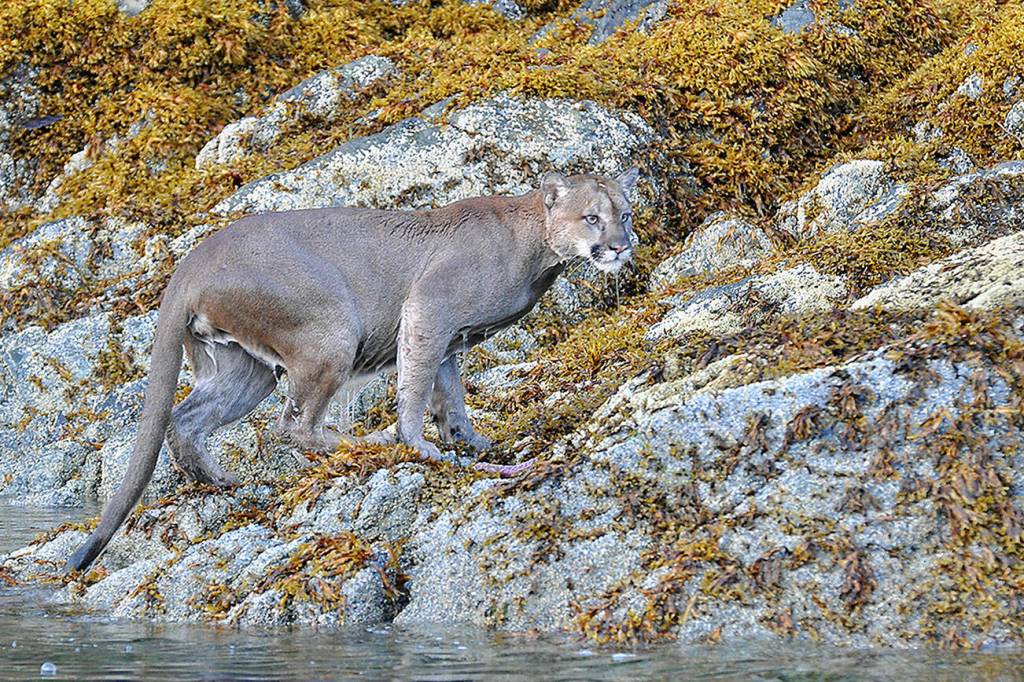
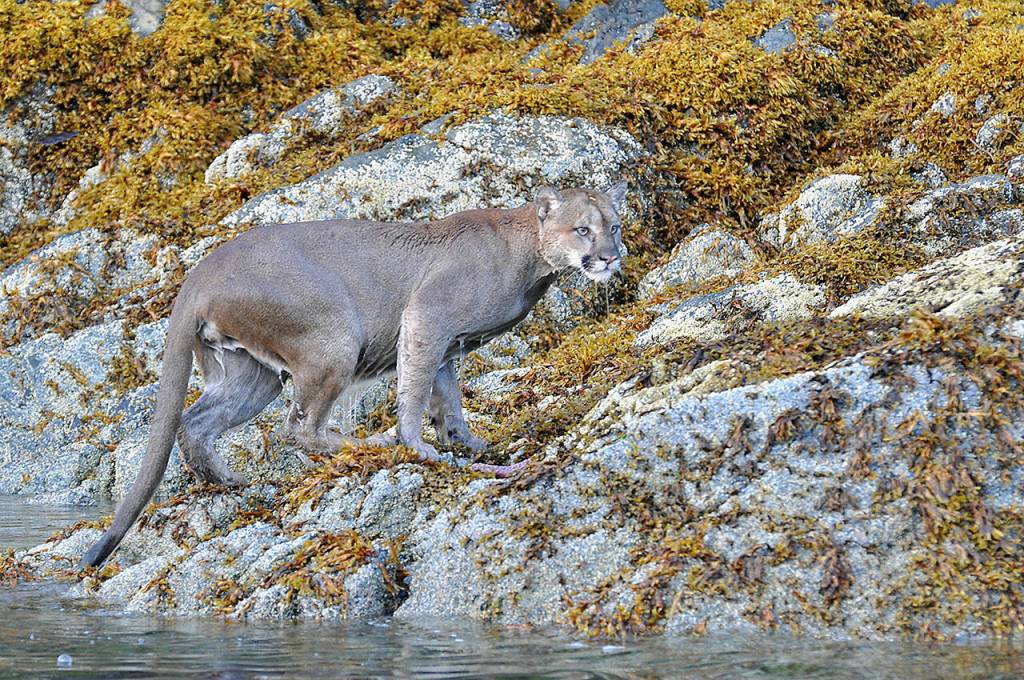
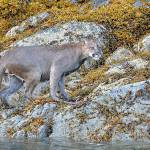
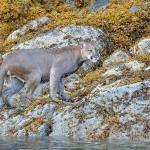
SEQUIM — Biologists are rethinking their notions about Washington’s cougars after observing the cats swimming long distances and island hopping around Puget Sound.
“We’re reimagining them as animals that take to water readily,” said Mark Elbroch, a Sequim-based biologist with the big cat conservation group Panthera.
“We are reimagining the potential connectivity of the Olympic Peninsula to the rest of Washington state.”
Panthera and local partners, including the Lower Elwha S’Klallam Tribe, have been studying cougars on the Olympic Peninsula.
Tracking collar
In 2020, a young male with a tracking collar was observed swimming just over a kilometer from mainland Mason County to Squaxin Island in Puget Sound.
Researchers began looking at other instances of cougar sightings on local islands and a study published in November found the cats would potentially swim up to 2 kilometers, meaning they could possibly access over half of the islands in Puget Sound and find other avenues off the peninsula.
It’s an important revelation, Elbroch said, as the cougars of the Olympic Peninsula are genetically isolated, which can lead to inbreeding, which, in turn, makes the animals more vulnerable to disease and other ills. Urban areas, especially the Interstate 5 corridor, create a significant barrier to the rest of the state for the cats.
Cougars in Washington aren’t endangered, Elbroch said, and at first glance, the Peninsula’s cats appear to be healthy, but recent genetic testing has shown they have the highest level of inbreeding in the state.
Elbroch said genetic diversity can be thought of as a set of options; the less diversity there is, the fewer options there are for animals responding to changes in the environment such as wildfires or disease.
“The greater the inbreeding, the less options you have, the less flexible you are as a species,” Elbroch said.
However, just because the population on the Peninsula is genetically isolated doesn’t mean it’s not genetically diverse, said Anis Aoude, game division manager with the state Department of Fish and Wildlife.
“There are things that are endemic to the Peninsula and it’s for a reason and it’s because it’s a peninsula,” Aoude said. “So it doesn’t always mean that there’s a problem. Because there’s not a lot of genetic interchange doesn’t mean that there’s interbreeding.”
The Olympic Peninsula is a large area with significant cougar habitat, Aoude said, and there is genetic interchange. It’s just slower than other areas of the state.
Cougar populations on the Peninsula are large enough that issues from interbreeding are not yet a concern, Aoude said.
But the fact that cougars can island hop around Puget Sound opens a new range of habitats for the animals, Elbroch said.
“In our heads, we had not considered any water paths or avenues and yet this young male who we called Nolan sort of opened our eyes to all sorts of new possibilities,” Elbroch said.
But there’s still the human element. The swimming cougar, Nolan, was shot and killed after 14 days on Squaxin Island and the Fish and Wildlife officers will kill cougars that have attacked local livestock.
Elbroch said humans need to find ways to better coexist with cougars, starting with building wildlife bridges across I-5.
“They’re in need of conservation attention but also some ingenuity on our part to see how we can connect the Olympic Peninsula to the rest of Washington,” Elbroch said.
“That won’t just benefit cougars. That will benefit us because we’re talking about connectivity that would increase the health of the entire Peninsula, its ecosystems and, importantly, human communities.”
Another step that could be taken is requiring livestock owners to build defensive structures to protect animals from cougar attacks. Elbroch said he’s been in discussion with local officials about creating a public pot of money that could help small livestock owners pay for those upgrades.
“We do have to hold people accountable, but we can help them as well,” Elbroch said.
Hunting cougars is legal in Washington, Elbroch said, but, according to his work, the biggest threat to the population is removal by the state after the cats attack livestock.
“Every male we pull out of this population is just another strike at the genetic diversity of local cougars,” Elbroch said.
But Aoude disagreed that depredation —when cats are killed because they’ve attacked livestock — was significantly impacting the cougar population on the peninsula.
“As it relates to depredation, I don’t think that the numbers we’re removing are large enough to exacerbate that because the reproductive rate is still higher than what we’re removing,” Aoude said.
That’s not to say increasing permeability isn’t important, Aoude said, but the situation is not dire as yet.
A 2022 study commissioned by Fish and Wildlife found that, as the human population of the Puget Sound area grows, the risk of genetic isolation increases, and wildlife managers should find ways to ensure aren’t cut off by urban areas.
________
Reporter Peter Segall can be reached at peter.segall@peninsuladailynews.com.