
Opposition to Rayonier site plan pours in
Published 1:30 am Thursday, February 27, 2020
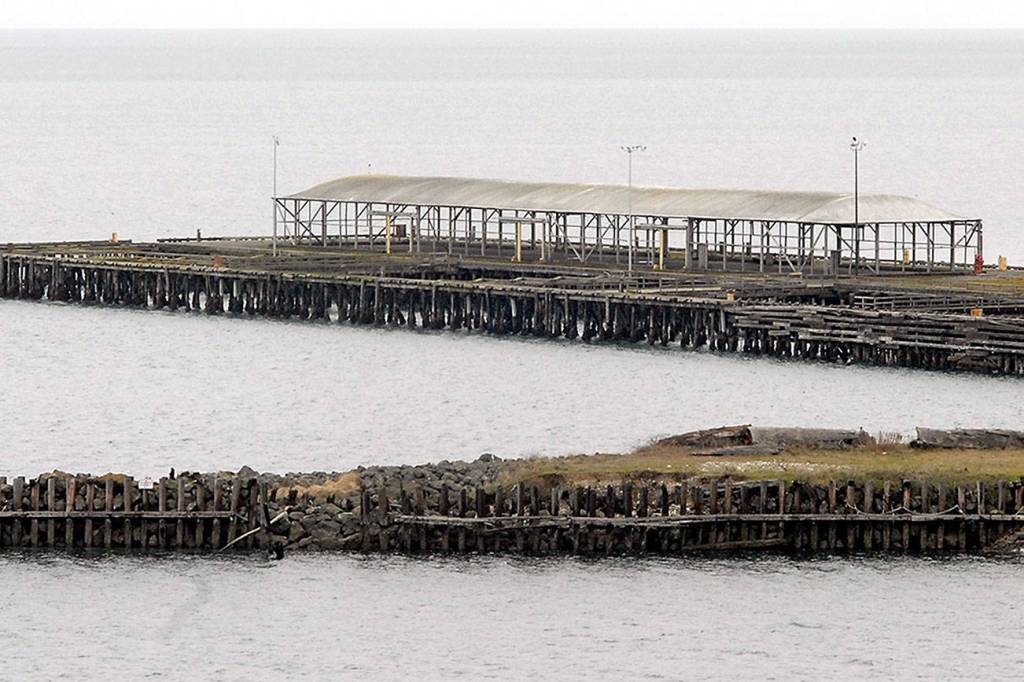
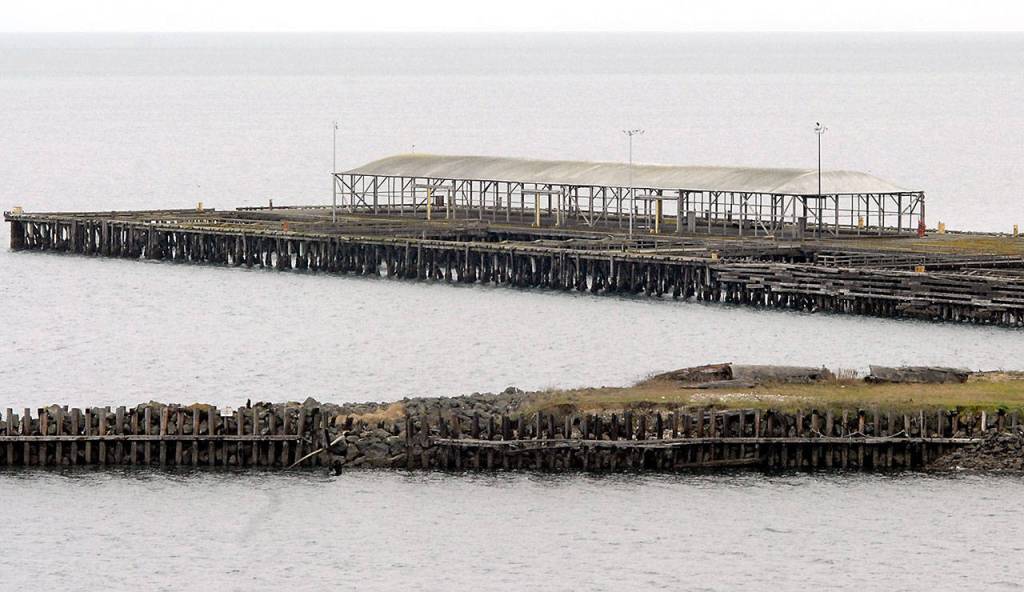


PORT ANGELES — Dozens of respondents to a cleanup plan that has been proposed for the former site of the Rayonier pulp mill want removal of all of the contaminated soil on the 75-acre waterfront site.
But the option most desired by area residents is not required under state law, making it a difficult task to accomplish, a state Department of Ecology official said Thursday.
Opponents include representatives of Port Angeles city, Clallam County and tribal governments, as well as 140 of more than 170 respondents to a proposed Rayonier cleanup plan that calls for capping Port Angeles Harbor sediments as well as upland pollutants instead of trucking them away.
“Our community doesn’t want you to just cover that and leave a toxic waste dump in perpetuity to us,” former City Council member Cherie Kidd told state Department of Ecology Southwest and Olympic Region Director Rich Doenges at a Feb. 12 Port Angeles Regional Chamber of Commerce-Port Angeles Business Association luncheon.
Ecology southwest Region Manager Rebecca Lawson said some residents who have been waiting for 23 years for the east Port Angeles parcel to be made whole need to better understand what’s being proposed — and that no cleanup strategy has been selected.
“If we try to make them do something that’s not legally required [under the state Model Toxics Control Act], they could take legal action, and I guess it would go before a judge, and a judge is going to look at what does the [regulations] require,” she said.
Lawson expects a community meeting will be scheduled for June to further explain the proposal.
By then, she predicted agency staff will finish their written responses to the proposal. The plan was outlined by Ecology at Sept. 25 meeting in Port Angeles at which no Rayonier representative offered input.
Jacksonville, Fla.-based Rayonier Advanced Materials owns the parcel, is paying for the cleanup and wrote the report presented Sept. 25.
Lawson said any cleanup option Ecology would pick would not preclude or prohibit development on the property.
Under Rayonier Advanced Materials’ preferred option, a park would be allowed, she said.
“The property owner would decide,” Lawson added.
The company’s proposal would cost $7.4 million and allow “occasional use” with an 8.9 benefit-to-cost ratio — a high overall value for the money spent.
That’s opposed to $37 million for removing all the remaining contaminated upland soil that would allow unrestricted use of the parcel but has a lower 2.3 benefit-to-cost ratio — but is heavily favored by many city residents.
The proposal is contained in the “Cleanup Alternatives Evaluation Report,” available at www.tinyurl.com/PDN-RayonierToxins.
While the proposal also focused on groundwater cleanup sedimentation cleanup, which many said should involved dredging instead of the proposed capping, most respondents directed their ire at keeping the remaining contaminated soil where it lay.
Rayonier has trucked off 30,000 tons since Ecology took on cleanup duties in February 2000, three years after the mill, among the state’s worst polluters, shut down.
Port Angeles City Manager Nathan West said the favored option is “not acceptable,” asserting it “effectively creates a permanent landfill on the property that is planned to be fenced off from public access in perpetuity.”
The letter writers included Port Angeles resident James Michael Langley, who moved to Port Angeles in the mid-1950s, recalled that windows in his home “were always dirty” from living downwind from the mill.
He said the Rayonier parcel should be held to the same comprehensive cleanup standards as a gas-station parcel, “to give the site its highest value to the most people for the longest time.”
Other opponents included the North Olympic Land Trust, the Olympic Environmental Council, Clallam County Economic Development Corp., Port of Port Angeles Commissioner Colleen McAleer, former county Commissioner Mike Doherty, the Port Angeles Business Association and the Jamestown S’Klallam Tribe.
The Lower Elwha Klallam Tribe, working with Ecology on cleanup, has at least one burial site there.
“The selected cleanup action should ensure that capping will not be relied upon in environmentally sensitive areas, including the marine shorelines (200 feet) and the Ennis Creek shorelines (150 feet),” said tribal Chairwoman Frances Charles, her position echoed by the Port Gamble S’Klallam Tribe in Kitsap County.
“A higher standard is both desirable and necessary since this was previously an industrial site and, at a minimum, should be cleaned up to this standard,” the three Clallam County commissioners said in their dissent.
“Occasional use is more protective than industrial,” Lawson retorted Thursday, calling the comment an example of misconceptions over the occasional-use standard — a term not included in the Model Toxics Control Act Regulation and Statute.
Unrestricted and occasional use allow the same levels of contamination for pollutants such as arsenic, lead and zinc, Lawson added, saying different pollutants have different standards.
She said some critics misunderstood information in report that said “more realistic exposure scenarios are warranted that assume exposure frequencies of only a few days per year.
Rayonier said in the report that “at the suggestion of [the state Department of Ecology], an exposure scenario was developed for an occasional site visitor (trespasser) that visits the site 104 days per year (approximately twice per week) during adolescence.”
“People seem to be hearing, ‘I can only go there two days a week, and if I go there three days a week, then what?’” Lawson said.
“It gets down to the specific parameters that we developed the cleanup levels for.”
Lawson said Ecology’s main goal with cleanup sites is to eliminate “exposure pathways” to and from direct contact with contaminated soil, including through ingestion “so that if you have something capped, it’s just as protective as if you removed all of it, because you don’t have that exposure pathway.”’
________
Senior Staff Writer Paul Gottlieb can be reached at 360-452-2345, ext. 55650, or at pgottlieb@peninsuladailynews.com.


Best of Olympic Peninsula