
SEQUIM — Saturday’s the day for the grand opening of Sequim Museum & Arts’ new facility, and Judy Reandeau Stipe is a flurry of activity inside, more like a big band director than an executive director.
“We’re working 50 hours a week — we didn’t even do that when we were really working,” she jokes.
“It’s been a labor of love.”
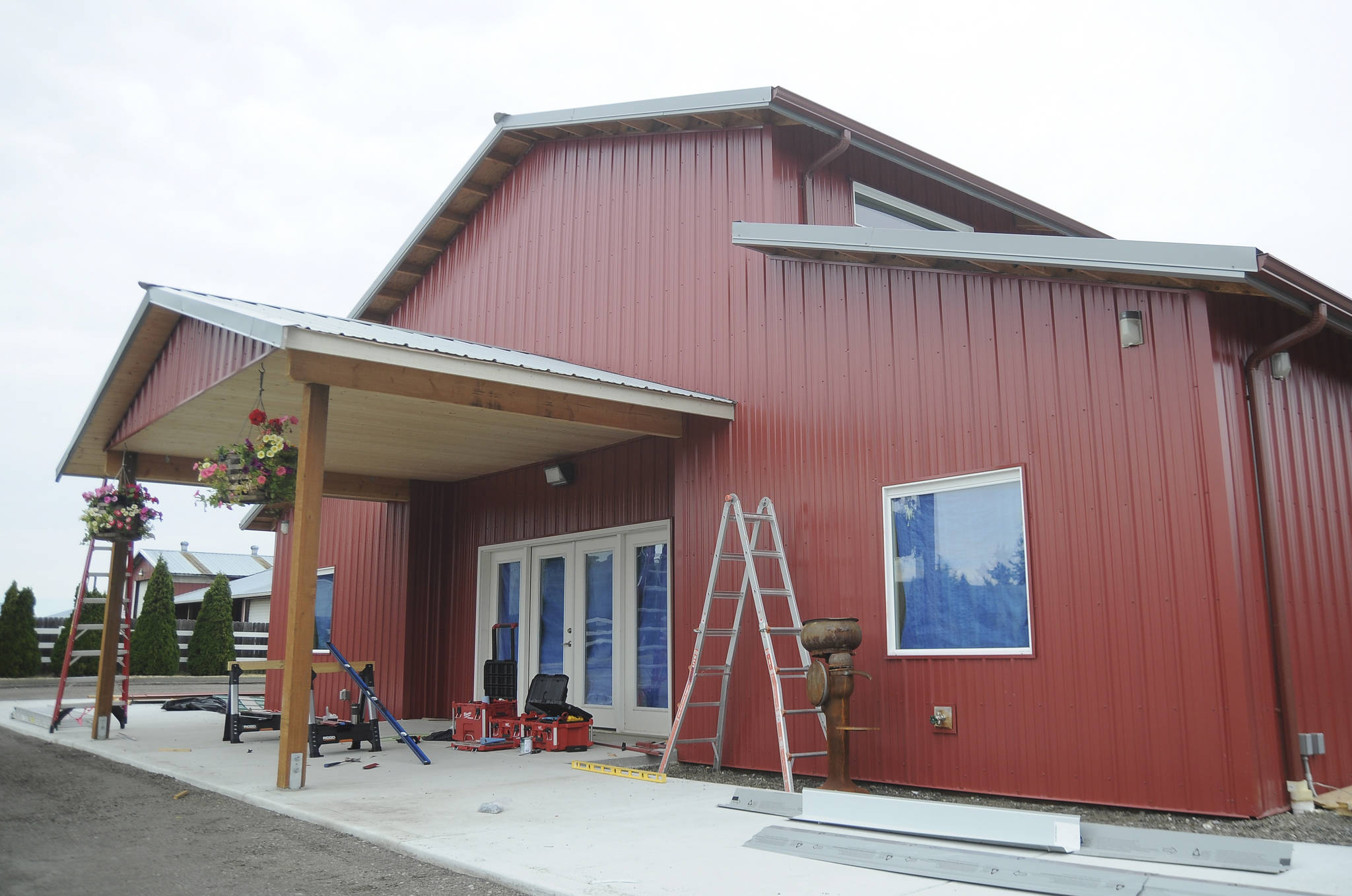
More than six years since she joined the board, Stipe and a hoard of volunteers are on the cusp of finishing a long dreamt-of reception to officially open the Cowan Complex Center — a 6,500-square-foot building at 544 N. Sequim Ave. to house the museum’s array of local artifacts, art, displays, interactive exhibits and more.
“I’m really proud of how this is coming out,” Stipe said last week, standing amid a half dozen projects as painters, carpenters and other volunteers buzzed by.
Museum volunteers welcome the public to a grand reception at 11 a.m. Saturday, an event to include special guest Matt Dryke, gold medalist from the 1984 Olympic Games.
Other special guests include photographer Ross Hamilton, “Strait Press” author Bill Lindstrom with Brown Maloney, and the museum’s board of trustees.
Thereafter, the facility will be open 11 a.m. to 4 p.m., Tuesdays through Saturdays, with private tours by appointment.
Admission rates are still being figured out, Stipe said, but the staff will be accepting donations.
Stipe listed dozens of individuals and businesses who have either donated money, time, in-kind services or all three: Dan Smith and the Nolan family for wood donations, Larry Somerville and her husband Bob Stipe for various woodworking projects, Bob Lampert for photo donations, and contributions and discounts from a multitude of business, including Lakeside Industries, Hartnagel Building Supply, Clear Image, Doghouse Powder Coating and Clallam Co-op Farm and Garden, among others.
A big thanks, Stipe noted in months past, went to workers who allowed the museum to take several loads of wood from the former Sequim Elementary School — and most recently the Sequim Community School, which was deconstructed last year.
The 20-foot-long, 16-inch-wide, 2 3/4-inch thick pieces of old growth timber — 30 in all — line the new museum
“‘How did we do this?’ It’s easy. It’s all these people standing behind us,” Stipe said.
Making the move
The origins of Sequim Museum & Arts date back more than 40 years. Stipe notes in the spring edition of “The Prairie Review,” the museum’s quarterly newsletter, that “farm artifacts, old bones or logging stuff were dropped off with the town clerk when locals paid utility bills” at the Sequim Town Hall, where Gladys Holmes and Ruby Trotter stacked relics on desks, shelves, in a utility closet — and later opened the jail cell for historical display (prisoners where no longer kept in town, Stipe notes).
In the mid-1970s, a group of community members on a bicentennial committee developed the idea of starting a community museum. After a couple of years of exhibiting in several locations around town, the community cut the ribbon for the Sequim-Dungeness Museum on May 10, 1979, at 175 W. Cedar St. — on the site of the former Sequim post office.
In 1992, the museum merged with the Peninsula Cultural Arts Center to become the Museum & Arts Center in the Sequim-Dungeness Valley. Three years later the organization grew once again, acquiring the historic two-story Dungeness Schoolhouse on Towne Road.
The schoolhouse is a rentable venue for community use. Thanks to various groups using the building for reunions, theater, weddings and birthdays, yoga, table tennis, homeschool lessons and more, Stipe said the organization is able to pay for its four facilities — the schoolhouse itself, plus the Cedar Street exhibit center, museum administration building and the new Cowan Complex.
Stipe joined the museum board about six-and-a-half years ago and along with others began the groundwork for the new facility. Albert Haller, a longtime Sequim logger, land developer and later an education advocate before his death in 1992, purchased the land on North Sequim Avenue to someday house a museum.
In March 2016, the museum got a big boost toward the new facility when it received and sold three properties courtesy of land endowments from West End pioneer John Cowan and his wife Inez — including two timber properties on Lake Ozette Road and off Highway 112, and a home in Port Angeles.
Despite some proverbial bumps along the way, Stipe credited a number of local government officials with helping with the process — in particular city of Sequim Operations Manager Ty Brown, Utilities Manager Pete Tjemsland, Community Development Director Barry Berezowsky and former Assistant City Manager Joe Irvin, among others.
“I’m over the moon,” Stipe said. “The biggest thing for me is it’s [done] the Sequim way. It makes me cry sometimes.”
Exhibits and features
Museum officials bring plenty of something old (from the previous exhibit center) along with some things new to the Cowan facility.
A section of the museum heralds former Sequim resident Joe Rantz and fellow members of the Olympic Games gold medal-winning 1936 University of Washington crew team. Judy Willman, one of Rantz’s daughters, donated larger-than-life photo boards of the team members. Complimenting the section is the George Pocock rowing shell gifted to the Sequim museum by the Olympic Peninsula Rowing Association in 2015. Once supported near ground level, the shell hangs from the new facility’s rafters.
A new feature to the museum’s traditional offering of artist space is the Judith McInnes Tozzer art gallery featuring her own art with others ranging from Joy McCarter’s piece on the grain elevator to Dale Faulstich’s Jamestown S’Klallam Tribe-inspired artwork. Each month the gallery will be open for community artists to display their work (a fee applies), Stipe said.
A section of the museum will be labeled the Albert Haller Library. Named after Haller, a lifelong advocate of education whose foundation Stipe says was a tremendous support in getting the facility built, the section of the museum will also house a “children’s corner.”
Two murals originally installed on the Lehman’s grocery storefront from 1995-2000 make their way into the museum exhibits as well.
Visitors will get a chance to peer into the area’s logging history with an exhibit that showcases antique logging equipment and a wall-sized photo of the Dungeness Logging Company’s haul via the railway.
A milk “parlor” spotlights artifacts from Sequim’s long history as a dairy area — including a life-sized cow replica.
A large, garage-style sliding door allows museum volunteers access to bring in antique tractors, cars and the like, such as the museum’s 1907 REO Runabout.
Other features include restored theater chairs from the Sequim Opera House and signs from businesses come and gone, such as “Southwoods Mall” and “Sofie’s Grill,” along with signs declaring “We’re Rollin’ to Nolan’s, Best Ice Cream in the Valley” and “Welcome to Flipper Drive In.”
A section not expected to be completed by the grand opening will feature tribal artifacts and more from the Jamestown S’Klallam Tribe, Stipe said.
Returning is the ever-popular Manis mastodon exhibit, the showcase of Emanuel (“Manny”) and Clare Manis’ archaeological dig that rewrote human history in North America. The museum will have mastodon-inspired shirts for sale, Stipe said.
Community groups and school children in Chimacum, Whidbey Island, Shelton and other communities visit the Sequim museum, Stipe said, and most of them come for the mastodon display.
“We are asking everyone to overlook some unfinished items because construction is ongoing,” Stipe said. “Opening the new museum was the focus. Our volunteers are working feverishly to get the place ready for visitors and the budget is still tight.”
For information, call 360-683-8110, email sequimmuseum@olypen.com or go to www.sequimmuseum.com.
________
Michael Dashiell is the editor of the Sequim Gazette of the Olympic Peninsula News Group, which also is composed of other Sound Publishing newspapers Peninsula Daily News and Forks Forum. Reach him at editor@sequimgazette.com.
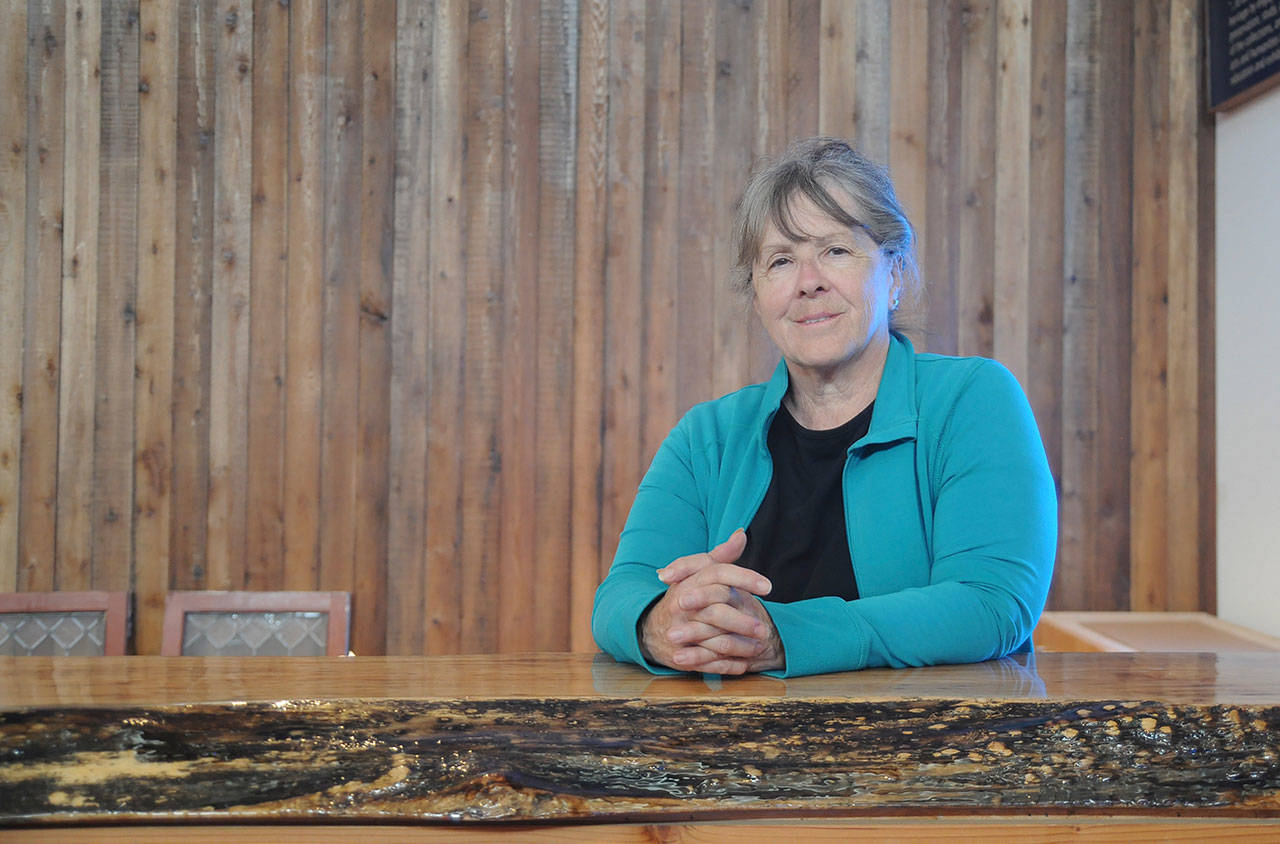
Judy Reandeau Stipe, executive director of Sequim Museum & Arts, said she’s excited for the community to see the museum’s new building, set for a grand opening Saturday. (Michael Dashiell/Olympic Peninsula News Group)
