
Electrical engineer to lecture on underwater sound
Published 1:30 am Friday, November 15, 2024
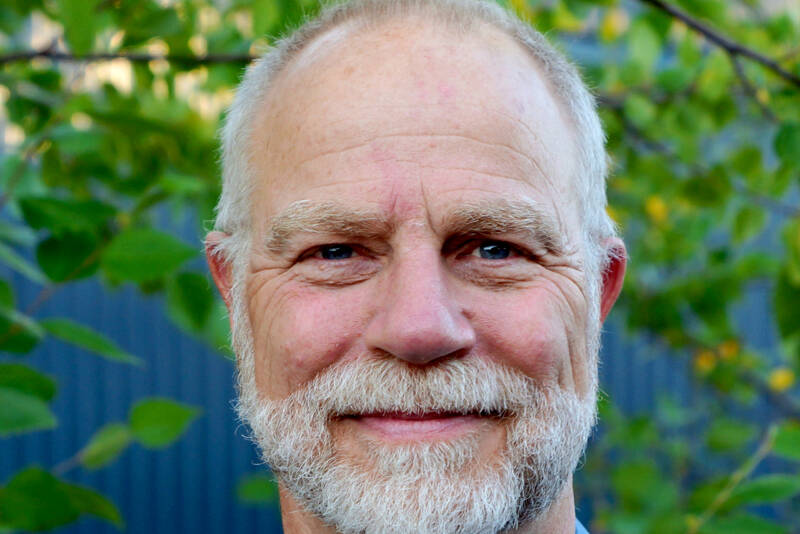
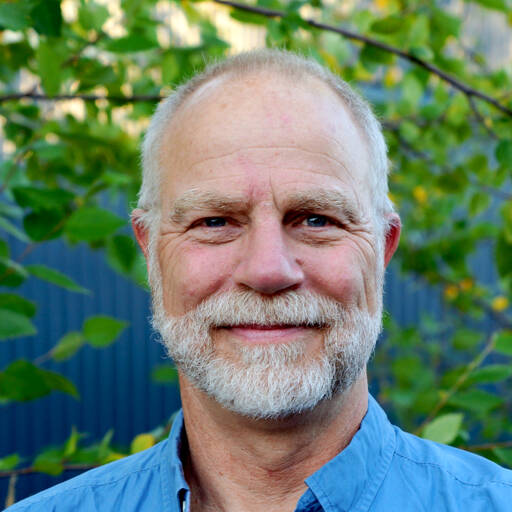


PORT TOWNSEND — A principal electrical engineer of the University of Washington’s applied physics lab will give a lecture intended to conjure awareness of the reality of underwater sound this weekend.
Eric McRae will speak at 3 p.m. Sunday at The Chapel at Fort Worden State Park. The free lecture is a part of the Port Townsend Marine Science Center’s “Future of Oceans” series.
“The talk will start off with a discussion of the general physics of sound, in layman’s terms,” McRae said. “Then we will start talking about sound underwater. Then we’ll talk about the recent research, or research that isn’t well known, about the various life forms underwater and their use of sound.
“Most people aren’t really aware. We stand at the shoreline and look across and we don’t hear anything going on underwater, but that’s not the situation.”
Sea mammals have highly developed senses of hearing, McRae said.
“The toothed whales out there can actually scan, kind of like they had a little parabolic reflector in their head, and they can actually shift that around a little bit,” he said.
McRae hopes to convey that there’s a world of sound and hearers underwater, and to share some of its distinct characteristics of that world.
“Since water is much more dense than air, the conditions are different,” McRae said. “For example, the speed of sound in water is 4 1/2 times faster than sound in air.”
Humans use the speed of sound to locate where a sound is coming from, McRae said.
“If we hear a sound that’s, say, off to the right somewhere, it arrives in our right ear first, just a few milliseconds before it arrives at our left ear,” he said. “Under water, because the sound speed is so fast, our brains can’t process the short time between one ear and another, so every sound sounds like it’s coming from the middle of your head.”
McRae compared the difference to listening to a pair of stereo headphones, with clearly discernible instrumentation coming from one side or the other, then switching them to mono.
Sound has been a keen awareness for McRae all his life. As a child, he noticed certain sounds that others did not. In his lecture, he will recall a story of interesting insight into the physics of sound pertaining to a beloved wristwatch he wore in his adolescence.
As a young adult, he had his hearing tested and was able to discern the technician’s voice down to the lowest level of the machine. The technician couldn’t believe it and judged that he was somehow cheating, perhaps reading her lips, McRae said.
At the university level, McRae studied physics before transitioning to electrical engineering, where he spent his career building embedded systems, designing hardware and writing software.
McRae’s heightened awareness of sound persisted as he went about his life.
“One of the things that occurred is I started SCUBA diving and started to become familiar with sounds underwater, as a diver, and how very different the soundscape is underwater.”
The most immediate distinction is that all of the air noise goes away, McRae said.
“Literally, you could be a foot underwater, with somebody standing up trying to yell at you, and you can hardly hear them,” he said.
As one goes underwater, they also will notice there is a large amount of biological noise, McRae said.
“I characterize it as noise because my hearing doesn’t know how to interpret it,” he said. “If you, say, get your head close to a piling that has a lot of bio-growth — barnacles and critters crawling around on it — it’s quite noisy. I know that my ears are not designed for hearing underwater, but still it’s pretty noisy.”
Becoming so keenly aware of the complexity of the sonic world underwater has led McRae to hope that the world might better accommodate underwater life by reducing human-made sounds, McRae said.
McRae remembered the first time he was underwater and he heard an older outboard motor going by.
“It was a terrible, terrible sound,” he said.
McRae said part of diving in the Strait of Juan De Fuca is hearing massive ships going by overhead.
“They make a lot of noise,” he said.
Human hearing is generally considered to go from 20 hertz to 20 kilohertz, with variation in age groups and individuals.
McRae used dolphins as an example of an underwater creature with a much larger range of hearing.
“If we have boat motor that’s screaming at frequencies that we don’t hear,” McRae said, “we’re making life miserable for those critters.”
“If, for example, you lived in the area when they rebuilt the marina at Point Hudson,” McRae said. “When they were pile-driving those beams down into the water, you would have wanted to move.”
About 12 years ago, McRae worked on a project with the University of Washington to develop a very large undersea science observatory. Two miles deep and 350 miles offshore, the observatory is not visitable, McRae said.
Through being a part of the build, in his capacity as an electrical engineer, McRae said he rubbed shoulders with some fantastic ocean scientists, becoming even more intrigued with the sounds.
“Just paying attention to what the scientists around me were talking about, what they were excited about, I mean, that was a blast,” McRae said.
McRae said the observatory has gathered all sorts of recordings of whales and underwater mammals. Part of the infrastructure is its collection of hydrophones, or underwater microphones, McRae said. Occasionally, the microphones will pick up audio that no one knows the source of.
“They don’t sound human-made; they’re pretty weird sounds,” McRae said.
The observatory’s array of hydrophones covers hundreds and hundreds of kilometers of seafloor, McRae said.
“One of the areas that we have a lot of instruments on is a subsea volcano and it erupted,” McRae said. “We have not only seismometer recordings of the eruption, but we have hydrophones in the caldera and stationed around the volcano. So we have fantastic recordings of the sound of underwater eruption.”
________
Reporter Elijah Sussman can be reached by email at elijah.sussman@sequimgazette.com.