
Tharinger says ‘secret sauce’ is building relationships
Published 1:30 am Wednesday, August 5, 2026
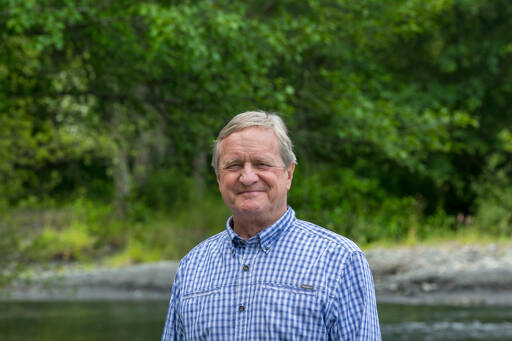
PORT ANGELES — Retiring state Rep. Steve Tharinger, a Port Townsend Democrat who is finishing his eighth term in the 24th Legislative District, reflected on his career on Tuesday during a discussion with the Port Angeles Business Association at Jazzy Joshua’s.
Tharinger, who announced in March he won’t run again, has represented Clallam and Jefferson counties and part of Grays Harbor County in the state House.
“This is actually the first time I haven’t been on the ballot in Clallam County since 1995,” Tharinger, 77, told the group.
A three-term Clallam County commissioner first elected to the House in 2010, Tharinger has chaired the Capital Budget Committee for the past decade, a post he holds until Jan. 1.
Tharinger said success in Olympia comes down to making an effort to get to know people, from legislators to lobbyists.
“The secret sauce, if there is one, is building those relationships, spending that time,” he said.
That holds true for both sides of the aisle, even though Democrats control both chambers — a 59-39 edge in the House.
Tharinger said he developed the capital budget — which starts with the governor’s proposal — alongside Republicans. It’s the one budget, he said, where the minority party has real input and incentive because it funds projects in every district, giving Republicans something to take back to their constituents.
The most effective way to steer money home, he said, is the proviso — a line item that directs funds for a specific purpose. One such proviso has sent the 24th Legislative District roughly $1.2 million each budget cycle to Olympic Medical Center — money that unlocked additional federal dollars.
“Provisos are really the key,” he said.
The 24th being one of the few rural districts represented by Democrats is “a big advantage,” he said, because it allowed its delegation to align with rural Republicans who share many of the same interests and concerns.
That common ground produced the bipartisan Connecting Housing to Infrastructure Program — CHIP — which covers the cost of sewer, water and other infrastructure that typical development funding doesn’t.
During the pandemic, Tharinger said, federal funding flowed into the state — enough to push the capital budget from about $5.5 billion to nearly $9 billion. That money has since dried up.
The state now has less to spend, he said, with shrinking state dollars left to backfill programs the federal money once supported.
“It is a matter of just retracting services that people have learned to expect,” he said.
Tharinger acknowledged that state energy-efficiency requirements — like heat pump water heaters and insulation — increased building costs.
“They are counterproductive as far as the need for more affordable housing. There’s no question about it,” he said, adding that there could be room for “some moratoriums.”
But he defended the underlying climate goals, calling Washington “a leader on climate change policy.”
Five candidates were competing for Tharinger’s seat in Tuesday’s primary: Bradley Callaway, a Democrat, Patrick DePoe, a Democrat, Mark Hodgson, a Democrat, Kaylee Kuehn, a Democrat, and Marcia Kelbon, an Independent. The top two vote-getters will face off in the general election on Nov. 3.
Tharinger said he would probably make an endorsement after the primary.
________
Reporter Paula Hunt can be reached by email at paula.hunt@peninsuladailynews.com.


Best of Olympic Peninsula