
From fittings to windows, port true to original quarters
Published 1:30 am Thursday, June 25, 2026


PORT TOWNSEND — The Port of Port Townsend has been restoring the Junior Officers’ Quarters building at Point Hudson one hinge at a time — since last October.
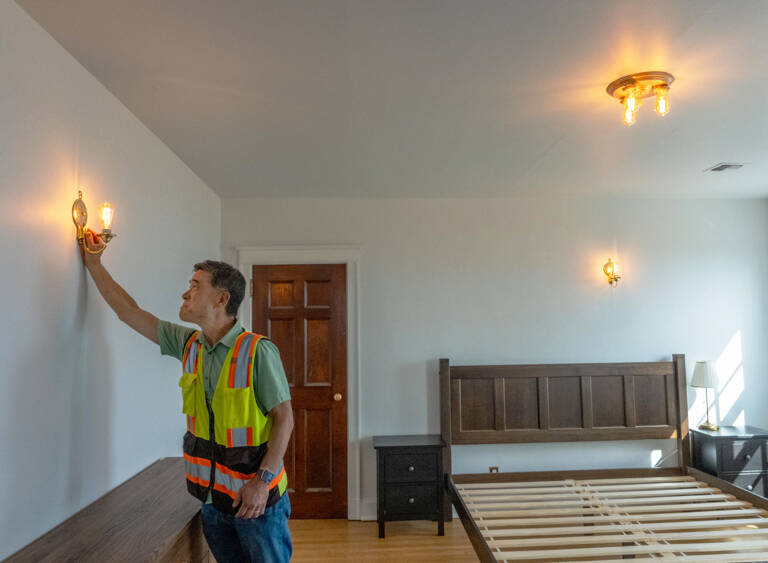
Every brass fitting on every door was pulled off, sandblasted and buffed. Missing doorknobs were replaced with replicas. Original wall sconces were rewired with Edison-style LED bulbs.
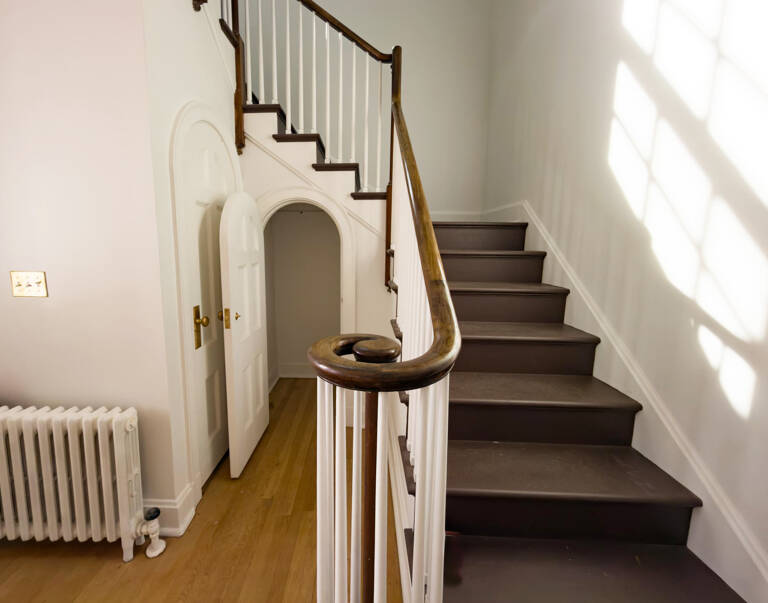
The oak floors throughout the north and south units of the building were sanded and refinished, as were the steps, risers and handrails of the staircases.
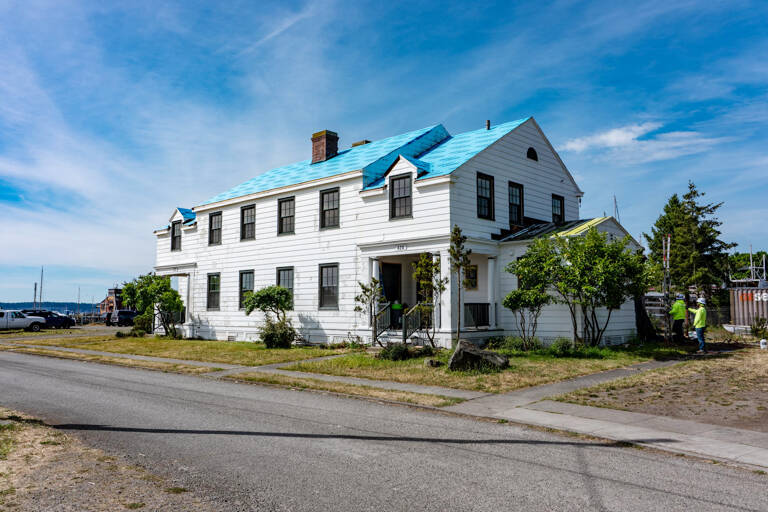
The 4,200-square-foot Colonial Revival duplex looking east over Admiralty Inlet is being polished, prepped and prepared for its next role as a vacation rental — 91 years after it housed low-ranking commissioned officers reporting for duty.
Built in 1934-35 by the Murch Brothers Construction Company of St. Louis using local materials, the duplex was part of the Public Health Service’s U.S. Quarantine Station at Point Hudson — where arriving ships were inspected to prevent the spread of infectious disease.
The building had good bones: wood lap siding over tongue-and-groove sheathing, lath-and-plaster walls and a wood frame resting on timber pilings.
“Nothing structural needed to be done,” port operations manager Chris Sparks said.
Because Point Hudson sits within the Port Townsend Historic District, the port needed Historic Preservation Committee approval before work could begin, which it received. The city also amended its municipal code in 2023 to permit the building to be used for short-term lodging, which opened the pathway for the project.
Remarkably, the building had retained much of its original architectural integrity — trim, moldings, hardware, plumbing and electrical fixtures, cabinetry, wood-framed 6-over-6 sash windows and most of its doors.
Retaining as many of those elements as possible was important to the port.
“We really tried to pay respect to the original,” said Dave Nakagawara, the capital projects manager.
Pointing out the attention to craftsmanship and touches like a Harry Potter-like cupboard under the stairs, he said, “The government really had a different attitude toward design at the time.”
The total project of the project — materials, furnishings, port labor, mechanical systems and outside contractos — was $842,000. Remaining faithful to the building’s history was balanced with updates and improvements that were simply necessary.
One of the biggest challenges was a problem that couldn’t be seen — only smelled.
Like all of the historic structures at Point Hudson, the duplex was built on a foundation of creosote-saturated timbers, with crawlspaces and walls that had absorbed its persistent and distinctive odor.
To remove and keep the odor out of the building, a new ventilation system now circulates fresh air through the structure and vents the odor outside — preventing any whiff reminiscent of barnacle-encrusted pilings and tar-stained manila rope from seeping into the occupied spaces.
The new HVAC system, along with new windows that replicate the originals, were funded through a $300,000 state Department of Commerce grant as part of a broader Point Hudson energy efficiency project.
The original radiators remain in place to preserve the interior’s historic character, and the fireplaces no longer function.
The kitchens have undergone the most significant upgrades: new stoves and refrigerators, replica cabinet hardware to replace worn originals and new overhead LED lights chosen to resemble the originals as closely as possible.
Port staff have done nearly all of the work.
Nathan Sherwood and Dakota Weeks polished the original metal wall sconces — about 10 hours of work pulling, polishing and reinstalling each one. Electrician Connor Cunningham completely rewired the building, including new plugs and switches. Charlie Shaw installed the new windows. Ty Tyler worked on projects throughout the building.
David Johnson, the maintenance lead who will retire next March after 25 years with the port, researched the original light fixtures to ensure that, where replacements were needed, the most historically accurate options were chosen.
John Green replaced the tile surrounding the bathtub in the second story master bath in the south duplex because the wall had to be replaced due to water damage, but other than that, the room retained its original sink and tile floor.
Laura Snodgrass, a port maintenance team member for 17 years, said working on the project was far more rewarding than cutting grass at Jefferson County International Airport.
“This was way more fun,” Snodgrass said. “ You see a project at the start and you know all that went into it.”
Outside jobs went to contractors to paint the exterior and to replace the asbestos-cement shingles and standing seam metal roof. Jacqueline Mention of Biquette Interiors was hired to select furnishings — from bedding to furniture — appropriate to both the building’s 1930s origins and its waterfront setting.
The goal is to have all of the interior work in the duplex and exterior painting completed by July 1 and the roof done by mid-July, Sparks said.
Lease and contracts administrator Heron Scott said the port was in the process of finalizing an operating and tenant agreement with David and Natalie Dionne, who operate the Commander’s Beach House at Point Hudson, to run the Junior Officers’ Quarters.
In October, the Commander’s Beach House will temporarily close for 100 days for the same fresh-air ventilation and window upgrades as Junior Officers’ Quarters.
After nearly 10 months on a project that demanded everything from painstaking detail work to major systems overhauls, Sparks said his team was ready to move on.
“It’s not your normal project, and it took a lot of time,” Sparks said. “But you can walk away and say, ‘We did this.’”
________
Reporter Paula Hunt can be reached by email at paula.hunt@peninsuladailynews.com.



Best of Olympic Peninsula