
Prosecuting attorney discusses challenges
Published 1:30 am Friday, May 15, 2026
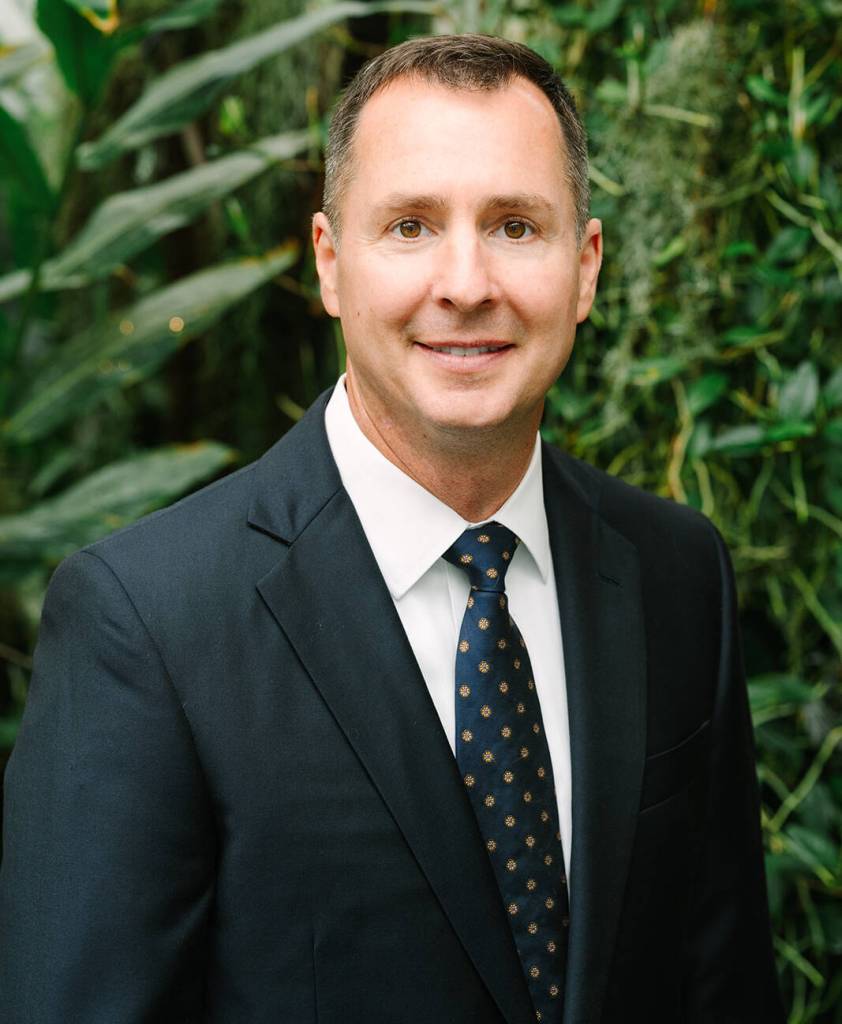
PORT ANGELES — Changes to state law have made prosecuting crimes more complex, Clallam County’s prosecuting attorney said.
Mark Nichols spoke about the changes as well as state crime lab backlogs during the Port Angeles Chamber of Commerce meeting Wednesday at the Red Lion hotel.
Changes to state law include indigent defense, otherwise known as public defense.
“If someone can’t afford defense, it’s provided by Clallam Public Defenders,” said Nichols, who is running unopposed for a fourth four-year term this fall.
In 2024, the state bar association’s Board of Governors adopted revised indigent defense caseload standards which apply to cities and counties. Then, on June 9, 2025, the state Supreme Court adopted new indigent defense standards which apply to attorneys.
Those new standards create a maximum number of cases a defense attorney can be assigned in a year.
“Practically speaking, they have created an affordability crisis because the state didn’t provide funding,” Nichols said.
The cap on caseloads has caused a need for increased funding and resources to provide indigent defense and also is contributing to a criminal justice system imbalance, since the caseload cap does not apply to prosecuting attorneys.
What is going to happen is that public defenders are going to be required to handle fewer cases than prosecutors but for the same pay, Nichols said.
“Local governments may need to hire more public defenders, which has a cost,” he said. “There’s already a shortage of attorneys in Washington state. A demand is going to come to exist. If we can’t staff the county with enough attorneys, something is going to have to give.”
The most likely result will be that judges will dismiss cases because there is no public defender available for the case, Nichols said.
“Imagine if you’re a victim of a crime. If charges aren’t filed, that’s not going to sit well with you, nor should it,” Nichols said.
Bail reform efforts proposed by various defense organizations are now pending before the state Supreme Court. If those reforms are adopted, they will change the current standard of assigning bail amounts based on “likely failure to appear” to “high likelihood of willful flight from prosecution.”
“If the rule goes through, I would need to argue that a defendant’s failure to appear in the past was a ‘willful flight from prosecution,’” Nichols said.
He gave examples of reasons people miss court dates, including car accidents, lack of transportation, medical emergencies, scheduling conflicts or they just forgot to appear. Proving excuses such as those and others to be “willful flights” from prosecution isn’t possible.
Another bail reform effort is to enact a cap of $200 on bond and warrant amounts for most misdemeanor offenses, excluding domestic violence, DUI and attempts to commit a Class C felony.
The Washington Association of Prosecuting Attorneys has provided comments on the pending change stating that the cap of $200 on bail — which would become a 10 percent bond, or $20 — is insufficient to ensure the appearance of a person who willfully flees from prosecution.
The higher burden to prove bail is warranted likely will result in seeing more people out on bail in a “catch and release” cycle, Nichols said.
In addition, exceptions to the bail cap overlook some crimes that pose a danger to public safety such as the attempted luring of a minor or attempted child molestation in the third degree.
Another challenge for pressing charges is a backlog at the state crime lab for testing blood samples provided for DUI and drug cases. Right now, the Clallam County Sheriff’s Office has 36 pending toxicology tests while the Port Angeles Police Department has 40, the Sequim Police Department has nine and Washington State Patrol has 109.
“Until we get results back, we’re not charging,” Nichols said.
The backlog and delay on test results is anywhere from 10 to 20 months, he said.
“Practically speaking, we’re exonerating the person to wait until blood test results come back,” Nichols said. “Justice is delayed and also a public safety challenge is created.”
The backlog for drug analysis tests is shorter, but it can still take about a month to get results back.
The state Legislature has passed a law allowing cities and counties to use private labs for samples — something they’ve always been able to do — but didn’t provide an appropriation for the use of private labs, which can sometimes charge up to $10,000 per case. With government entities watching their money, that’s not a feasible solution, Nichols said.
“It’s going to take about a decade to get out of this testing backlog,” he said.
Another barrier for pressing charges is that Washington is not a grand jury state so any prosecutor can press charges by signing an indictment and filing it. While the defendant has an assumption of innocence within the court system, those indictments are public record and a person’s life can be ruined even if they are eventually found to be innocent in court.
“We have an ethical obligation before pressing charges and statutory standards to meet,” Nichols said.
For more information, go to clallamcountywa.gov/463/Prosecuting-Attorneys-Office.
________
Reporter Emily Hanson can be reached by email at emily.hanson@peninsuladailynews.com.


Best of Olympic Peninsula