
HORSEPLAY: Wild mustang gets help from Forbes, Lowe families
Published 1:30 am Saturday, March 28, 2026
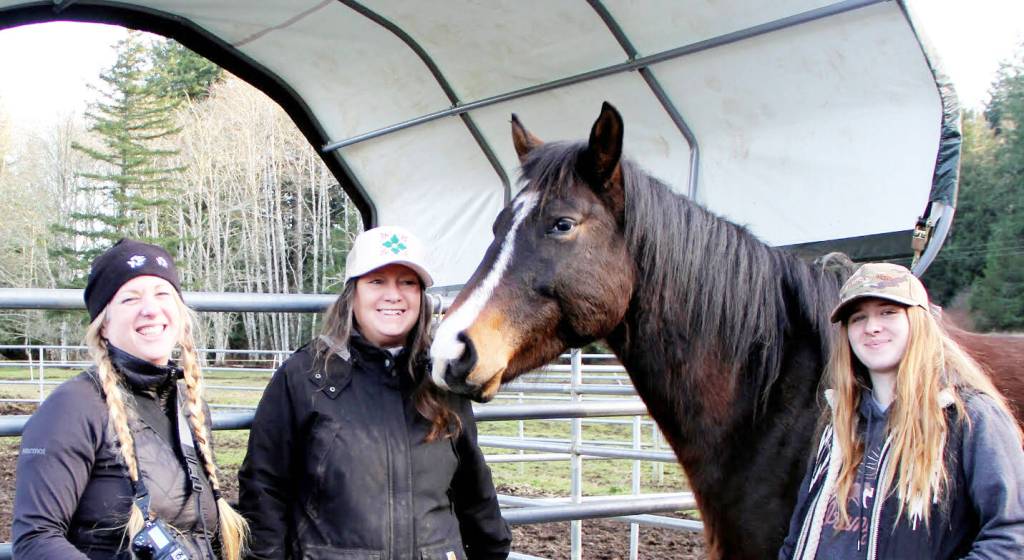
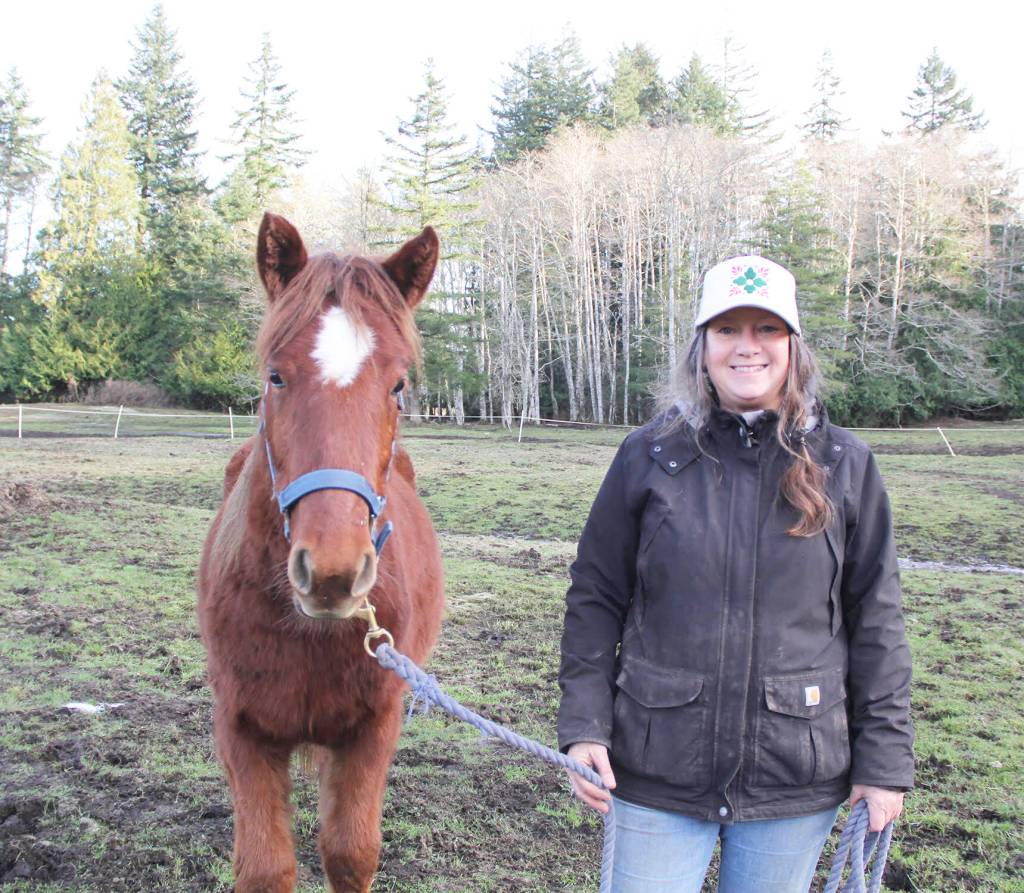


TO LOOK AT the bright red-colored healthy coat on the young male Mustang with dark expressive eyes, one couldn’t tell not long ago he was a frightened young foal wandering alone, banged up and starving to death in the Skokomish River Watershed of the Olympic National Forest.
He was spotted a few times by hikers but was too skittish to allow anyone too close to him, until two determined, compassionate and non-horse-owning people saw the foal’s photo posted on Facebook along with a location.
Nathan Forbes and his daughter set out looking for the baby horse carrying a halter, lead rope and some treats. Thankfully they found him; starving, thirsty, exhausted, yet still wild and not knowing how to behave after the halter was attached to his head and the two tried leading him to safety.
Yet, somehow, they managed to coax the foal into walking several miles down the road to meet a friend with a horse trailer. Forbes then called Mason County Sheriff’s Office and met with deputies, fish and wildlife and tribal police.
Given the name River, after an initial life-saving treatment and evaluation, he was taken to Paradise Waits Mustang Sanctuary in Joyce for ongoing extensive care.
“River arrived July 10 in very bad shape, with significant emaciation and wounds,” said facility founder and director Vanessa Lowe. “We quarantined him from others and monitored him closely for a month until his health stabilized.”
It’s too soon to tell if River will suffer any long-term consequences to his health, Lowe said, but so far he’s doing amazingly well.
“He is still very wary of strangers but is slowly opening up and becoming more social,” she said of the now 14-month-old. After much sleuthing, she thinks River was among 12 Mustangs bought off a reservation herd disposal sale, but “I can’t understand why he was dumped in the woods.”
The Mustang Sanctuary is dedicated to rescuing and providing long-term care for at-risk senior and special-needs BLM Mustangs, native wild horses and horses within the community, Lowe said. “We’re completely volunteer operated and rely on donations and sponsors to help cover the ongoing cost of care and feed.” All donations go directly to the rescue and long-term care of the horses.
She’s open to requests by horse owners who are looking for a companion for their existing horse, which often becomes lonely and depressed after its companion passes away. Horses are, by nature, social and herd animals.
Of utmost importance to her is any rehome horse is not at risk of ending up in the slaughter pipeline, especially those who are seniors or horses which have disabilities.
Morally correct
Which brings me to my mantra: Do not pass along the horse you’ve owned for years, or separate two horses that have lived most of their lives together; do not rehome your older, lame, unrideable or problem horse.
Do the right thing and humanely euthanize or put down the horse right where he or she’s been living. And, after the horse passes, do let your other horse see and smell the deceased horse so it doesn’t run nervously around whining, crying and frantically searching for their missing friend.
As a teenager boarding my horse at a stable in California, I didn’t think twice about the buying and selling of horses. At 15, I sold my trail horse when venturing into the sport of barrel racing and other games, then known as Gymkhana. As an adult caring for my horses on my own property, I got to know intimately how sensitive and varied each of their souls are, and how, after earning their trust, they would watch out and care for me, too. It became a sense of honor for me to care for my horses until their quality of life was diminished by ending their lives as humanely as possible, by euthanasia or by an expert marksman from Olympic Game Farm.
This week I watched an eye-opening new documentary, “Throw Away Horses.” It’s about what happens when a horse is no longer needed or wanted, providing valuable insight from industry professionals in how the disposable attitudes by horse owners are causing tens of thousands of horses each year to be shipped to Canada and Mexico to be slaughtered. The film is available on Prime.
Wild and free
Currently, Lowe said BLM Mustangs are facing a significant crisis due to overpopulation, which leads to overgrazing the land. That, plus drought, has led to a lack of food, and the horses are often competing with grazing cattle.
Bureau of Land Management (BLM) is responsible for managing Mustangs and wild-burro populations on government-owned lands. An approved fertility control program, which includes darting mares with PZP for birth control, is available, but, Lowe said, “unfortunately it’s underutilized, so the [BLM] management is still choosing to use helicopters to run at the horses and push them into corrals as a means to lower the herd population.”
This year BLM announced the overall wild horse capture and removal goals are 14,830 and 14,378, respectively.
BLM’s biggest roundups start in the spring, which means pregnant mares and mares with young foals by their sides are forced to run alongside frightened and fast-moving adult mares and stallions down mountains and across prairies, where they’re funneled into holding corrals. There, they are separated: those so badly injured they’re euthanized, the injured who may heal, males separated from female, and so on.
The inhumane practice is quite controversial and upsetting to animal lovers worldwide. Just as upsetting, Lowe said, are changes the BLM has made in the adoption process for wild horses, including ending its adoption incentive program (AIP) and immediately offering the sale authority program (SAP), for which horses are sold for $25 without protection regarding their future welfare.
Those adoption programs served to greatly increased the likelihood of Mustangs being “adopted by a wild horse-loving human with a gentle touch, who’ll give them good hay, good energy and snacks,” Lowe said. “The fact that BLM is no longer waiting for horses to be adopted before selling them off increases the chance that, once sold, they can be taken directly to kill pens, where they are sold by the weight and then hauled across the Canadian or Mexican boarders, where they’re slaughtered for food.”
It’s a challenging and complex problem, as are most events going on in the world today. We can help by supporting those already working hard to help animals in need in our own community.
Visitor tours are offered in exchange for a donation or a bag of Timothy horse pellets.
PWMS is a 501(c)(3) nonprofit. All donations are tax deductible. For more information, visit the Facebook page Paradise Waits Mustang Sanctuary, e-mail paradisewaits mustangs@gmail.com or call Lowe at 530-307-0417. Mail donations to PWMS, P.O. Box 94, Carlsborg, WA 98324
________
Karen Griffiths’ column, Peninsula Horseplay, appears the second and fourth Saturday of each month.
If you have a horse event, clinic or seminar you would like listed, email Griffiths at kbg@olympus.net at least two weeks in advance. You can also call her at 360-460-6299.