
HORSEPLAY: Sequim High School equestrian team takes firsts
Published 1:30 am Saturday, February 14, 2026
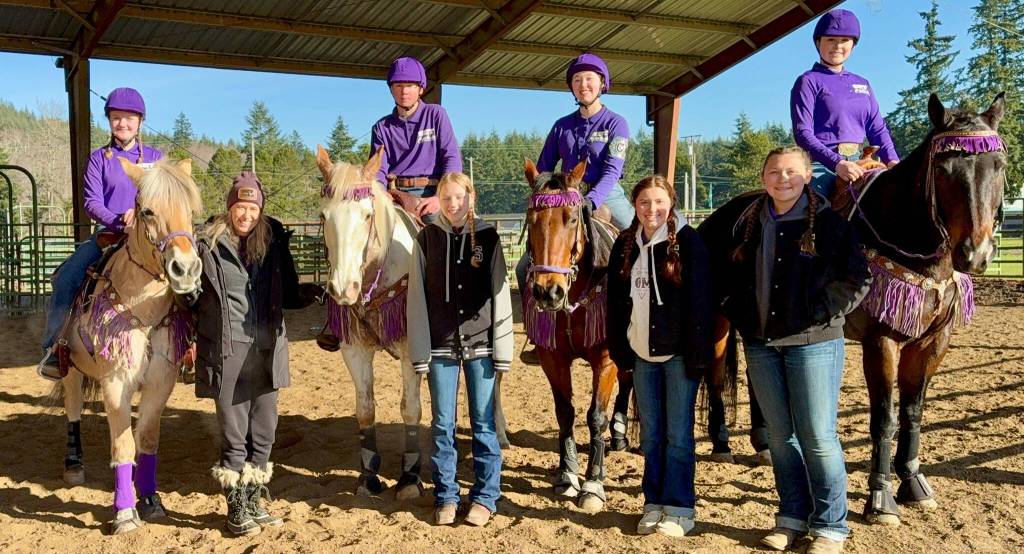
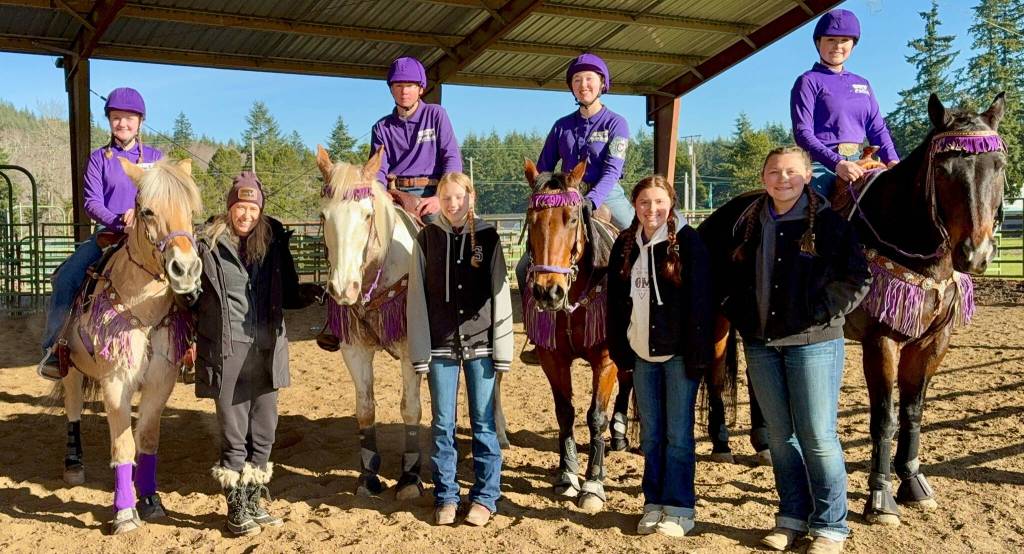


CONGRATULATIONS TO THE Sequim Equestrian Team for bringing back several first place wins at the Washington High Equestrian Team District 4 first meet! Freshman Lucas Seelye brought home two first place wins — in individual flags and keyhole races; Paisley Morris for In-hand trail; in-hand obstacle relay team of Asha Swanberg, Paisley Morris, Kenzi Winters and Lila Torey, Katelynn Sharpe in saddle seat equitation and Katelynn and Asha in team sorting — well done team!
Kaija Johnson also placed in the top 5 there. Madalyn Loucks is a non-competing team mate. Katie Newton is Head Coach, assisted by coaches Cori Youngblood and Misty Gilbertson.
Results
Dressage — Katelynn Sharpe, 2nd; Lila Torey, 6th
Hunt Seat Equitation — Lila, 4th
In-hand Obstacle Relay Team — Asha Swanberg, Paisley Morris, Kenzi Winters, Lila, 1st.
In-hand trail — Paisley, 1st; Kenzi, 9th
Reining — Asha, 4th; Katelynn, 7th; Lila 10th
Saddle Seat Equitation — Katelynn, 1st; Kenzi, 2nd
Showmanship — Katelynn, 3rd; Paisley, 5th; Lila, 8th; Kenzi, 12th
Stock Seat Equitation — Paisley, 6th; Lila, 11th
Team Versatility — Asha, Kaija Johnson, Paisley, Lila, 4th
Working Pairs — Katelynn & Asha, 3rd; Kenzi & Lucas Seelye, 4th; Kaija & Paisley, 5th
Working Rancher— Asha, 3rd; Kenzi, 7th
Drill Team Freestyle 4’s — Katelynn, Kenzi, Lucas, Lila, 2nd
Timed Events
Barrel Racing — Lucas, 7th; Asha, 10th; Kaija, 12th; Paisley, 24th
Figure 8 — Lucas, 7th; Asha, 17th
Individual Flags — Lucas, 1st; Asha, 11th; Kaija, 13th
Keyhole — Lucas, 1st; Katelynn, 2nd; Kaija, 3rd; Kenzi, 11th; Paisley, 15th
Pole Bending — Kaija, 7th; Lucas, 11th
Team Canadian Flags — Katelynn, Asha, Kenzi, Lucas, 4th
Two Man Birangle — Asha & Kaija, 8th; Katelynn & Lucas, 8th; Kenzi & Lila, 16th.
Cattle Events
Breakaway Roping — Asha, 3rd
Steer Daubing — Asha, 3rd; Lucas, 4th; Katelynn, 5th
Team Sorting — Katelynn & Asha, 1st; Kenzi & Lucas, 9th; Kaija & Paisley, 16th
The team’s next competition is Feb 20-22.
Horses and frogs
Ribbit said the frog to the horse. It seems a few Horseplay readers were wondering what the frog was I referred to in my Jan. 24 column featuring farrier Chris Niclas, “Hoof care with Chris, part 1: plastic replacing steel” where I wrote “contact and interaction between the horse’s hoof, frog and ground are maintained.”
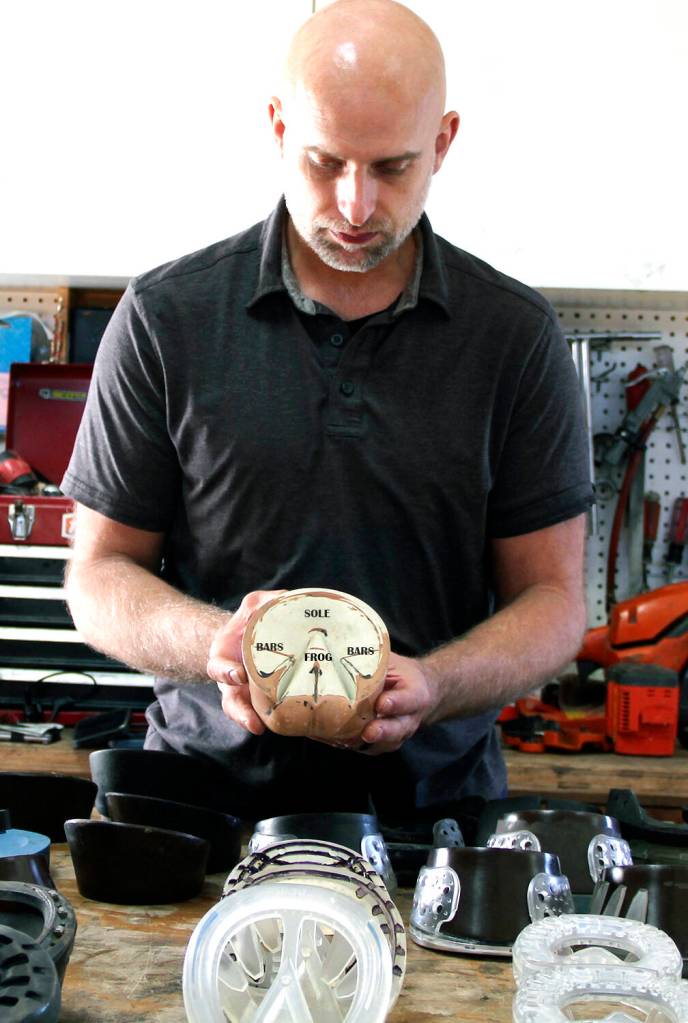
To answer, the horse’s frog is a triangle shape on the underside of the hoof that extends from the heel bulbs toward the toe. It contributes to shock absorption, stability and circulation along with the entire hoof mechanism, as well as helping to provide traction on slippery or uneven surfaces.
The hoof’s pump mechanism involves the whole hoof capsule expanding and contracting as it loads and unloads, which helps move blood back up the leg. Heel bulbs, frog, bars, sole, white line, wall, quarters, central sulcus and lateral grooves are all key elements on the bottom of the hoof. Learning each one’s function aids in mapping a hoof to give a balanced hoof trim for both barefoot and shod horses.
“Adding a steel shoe can sometimes lift the frog off the ground, depending on trim, shoe type, and the individual horse — but this isn’t always the case. Frog contact is also not just shoe-related.” said Niclas, “Some barefoot horses don’t engage the frog with the ground either, especially on hard surfaces. The ground environment matters: soft footing, hard ground, and uneven terrain all affect how the hoof loads and whether frog contact is helpful.”
In other words, good frog engagement isn’t a guarantee of healthy feet. Issues like frog atrophy or contracted heels usually have multiple contributing factors.
While the evolution of composite horseshoes into hoof care makes modifying shoes to fit each horse faster and simpler, Niclas said earlier versions didn’t yet offer the range of features he was looking for until about five years ago when EasyCare introduced a composite shoe lineup called VersaGrip. It came in multiple options with different flexibility, density, and designs to better work with the horse’s movement.
Since then, composite shoe options have expanded further with even more options. Today, there are many composite shoes available in different thicknesses, widths, and support densities, allowing hoof care providers to better match the shoe to the individual horse and footing.
“When VersaGrip out on the market, and I was getting frog support and frog engagement I was so excited,” he said, at the time believing every horse must have frog engagement.
“I have a client that, bless her heart, kept me, despite me creating problems for her horse for about a year,” he humbly admitted. “She had a list of issues her horse was having and believed that the frog support was causing the problem. I was like ‘are you crazy? Horses need frog support.’”
Structure
Then he listened to an anatomy lecture online from Paige Poss, whom he calls a “phenomenal anatomist.” (www.Anatomy-of-the-Equine.com)
He said she showed some dissected feet and talked about how the vein, artery and nerve bundle comes in at the back of the foot. When she mentioned asking a horse a question with hoof testers to search for reactions to sore spots, or having a horse stand on a wire brush hoof pick to see if they like frog support or not, he decided to try both methods on this client’s horse. It was then he discovered the horse loathed anything touching his frog.
“This horse hated frog support! There was something going on in his nervous system in the back of the foot that caused him not to like it,” said Niclas. “So, I got rid of the frog support.”
Because the horse showed some sensitivity in the back of the foot he used an EasyCare EasyShoe roller aluminum glue-on shoe, but removed its frog support.
“I then riveted a leather pad to the shoe and shaped it like a hammock, so the frog was gently caught and supported without being loaded or compressed.” He said. “As the horse worked indifferent surfaces the foot was supported, but the frog wasn’t being overloaded.”
When he saw the horse moving out the best he’s ever seen him he said, “I felt so stupid, because I kept telling the client she was inaccurate, but I was the one who was inaccurate.”
That case reinforced an important lesson for Niclas: Some horses do well with direct frog support, some do better when the frog is lightly supported without pressure, and some need the frog unloaded altogether. The right approach depends on the individual horse, the footing, and how the horse responds.
Now, when something isn’t working, he’s learned to ask, “Why didn’t it work? And what can we do to help the horse?”
He said knowing the anatomy, and learning the craftsmanship is a lifelong process of evolving and learning that one never graduates from.
“It’s the same with horsemanship,” he said. “You don’t ever arrive and think ‘I’ve learned all I can.’ It’s exciting to be constantly learning more.”
Next time with Niclas: Horse shoe hoof pads and preventing thrush.
________
Karen Griffiths’ column, Peninsula Horseplay, appears the second and fourth Saturday of each month.
If you have a horse event, clinic or seminar you would like listed, please email Griffiths at kbg@olympus.net at least two weeks in advance. You can also call her at 360-460-6299.