
OUTDOORS: Canadian recreational salmon fishing facing big changes
Published 1:30 am Saturday, January 31, 2026
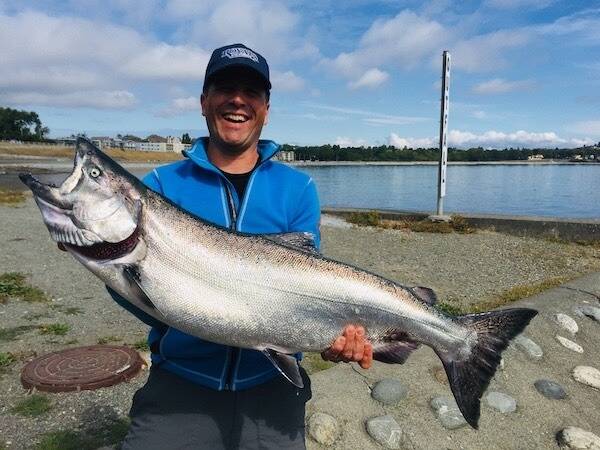
BOLDT DECISION, CANADIAN style? In recent years, Canadian waters have become a welcome option for North Olympic Peninsula anglers shut out of now-shuttered fall coho and winter blackmouth fisheries along the U.S. portion of the Strait of Juan de Fuca. But that access could soon be delayed and eventually even cut off if the major changes to who has priority access to salmon are approved.
Fisheries and Oceans Canada (referred to as DFO in Canada) is proposing altering which group is given priority access to king and coho salmon through its Salmon Allocation Policy — a policy that has been in place since 1999. This comes after a review started by a 2018 British Columbia Supreme Court decision that included a period of public feedback and consultation conveniently planned over the winter holidays.
The DFO is currently considering removing the designation of salmon as a “common property resource” from federal policy. That designation means the public owns the fish and they’re managed in trust by the federal government. Stripping that language from the federal policy would be a serious breach of that trust.
“If salmon are no longer identified as a common property resource owned by all Canadians, then who owns them?” British Columbia Wildlife Federation Executive Director Jesse Zeman said. “And who decides who gets to go fishing? And if they’re no longer a common property resource, then our right to fish, which is hundreds of years old, disappears. So this is a major, major, major issue for licensed anglers here in Canada.”
In Canada, native tribes (First Nations) are constitutionally granted priority rights to fish for food, social and ceremonial purposes, but there’s no constitutionally protected right to fish for the general public. Recreational anglers instead point to the 1868 Fisheries Act, which implemented the idea of salmon as common property with a common-law right to fish for them.
Last month, DFO released a document highlighting various perspectives and rationales behind the proposals, noting that First Nations are concerned about the “common property resource” being a remnant of colonialism that has proved harmful to fish and tribal life.
The rationale continues, “First Nation representatives have also indicated that DFO’s management of fisheries (e.g. licensing of harvesters and fisheries opening/closures) has largely replaced the ‘common property resource’ and that what is described in the 1999 policy is no longer relevant, nor serves a useful purpose.”
DFO also is considering another proposal supported by First Nations and the country’s Commercial Salmon Advisory Board — to remove priority for recreational fishing over commercial fishing for chinook and coho.
Currently, the allocation framework gives recreational anglers the first shot at both species, with commercial fishing only when abundance permits. The proposal would flip that structure around, adding catch limits or caps for sport fishermen to allow for more commercial harvest, especially in years with subpar salmon runs.
Doing so would be a huge hit to the sportfishing industry, which, Zeman said, generates 9,100 jobs and is worth about $1.3 billion a year in British Columbia.
On top of that, he said, the recreational angling sector has dedicated funding mechanisms for conservation projects (fish hatcheries, habitat improvement, research, etc.) by way of license fees. “Anglers do the conservation work and salmon enhancement all over the province of British Columbia,” he said. “If we get rid of fishing, we get rid of the fish ultimately, because all these conservation pieces that we put in place and volunteer and donate to — those are going to disappear.”
Washington state anglers know what happens when recreational access is removed: seasons rarely reemerge.
Changing the SAP wouldn’t be a certain end to salmon fishing, but it certainly would be a step in that direction.
Fishing lodges might have trouble booking clients if there are harvest caps in place or uncertainty in terms of fishing seasons. Individual anglers could see area waters closed until the commercial fleets working offshore have caught their portion of the catch.
“If they go into effect, it could possibly be the final nail in the coffin for a lot of people like us in the entire industry who have guided or worked at fishing lodges,” B.C. fishing guide Andrew Turkstra said in a CBC TV interview.
A series of Salmon Allocation Policy town halls hosted by the B.C. Wildlife Federation are planned around the province.
Shellfish changes
The state Department of Fish and Wildlife is proposing rule changes for state recreational clam, mussel and oyster seasons to conserve shellfish populations, address increases in harvest effort and promote sustainable shellfish gathering.
“Minimum size and daily limits help to sustain shellfish beds and keep recreational harvesting opportunities open year after year,” said Camille Speck, the department’s Puget Sound intertidal bivalve manager.
“Recent shellfish seasons have also seen high turnout — in some cases leading to beach closures. By adjusting season dates at certain beaches, WDFW shellfish managers aim to meet co-management harvest sharing agreements, spread out harvest pressure, and conserve these important natural resources for current and future generations.”
Proposed changes include:
Extending or shortening seasons for some public beaches as part of the annual season-setting process.
Increasing the cockle minimum harvest size from 11/2 inches to 21/2 inches.
Decreasing the geoduck daily limit from three to one.
If adopted, the changes would take effect in the 2026 season.
“Increasing the minimum harvest size for cockles better aligns with this species’ biology, allowing more cockles to reach reproductive age and supporting long-term sustainability,” Speck said. “Geoducks are slow to reproduce, and populations can take decades to recover after harvesting. Populations in the intertidal zone are particularly vulnerable, and harvest can have impacts on habitat.”
For more information, visit https://tinyurl.com/PDN-WDFWShellfish26.
To comment, visit https://engage.wdfw.wa.gov/2026clamandoystercr102 or email 2026clamandoystercr102@publicinput.com by Feb. 24.
________
Sports reporter/columnist Michael Carman can be contacted at sports@peninsuladaily news.com.