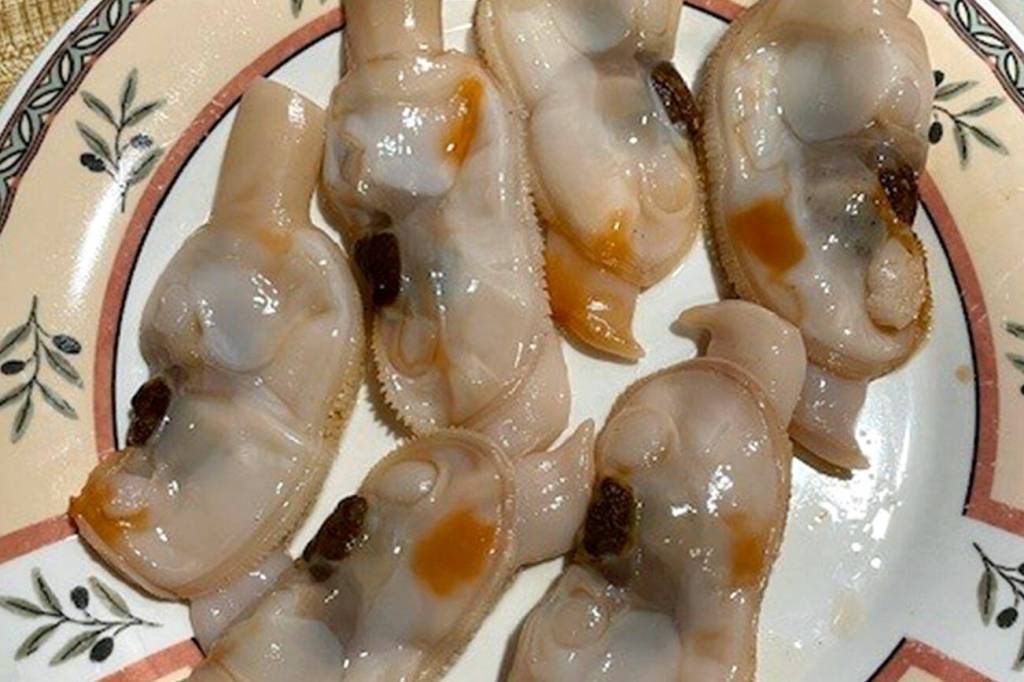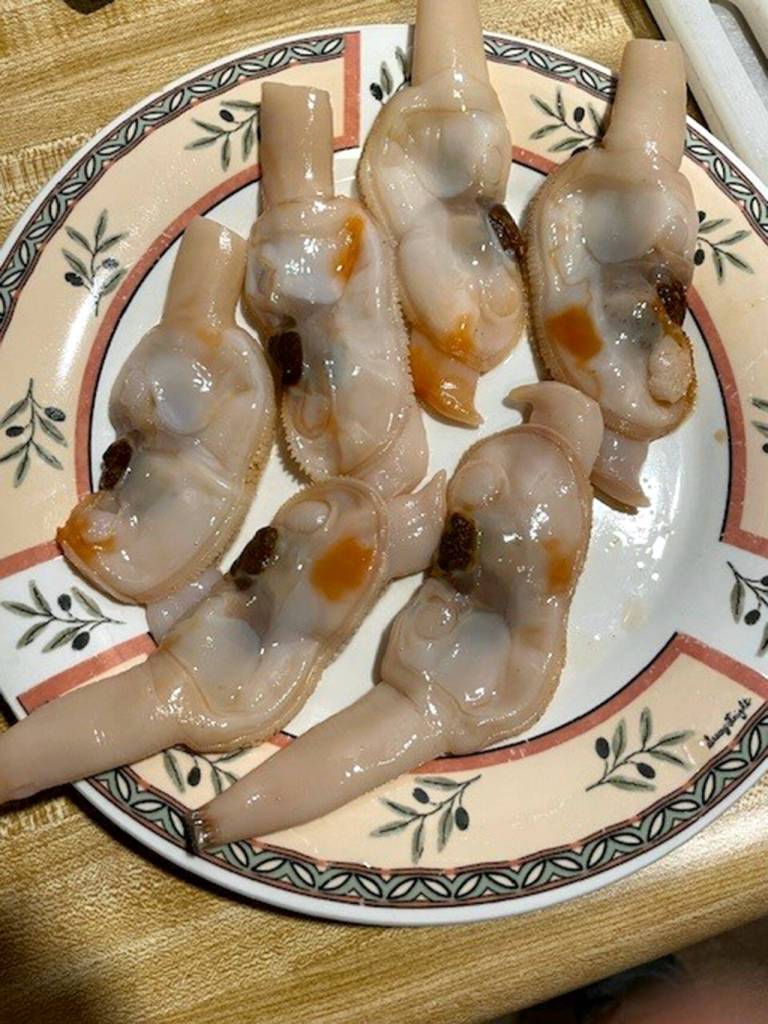
State Department of Fish and Wildlife Reports of orange spots or stains in razor clams and oysters along coastal beaches have been reported to the state Department of Fish and Wildlife. The spots are a naturally occurring plankton called dinoflagellate Tripos. Luckily, there is no concern for shellfish health, and oysters and razor clams with orange coloring are still safe to eat.

State Department of Fish and Wildlife Reports of orange spots or stains in razor clams and oysters along coastal beaches have been reported to the state Department of Fish and Wildlife. The spots are a naturally occurring plankton called dinoflagellate Tripos. Luckily, there is no concern for shellfish health, and oysters and razor clams with orange coloring are still safe to eat.

OUTDOORS: Nov. 1-5 razor clam digs approved

Orange-spotted clams safe to eat

Razor clam digs approved Nov. 1-5

OLYMPIA — November will kick off with razor clam digging opportunities on four coastal beaches, shellfish managers with the state Department of Fish and Wildlife confirmed.

The following digs during evening low tides will proceed as scheduled, after marine toxin results from the Department of Health showed razor clams are safe to eat:

•  Friday: 7:15 p.m.; -0.2 feet; Long Beach, Twin Harbors, Mocrocks.

•  Nov. 2: 7:47 p.m.; -0.4 feet; Long Beach, Twin Harbors, Mocrocks (switch to standard time).

•  Nov. 3: 7:22 p.m.; -0.4 feet; Long Beach, Twin Harbors, Copalis.

•  Nov. 4: 8 p.m.; -0.3 feet; Long Beach, Twin Harbors, Copalis.

•  Nov. 5: 8:42 p.m.; -0.1 feet; Long Beach, Twin Harbors, Mocrocks.

Fish and Wildlife recently has received reports of orange spots or stains in razor clams along coastal beaches and oysters in Willapa Bay and Grays Harbor.

The orange coloration is due to a bloom of the naturally occurring plankton dinoflagellate Tripos that has been observed off the coast since early October. This plankton is commonly found in water samples, though large blooms are less common. In fact, the last time a large-scale bloom was found off the Washington Coast was in 1995.

Current ocean conditions have been favorable for dinoflagellate growth.

There is no concern for shellfish health. Oysters and razor clams with orange coloring are still safe to eat.

Fish and Wildlife will continue to monitor coastal waters for any changes in collaboration with the Olympic Region Harmful Algal Blooms Partnership.

Peninsula Daily News

More in Sports

Neah Bay Red Devils
PREP BASKETBALL: 4-0 Neah Bay girls run past Forks

Neah Bay executed its halfcourt offense and got numerous… Continue reading

BRIDGE CLOSURE: Several prep games postponed due to Hood Canal Bridge accident

A total of six basketball games involving Olympic Peninsula… Continue reading

Members of the Lincoln Park BMX were recognized by USA BMX as the top fundraising park in the nation for Race for Life. (Lincoln Park BMX)
AREA SPORTS BRIEFS: Lincoln Park BMX No. 1 in Race for Life

The Lincoln Park BMX track led the country with… Continue reading

Peninsula College’s Makena Patrick battles for a rebound against Tacoma on Sunday at Peninsula College. The Pirates beat Tacoma 80-48 to complete a three-game sweep in the Pirates Classic as the women improved their record to 4-2. Patrick contributed 10 points and nine rebounds in Sunday’s victory. (Jay Cline/Peninsula College)
PENINSULA COLLEGE: Pirates women complete three-game sweep

Peninsula College’s Makena Patrick battles for a rebound against Tacoma on Sunday… Continue reading

Peninsula College’s Aspen Fraser battles for a rebound against Chemeketa on Friday night. Fraser has 12 points and 12 rebounds as the Pirates won 80-62. (Jay Cline/Peninsula College)
WOMEN’S BASKETBALL: Pirates sweep their home classic

The Peninsula College women capped off a perfect weekend… Continue reading