
Not so mellow about this yellow: Peninsula petition urges mandatory control of scotch broom
Published 12:01 am Friday, May 31, 2013
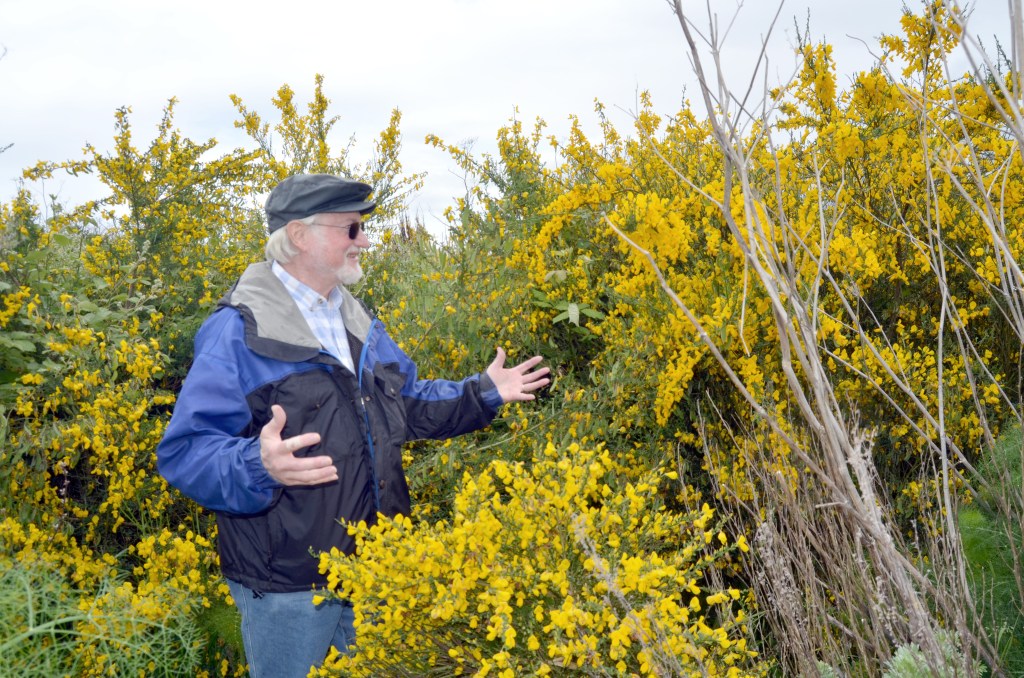
PORT TOWNSEND — If scotch broom, the invasive weed, is not curtailed, it will spread into the equivalent of an agricultural apocalypse, according to a Kala Point man who has started an online petition for statewide mandatory control of the weed.
“Scotch broom’s growth has exploded in Washington,” said David Tonkin, a retired technology worker.
“If we don’t control it, in five or 10 years, it will choke out all the other vegetation,” he said.
“We will have to change our name from the Evergreen State to the Ever-yellow State, and change our state flower from the rhododendron to scotch broom.”
State Noxious Weed Control Board Executive Secretary Alison Halpern said she recognizes the situation’s seriousness but doesn’t think it is beyond repair.
“If we did nothing, then a lot of natural areas would get choked out by scotch broom and Himalayan blackberry and knapweed and knotweed,” she said.
“But it hasn’t taken over because of ongoing efforts by parks and volunteer groups county weed boards and private citizens, among others.”
Total eradication would cost millions of dollars, she said.
Scotch broom, a Class B noxious weed, was first listed in Washington state in 1988.
The plant’s bright yellow blossoms are now visible along many local highways.
The non-native plant, originally from Europe, was deliberately rooted along roadways as an erosion deterrent before it was discovered that it would crowd out other species, according to Jefferson County Weed Board member Jill Silver.
While attractive when in bloom, a field of scotch broom can choke out any other vegetation on a particular site and become thicker and higher with time.
“Since I’ve been watching this, there are twice as many plants in more or less the same spaces,” Tonkin said.
Tonkin’s petition, which can be seen at http://tinyurl.com/lb74500, asks the Washington State Weed Control Board to “designate scotch broom for mandatory control throughout Washington to require removal of plants to stop their spread.”
As of Thursday afternoon, it had been signed by 30 people.
Tonkin said mandatory control would force public agencies to develop programs for the removal of the weed from public lands and require private landowners to remove it from their property on their own expense, under threat of a fine.
“People will be responsible to remove scotch broom from their property. If they fail to do so, the county will come in and remove it and bill them along with an administrative charge,” Tonkin said.
Halpern said she is aware of Tonkin’s petition and “will pay close attention to it.”
But she said total eradication of the weed is not feasible because of expense and its overwhelming presence.
“In order to get rid of scotch broom, it would cost us millions of dollars per year, and the state doesn’t have the money,” Halpern said.
Tonkin isn’t fazed by the potential cost.
“If you think it would be expensive to get rid of it now, just wait five or 10 years when it’s spread everywhere, and it will be even more expensive and impossible to remove,” he said.
“It will cost us more if we don’t take action now.”
Halpern said mandatory enforcement is implemented in cases in which the plant is not pervasive and can be easily controlled.
“We exert mandatory control where it is feasible,” Halpern said.
“We have instituted it for scotch broom in Eastern Washington because you can still control it.
“And we can’t force landowners to remove scotch broom from their property. We just don’t have the labor.”
Said Jefferson County Noxious Weed Control Coordinator Eve Dixon: “A compulsory policy isn’t possible with scotch broom because there is so much of it.
“The only way we can control it is to ‘nip it in the bud’ and pull out the plants when we see them,” she said.
“There is no way we can force individual property owners to get it off of their own property, but we can provide them the tools so they can do it voluntarily.”
Dixon said the weed board will loan tools that are designed to pull the plant effectively.
Silver calls scotch broom “a botanical bully” and agrees with Tonkin that if something isn’t done now, the severity will increase.
“Scotch broom threatens our habitat and our way of life,” she said.
“It takes land that can be used for recreation, forestry and agriculture and makes them non-recreation, non-forestry and non-agriculture.”
Silver is organizing large-scale removal efforts that are necessarily volunteer-driven, saying that every little bit helps.
“Whenever I see a single scotch broom plant, I just pull it out and throw it on the ground,” she said.
“Every time you do this, it means that you are preventing the spread of 6,000 new seeds.”
Using this logic — along with the idea that each of those 6,000 seeds could yield an equal number for generations to come — makes the “one plant at a time” process effective, Silver said.
Seeds are toxic to livestock, and large patches of scotch broom are visible throughout the region.
In these cases, the soil is virtually ruined, Silver said.
“Even if you remove the large patches, the land can’t be used for anything but growing scotch broom without fertilization,” she said.
Tonkin said he has tried to call attention to the scotch broom epidemic for six years.
In a May 2007 letter to the Jefferson County commissioners, he wrote: “This problem is occurring on your watch.
“The buck stops with you and it is your responsibility to find a solution.”
Tonkin said that while pulling individual plants can help, governmental intervention will be needed to solve the problem.
“People will not do this on their own,” he said.
________
Jefferson County Reporter Charlie Bermant can be reached at 360-385-2335 or at charlie.bermant@peninsuladailynews.com.